High-Quality Chinese Tea & Teaware.We focus on authentic flavors. Every tea is sourced from the best farms and made by experienced artisans to keep the complex taste. Our teaware combines beauty and practicality. Discover the essence of traditional tea culture with us. DismissSkip to content
Elm Drawer Storage Cabinet: 10 Drawers Tea Ware Storage, Pure Joy Treasure Dental
$2,000.00Original price was: $2,000.00.$1,640.00Current price is: $1,640.00.
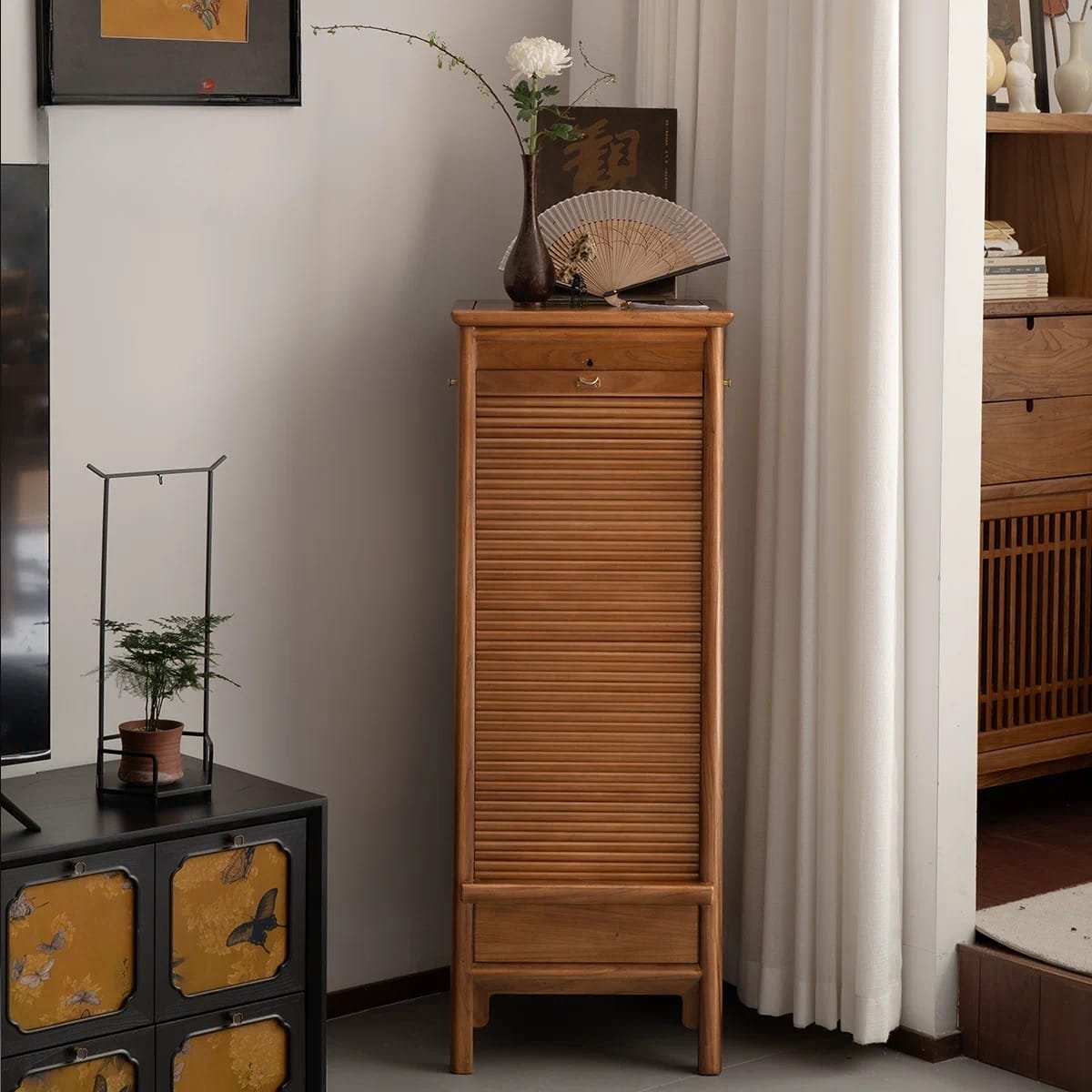
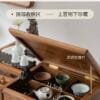
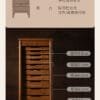
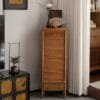
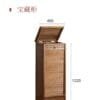
The Elm Drawer Storage Cabinet is a full-drawer treasure cabinet for tea ware and jewelry, offered in elm walnut and elm rosewood. Ten labeled layers, a dust-proof rolling wooden shutter, top open storage, and a left-side unlock/key lock keep 45x40x122cm organization secure and beautiful.
1. Elm Drawer Storage Cabinet: 10 Fully Pull-Out Drawers for Tea Ware Storage
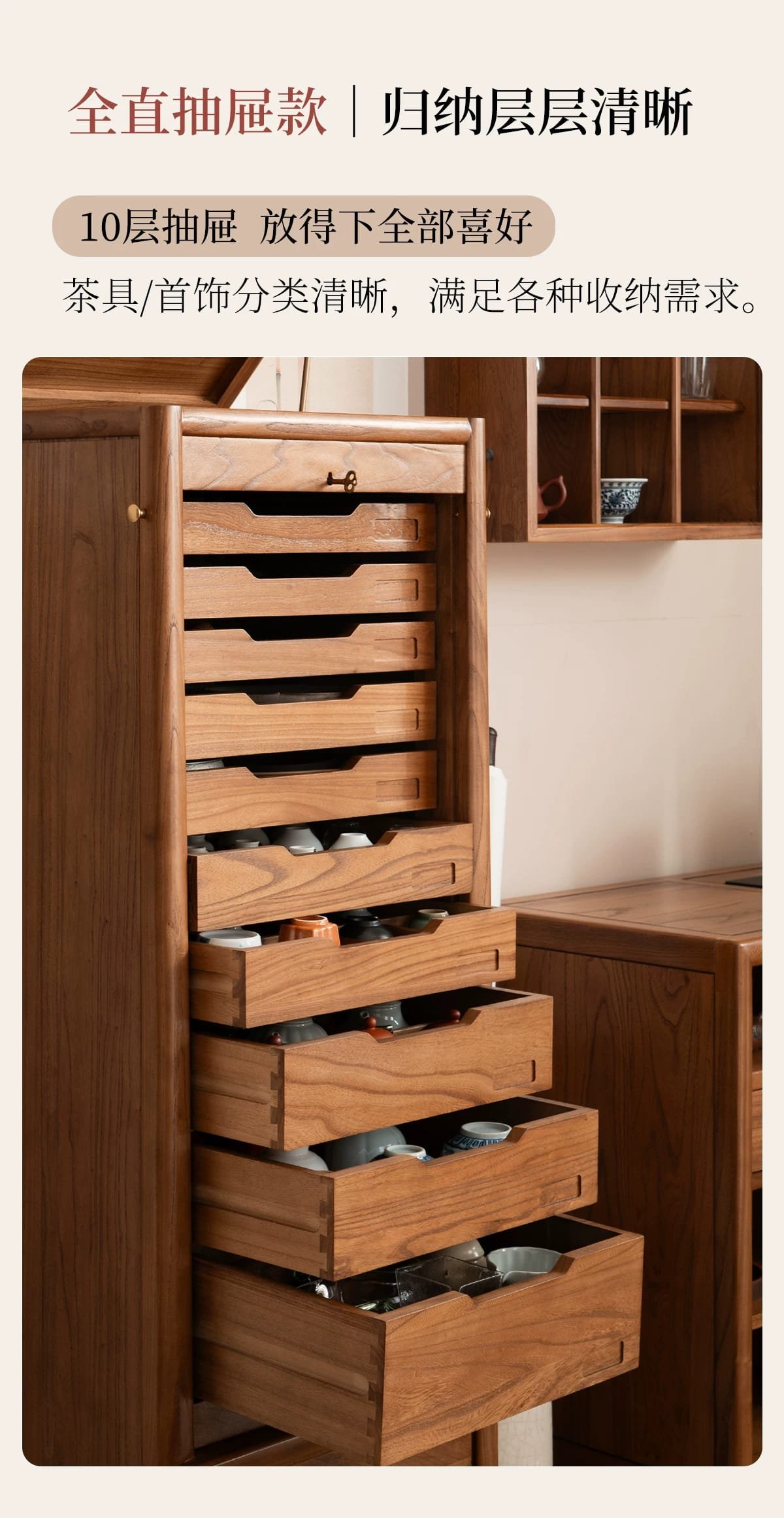
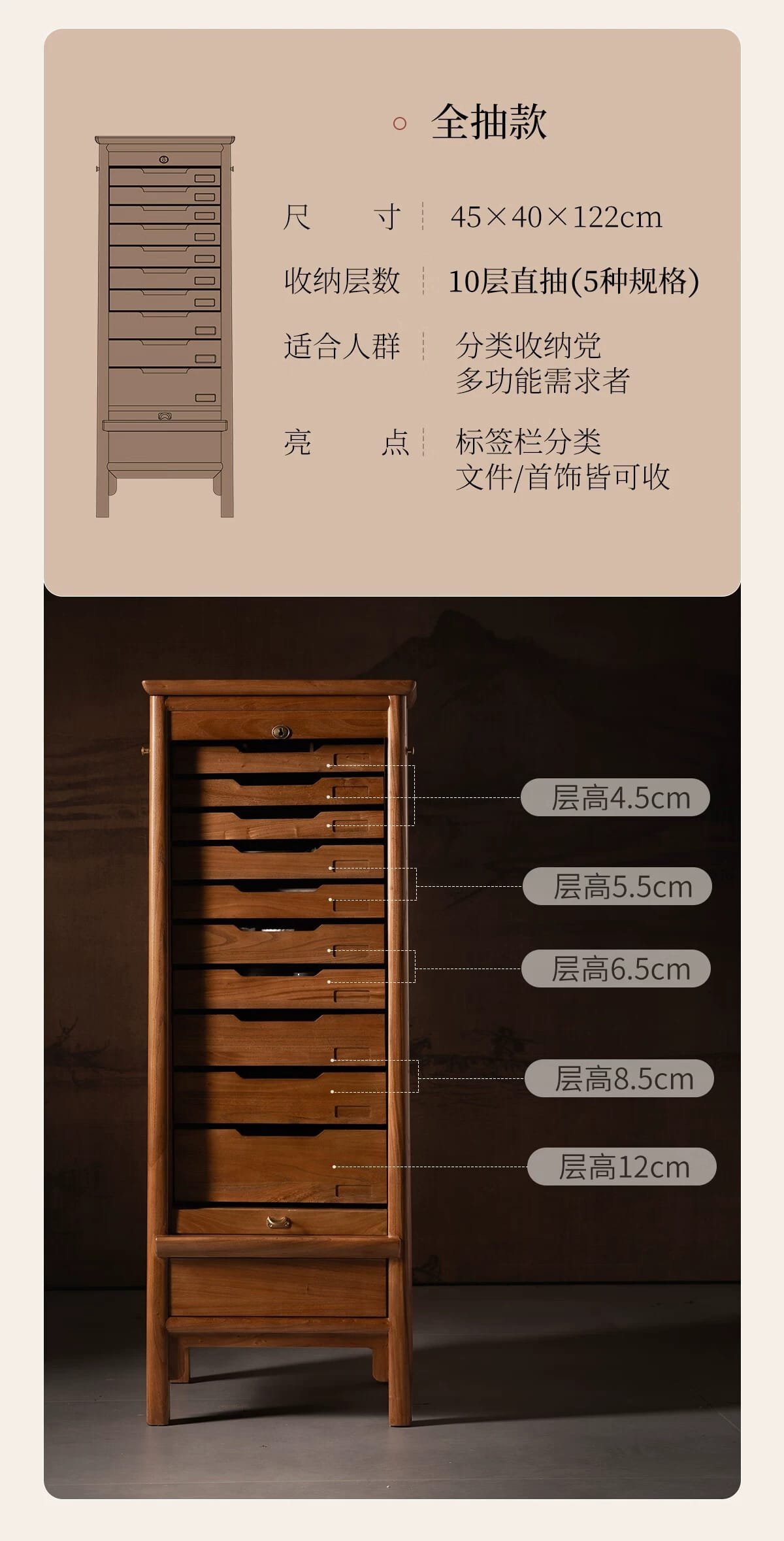
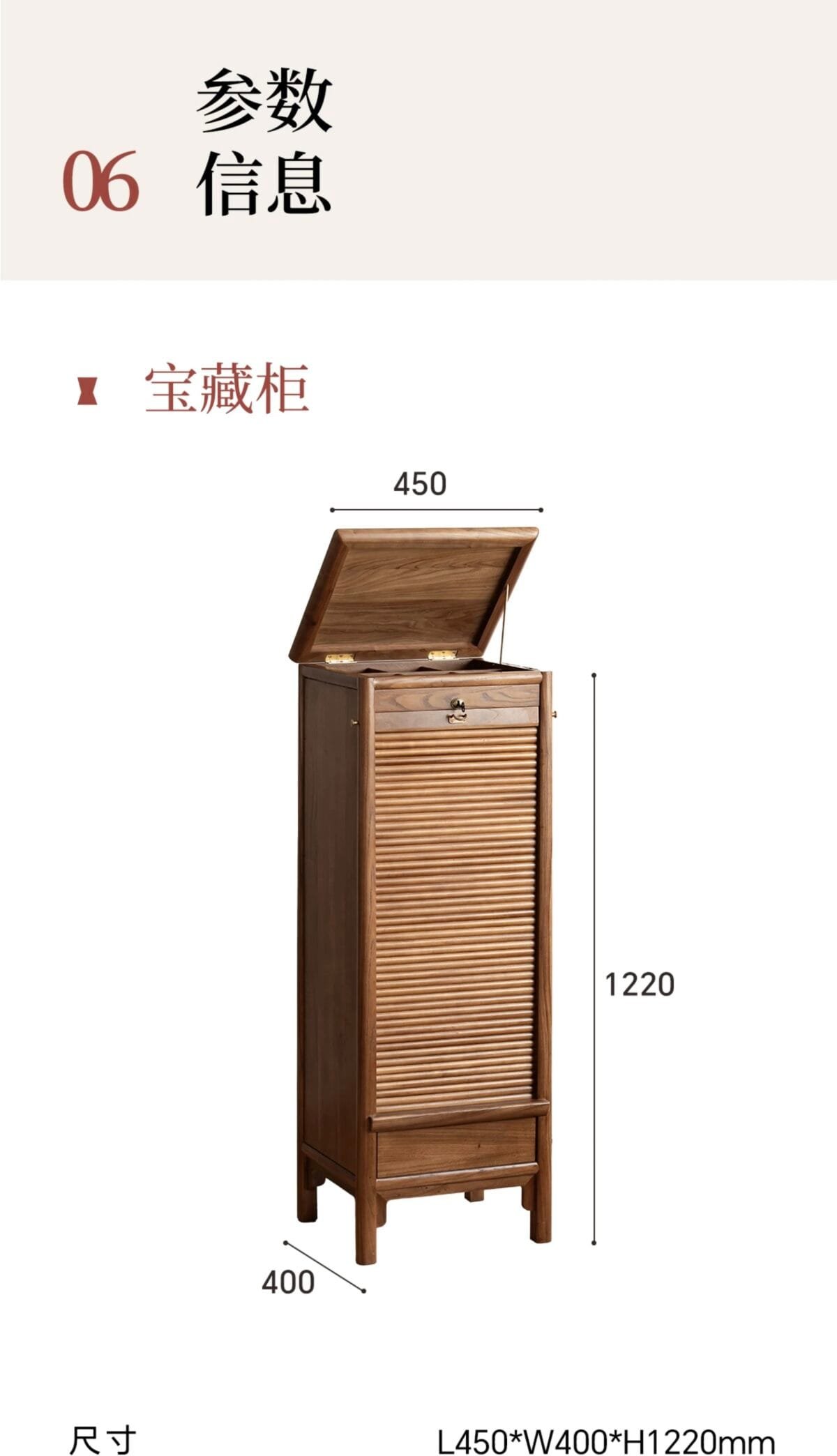
The Elm Drawer Storage Cabinet by Junxistea is a full-drawer treasure organizer built for tea lovers who own more gaiwans, cups, teapots, and accessories than open shelves can hold. Measuring 45cm long, 40cm wide, and 122cm high, with a total weight of about 37kg, this solid elm piece offers ten independent drawers that slide out completely. Each layer is deep enough for daily tea ware, while the compact footprint fits neatly beside a tea table or against a living-room wall.
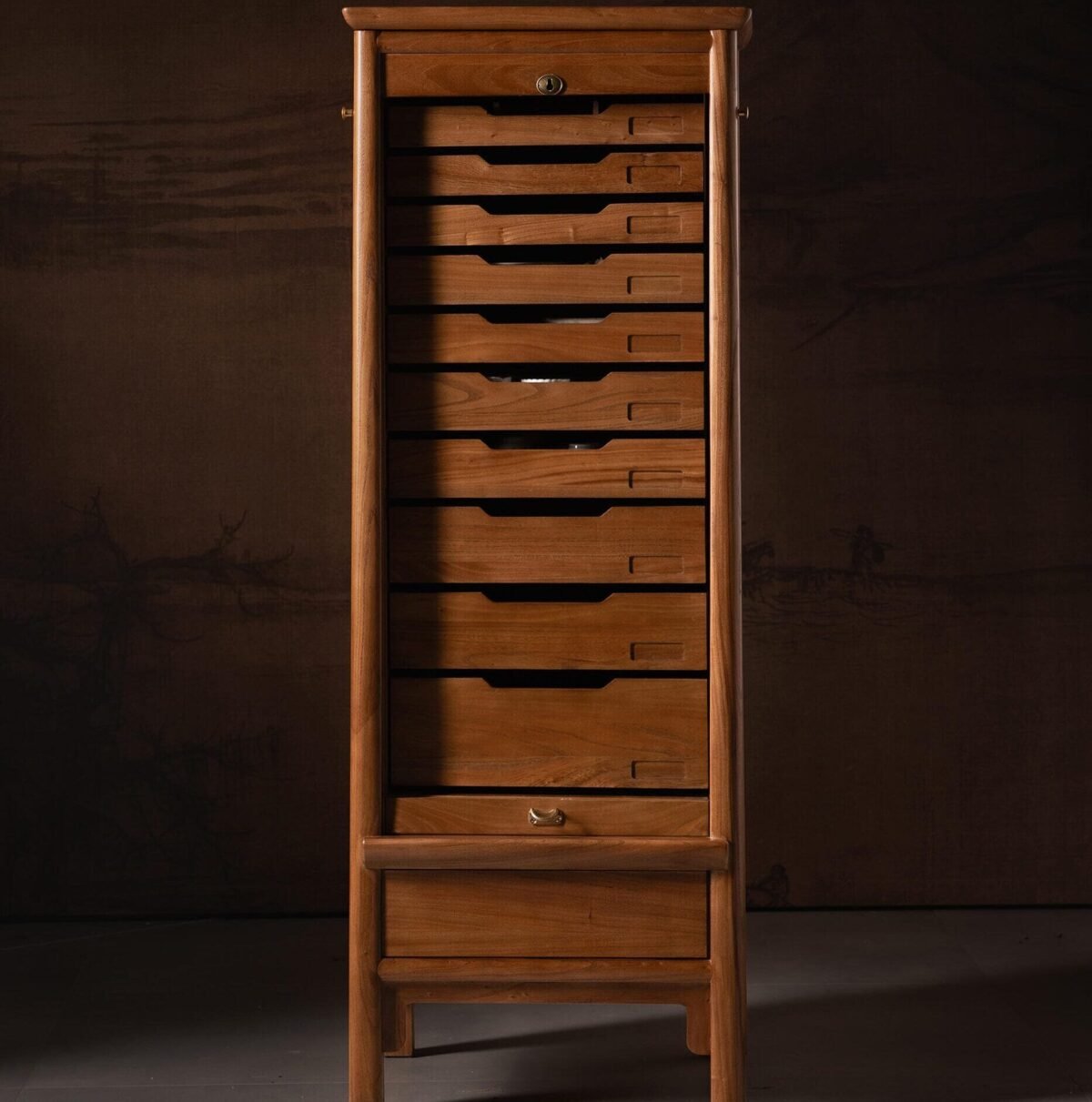
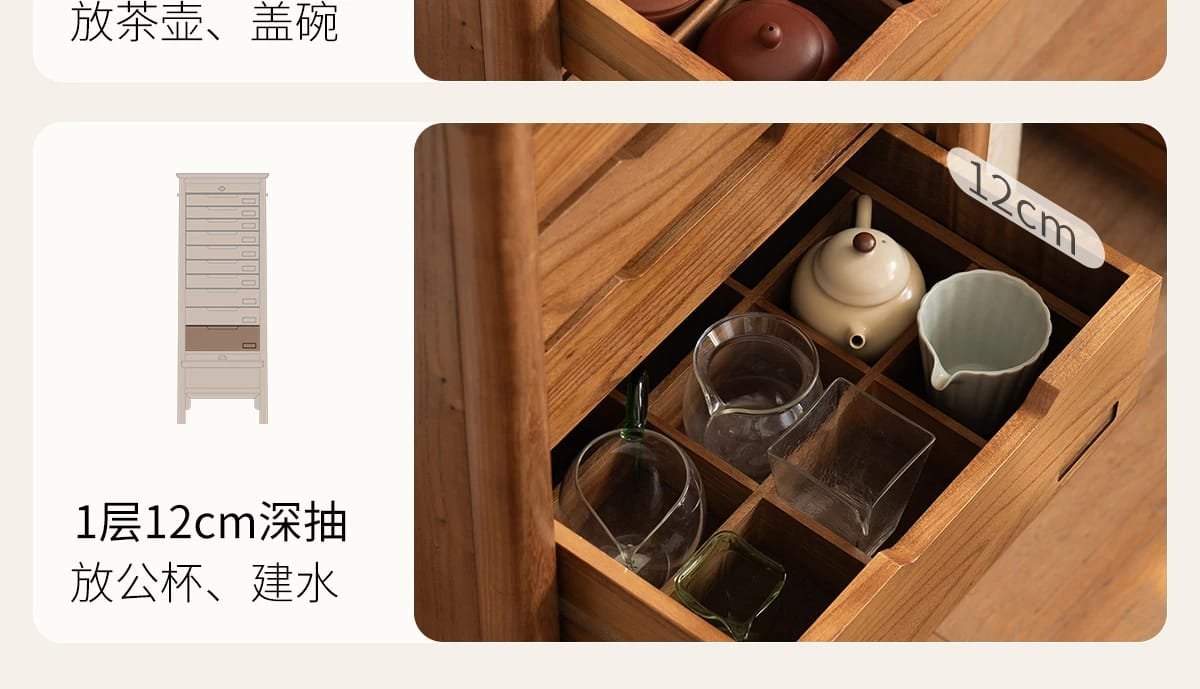
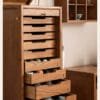
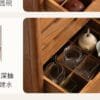
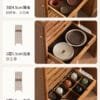
Unlike open display shelves that gather dust and scatter small items, this ten-drawer unit keeps everything separated by category. The upper section can store taller teapots and serving vessels; middle drawers hold cups and tasting sets; lower drawers keep spare gaskets, tea tools, and jewelry orderly. Because the body is solid elm, the cabinet feels stable on tile, wood, or carpet floors without any anchoring brackets.
This page covers the product story, the joinery, the rolling circular wooden shutter, the left-side latch lock, the two elm color options, and the realistic care expectations for natural wood. Our goal is simple: help EU and US buyers understand why a 10-drawer elm cabinet can replace plastic bins, metal carts, and mixed boxes with one calm, attractive piece of home organization furniture.
2. Elm Drawer Storage Cabinet: 45x40x122cm Footprint and 37kg Stable Build
2.1 A Compact Depth That Fits Narrow Corners
This elm cabinet occupies only 45cm in length and 40cm in depth, so it fits narrow spaces beside a tea table, in a hallway, or against a living-room wall. Despite the slim footprint, the internal layout uses full-extension thinking: each drawer runs nearly the entire depth of the body. That means a 122cm tall cabinet delivers far more usable storage than its floor space suggests.
Buyers in European apartments and American condos often struggle to find furniture that provides serious storage without dominating a room. The 45cm width solves that problem while still leaving room for a kettle or display objects on top. In smaller tea corners, this piece becomes a vertical storage tower rather than a bulky sideboard.
2.2 A Height That Works as a Side Table or Display Surface
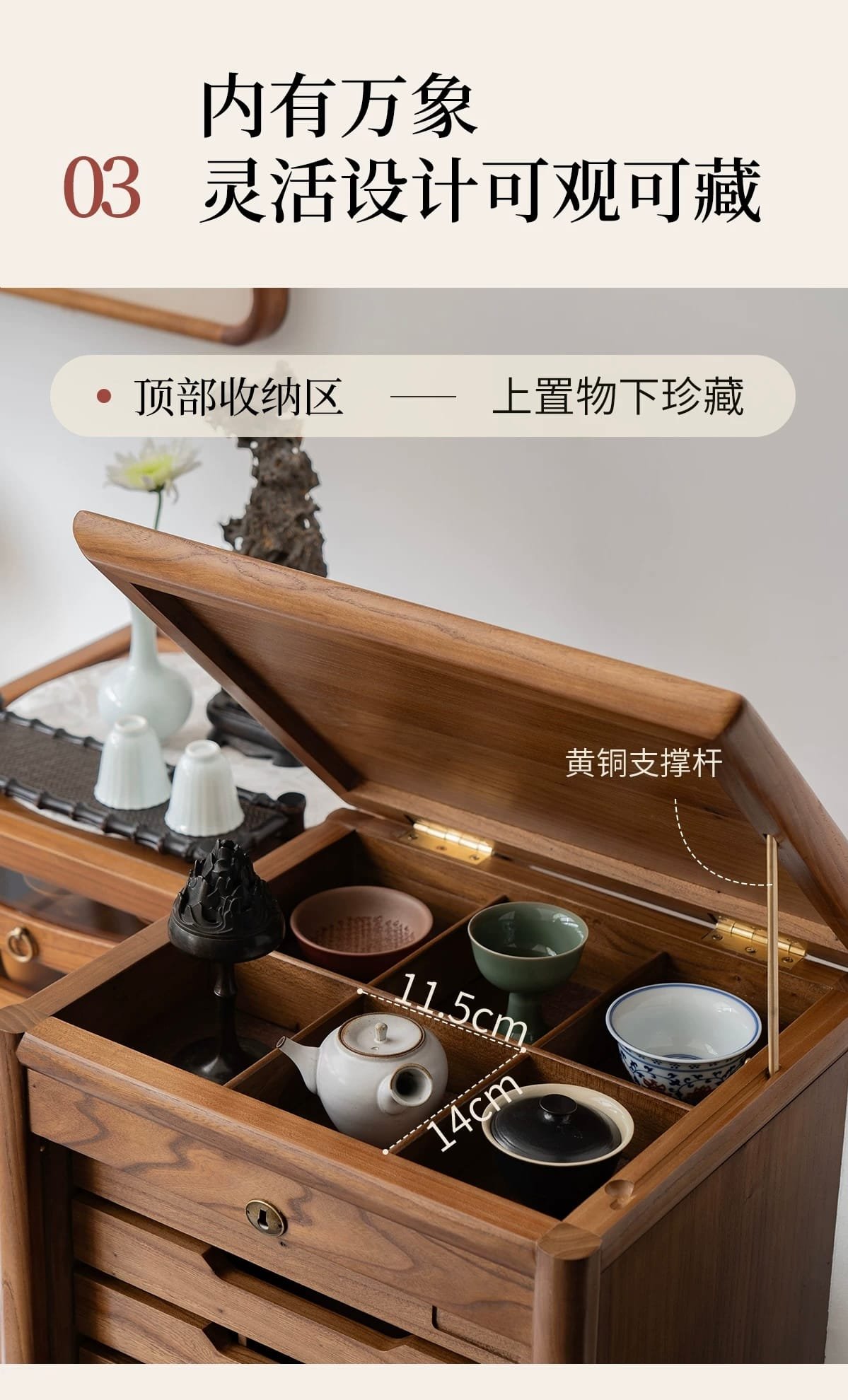
At 122cm, the cabinet reaches counter height, making the top surface practical for a small tray, a plant, or a stack of tasting bowls. The top open compartment adds a second tier for infrequently used tins, seasonal teaware, or decorative items. Western users often treat the top as a low display shelf; traditional tea practitioners use it for ritual objects and spare lids.
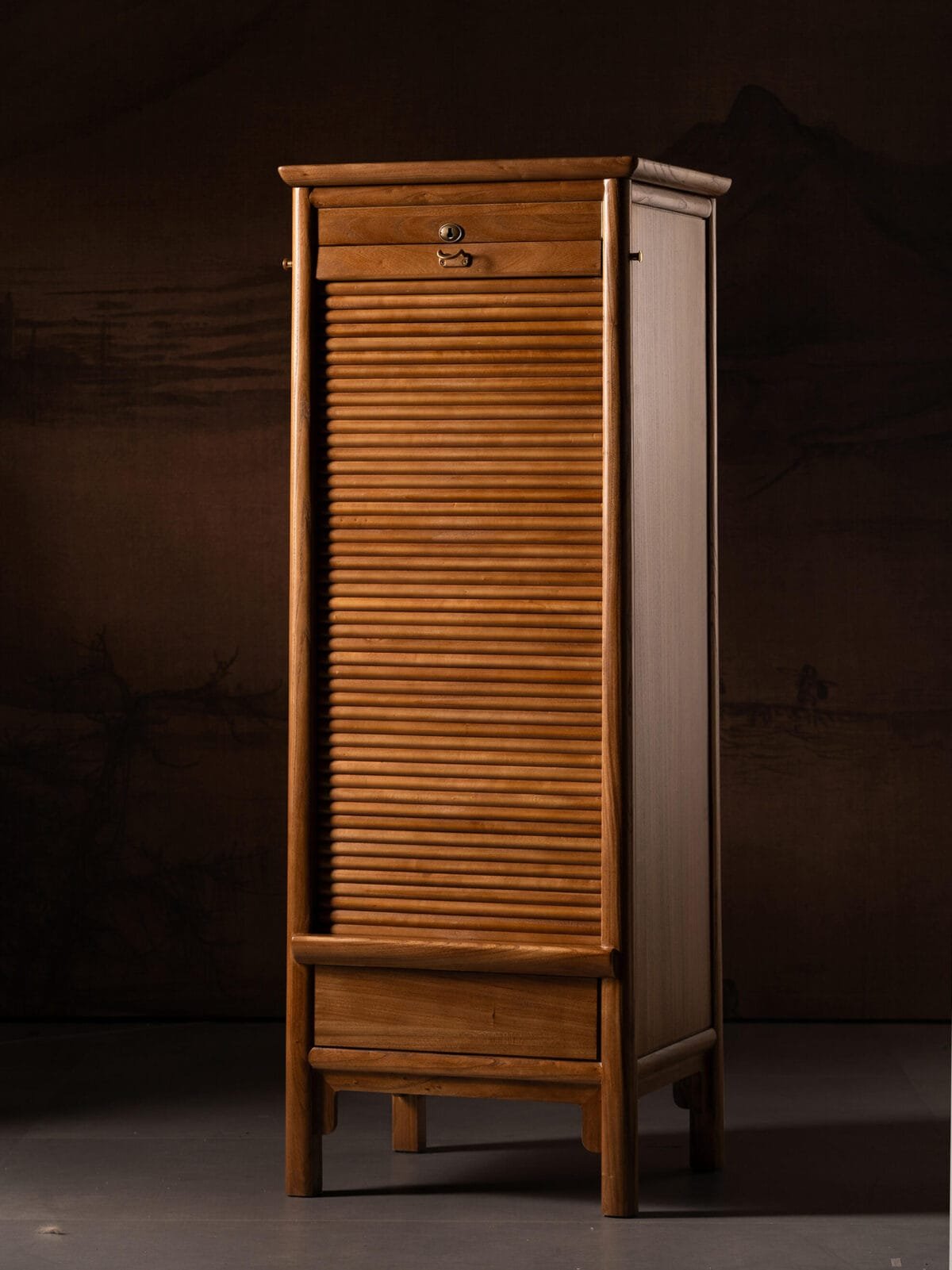
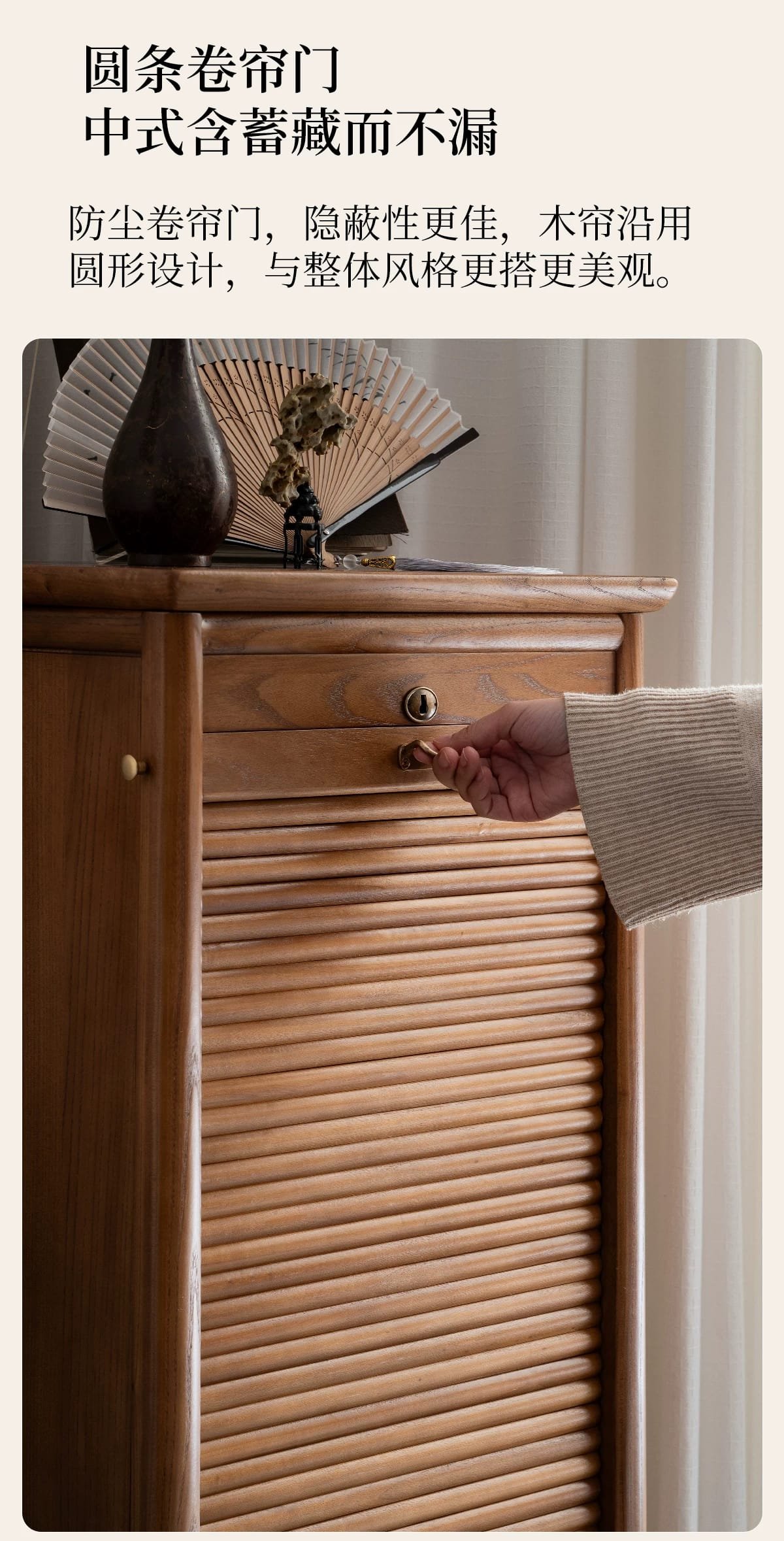
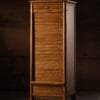
Because the top is open and the main body is enclosed by a rolling wooden shutter, the silhouette stays clean. When the shutter is closed, the entire front becomes one continuous wood face, hiding all drawer lines and creating a quiet, unified look that suits both modern and classic interiors.
2.3 A Solid 37kg Frame That Stays Put
Weighing about 37kg when empty, this cabinet feels substantial and reduces vibration when drawers open and close. Heavy elm also lowers resonance, so porcelain cups stored inside do not rattle during daily use. The wide base and centered mass make the cabinet stable even when only the bottom drawers are loaded.
For homes with children or pets, the included key lock prevents unsupervised full extension. The solid weight also means the cabinet will not tip forward when two top drawers are opened together, as long as the lower drawers carry some load. This stability is one of the main reasons customers prefer it over lightweight bamboo or MDF alternatives.
3. Elm Drawer Storage Cabinet: 10-Layer Classification for Tea and Jewelry
3.1 Six Tea Categories, One Drawer Each
This 10-drawer cabinet supports Junxistea’s six major tea families—black, oolong, green, white, scented, and dark—by assigning each category its own layer. One drawer can hold sample pouches, another can store full-size bags, another can separaete fragile young pu-erh cakes, and another can keep scented teas away from strongly aromatic oolongs. This classification reduces flavor cross-contact and helps beginners remember which drawer holds which profile.
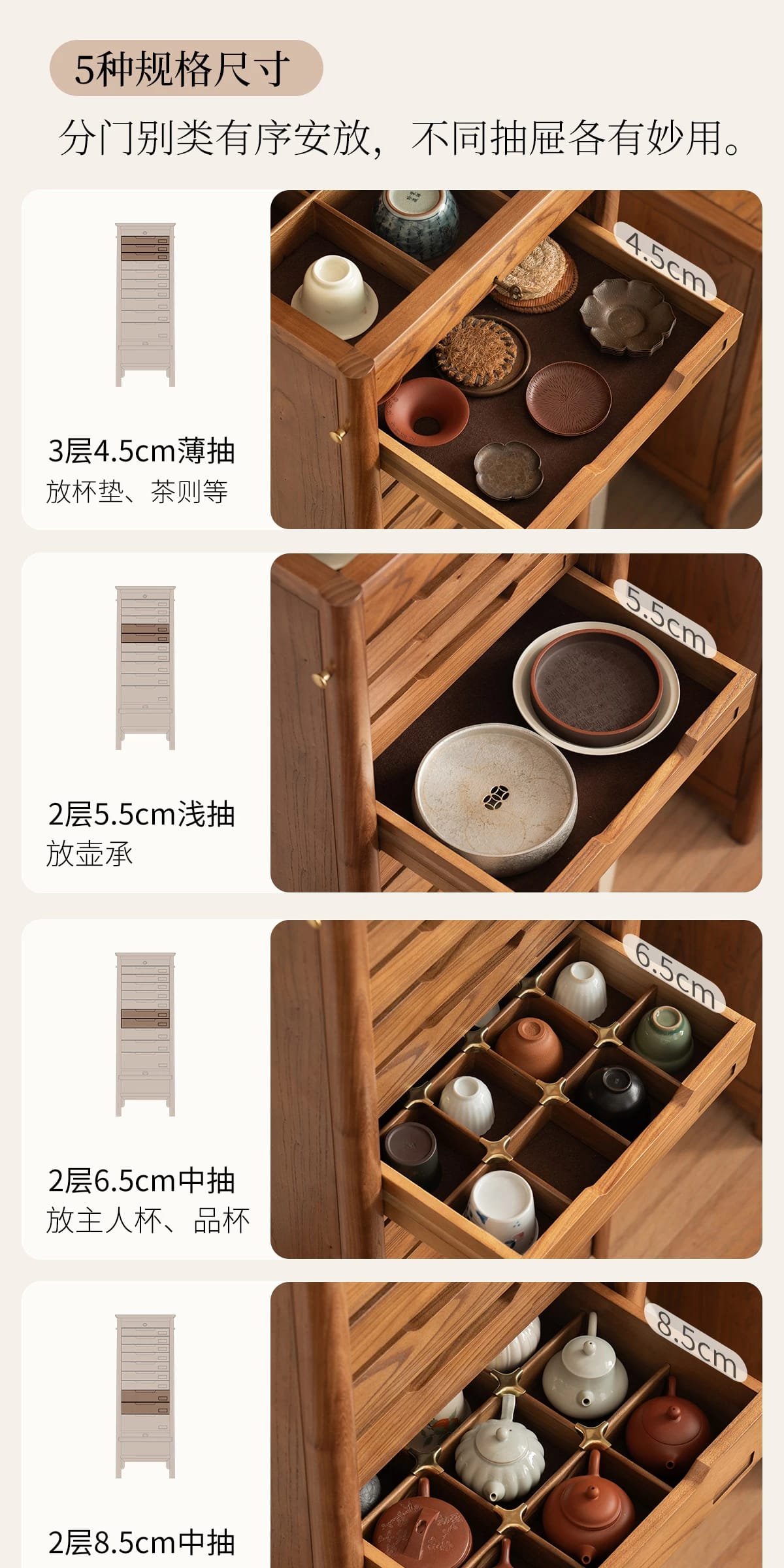
For advanced collectors, the extra drawers can be used for gaiwans by volume, cups by size, or seasonal limited editions. The labeling system is flexible: you can write on removable cards or use small wooden tags. Because each drawer is fully pull-out, you see everything inside at a glance without digging to the back.
3.2 A Jewelry Drawer Organizer That Doubles as Tea Storage
Beyond tea, the same cabinet works as a jewelry drawer organizer. Small trays inside each layer separate rings, earrings, bracelet beads, watch straps, and enamel pins. Tea collectors who also store teapot charms, silver tea pets, or gift packaging find the same 10-layer logic useful. Because elm has a neutral odor and breathable finish, it is safer for long-term accessory storage than plastic cases.
Many customers use one row for tea tools and the other row for jewelry, so a single piece of furniture serves two purposes. This dual function makes the cabinet an ideal companion for a bedroom dresser, a studio shelf, or a boutique display table.
3.3 Home Organization Furniture With a Clear Place for Everything
As a home organization furniture piece, this storage cabinet ships with a labeling concept rather than permanent stickers. You can mark layers by tea type, by cup size, by guest count, or by season. Many customers label one drawer “daily gongfu,” one “guest cups,” one “spare lids,” one “tools,” and one “jewelry.” The system is flexible, so the same cabinet serves a solo drinker and a weekend hosting family.
This drawer-based workflow encourages a tidy routine: when every item has a designated layer, cleaning up after a tea session takes less than two minutes. The visual result is also more serene than a shelf full of mismatched tins and bags.
4. Elm Drawer Storage Cabinet: 10-Drawer Story From Vintage Dental Cart to Tea Treasure
4.1 The Heritage Design That Inspired the “Treasure Cabinet” Silhouette
The design takes its silhouette from old apothecary and dental specimen carts—many small equal drawers, a roll-down cover, and a calm wooden face. In traditional workshops, that form kept tiny items visible, sorted, and dust-free. Junxistea adapted it for tea: instead of clinical steel, we use warm elm; instead of medical labels, we use tea and jewelry categories. The result is a “treasure cabinet” look that feels collectible rather than institutional.
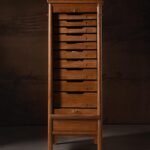
This heritage also explains why the drawers are all the same height. Uniform layers create a strong grid pattern that looks orderly when the shutter is open, and the repeating rhythm is visually soothing. The circular rolling shutter, made from rounded wooden slats, adds a softer hand-feel than a flat roller door and matches the vintage curve language of old furniture.
4.2 Ten Layers for Beginners and Collectors Alike
First-time buyers use this cabinet to replace random boxes under the sink. Intermediate brewers use it to separate gaiwans by volume—90ml, 110ml, 130ml—and by clay type. Collectors use it for limited editions, sample libraries, and fragile exhibition cups. Jewelry makers use the shallow trays for findings. The story behind the product is not one use case but ten small rituals, each in its own drawer.
For customers new to Chinese tea, the cabinet becomes a physical map of tasting categories. For seasoned connoisseurs, it is a way to keep rare pieces protected and visible at the same time. That combination of beginner friendliness and collector utility is what makes this piece stand apart.
4.3 One Brand Promise: Natural Imperfection Is Part of Elm’s Character
Junxistea promises that this elm cabinet uses graded raw material, strict selection, and final inspection to avoid obvious color patches and defects. However, elm is a natural product. Slight grain variation, minor tone differences, small knots, and unique tactile texture are not quality faults; they are part of wood character. We ask buyers to accept these natural traits with a relaxed, organic mindset.
This honesty matters in the EU and US market, where customers appreciate knowing exactly what to expect. We do not hide the fact that wood is alive. Instead, we celebrate the subtle differences that make each cabinet one of a kind.
5. Elm Drawer Storage Cabinet: 3 Material Grades and 10-Step Craft
5.1 Two Color Options: Elm Walnut and Elm Rosewood
This drawer cabinet offers two color directions—elm walnut and elm rosewood. Both use the same kiln-dried elm boards, but stains, surface oils, and topcoats differ. Walnut color gives a deeper, warmer study-room feeling; rosewood color gives a brighter, traditional Chinese cabinet feel. Before cutting, boards are sorted into grade A for face panels, grade B for inner sides, and grade C for hidden structural parts. This grading reduces visible mismatch while controlling cost.
Color coordination extends to the shutter slats, drawer fronts, carcass, and top rim, so the whole piece reads as one designed object rather than assembled parts. Whether your interior is Scandinavian or classical, one of the two finishes will blend naturally with your space.
5.2 Ten Joinery Steps for Durable Drawers
Production follows ten core steps: board inspection, moisture testing, dimension cutting, dovetail or finger-joint drafting, side gluing, bottom panel floating groove, drawer front fitting, carcass assembly, shutter-frame building, and final sanding. Drawers use engineered wood bottoms where appropriate to prevent warping, while elm fronts provide the natural grain appearance. Each runner is adjusted for equal gap, so all ten drawers slide without tilt.
This level of attention is why the cabinet can support daily use without sticking or sagging. The drawer runners are tested multiple times before packing, and the hardware is selected to match the wooden aesthetic rather than detract from it.
5.3 One Rolling Circular Shutter With a Smooth Cord System
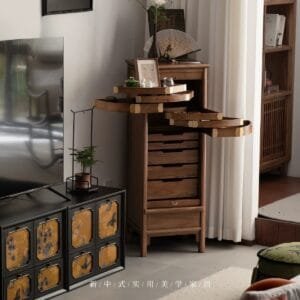
The signature feature is a rolling wooden shutter made from rounded slats. Unlike flat roller doors, the circular-profile slats feel softer and match the cabinet’s vintage curve language. Each slat is sanded, edge-rounded, stained to match the body, and strung on a concealed cord system inside a top track. The shutter rolls down to hide all drawer fronts, creating one continuous wooden face that doubles as dust protection and visual privacy.
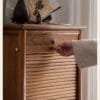
Operating the shutter is simple: pull it down gently to close, roll it up to expose all drawers, and use the left-side single-pull unlock when needed. The cord system is designed for long-term durability, but it also remains user-serviceable if the household ever needs to adjust tension.
5.4 One Left-Side Latch and Key Lock for Security
Security uses a left-side single-pull unlock plus a key switch. The left panel houses the pull mechanism; turning the key engages the lock and secures the shutter. This keeps the front clean—no central handle hardware interrupting the dental-cabinet look—while still allowing households, studios, and shops to restrict access. Two keys are supplied; spare keys should be stored separately from the cabinet.
6. Elm Drawer Storage Cabinet: 1 Top Open Compartment and 10 Storage Ideas
6.1 A Convenient Open Zone for Daily Items
Above the shutter, the cabinet includes a top open compartment. This zone is ideal for tall tins, seasonal teaware, incense burners, gift boxes, or jewelry gift wrapping. Because it is open, it suits items you want within one second; the locked shutter below suits items you want protected. The combination of open top plus ten closed drawers gives both convenience and security.
6.2 Ten Layout Examples for Different Homes
A practical layout for this cabinet might be: drawer 1 samples, 2 scented teas, 3 green/white, 4 oolong, 5 black/dark, 6 gaiwans under 110ml, 7 cups 110–150ml, 8 teapots and lids, 9 tools and strainers, 10 jewelry and spare hardware. The order can be reversed for jewelers or changed for family use. Because every drawer is independent, reclassification takes only a few minutes.
For a boutique owner, the drawers can display loose-leaf tea pouches in one row and handmade jewelry in another. For a home user, the top compartment can hold the kettle, while the drawers store cups and leaves. The beauty of this system is that no two owners arrange it the same way.
7. Elm Drawer Storage Cabinet: 10 Care Tips to Preserve Natural Elm
7.1 Daily Cleaning Without Harsh Chemicals
Care for this elm cabinet with a dry microfiber cloth for daily dust, a slightly damp cloth for stains, and periodic furniture wax for wood vitality. Avoid bleach, ammonia, abrasive powder, and steam cleaning. Shutter slats should be dusted with a soft brush so circular grooves stay clean. Hardware tracks need only light dry lubrication; wet oils can attract dust and slow the roll.
7.2 Two Climate Rules for EU and US Homes
Elm performs best between 40% and 60% relative humidity. The cabinet should not sit beside radiators, under direct HVAC vents, or in damp basements without dehumidification. In dry winters, use a room humidifier; in rainy seasons, ensure airflow behind the cabinet. Proper climate control minimizes wood movement and long-term surface stress.
7.3 Ten Quality Checks Before Shipping
Each cabinet passes ten inspections: dimension tolerance, diagonal squareness, drawer alignment, shutter roll smoothness, latch return, key lock engagement, color consistency on visible faces, interior sanding, hardware tightness, and packaging shock test. These checks reduce common furniture complaints such as misaligned drawers and difficult assembly because the cabinet is delivered largely pre-assembled.
8. Elm Drawer Storage Cabinet: 10 Styling and Placement Ideas
8.1 Seven Placements for Apartments and Houses
Use this cabinet beside a gongfu table for authentic sessions, in a kitchen corner for tea bags and accessories, in a boutique for jewelry display, or in a hallway as a curio cabinet display. Its 45cm width suits apartments in London, Berlin, Paris, and New York, while the 122cm height keeps everything at arm level. In larger rooms, two cabinets can stand symmetrically on each side of a sideboard.
8.2 Three Decor Pairings With Junxistea Teaware
Pair this cabinet with Jingdezhen gaiwans, Dehua travel sets, Yixing teapots, titanium kettles, and wooden tea trays. Walnut color complements matte ceramic and dark clay; rosewood color complements painted teaware and gold-rim cups. Because the cabinet stores both teaware and jewelry, it can also support a gift studio that bundles tea samples with handmade accessories.
9. Elm Drawer Storage Cabinet: 10 Common Questions Before Purchase
9.1 Does This Cabinet Arrive Fully Assembled?
The cabinet ships mostly assembled; only the shutter track, feet, and internal trays may need simple installation. Weight is about 37kg, so two-person delivery is recommended. Lead time depends on color and destination; walnut and rosewood are both stocked periodically. Tracking is provided for EU and US orders.
9.2 How Much Weight Can Each Drawer Hold?
Each drawer is rated for everyday tea accessories, not heavy books or power tools. Porcelain cups, small tins, samples, tools, and jewelry are ideal. If storing dense items, distribute weight evenly from bottom to top so the 37kg body remains balanced. Overloading a single shallow drawer can accelerate runner wear and affect shutter alignment.
9.3 What Does “Natural Imperfection” Mean?
This cabinet uses real elm, so slight grain variance, minor shade difference between panels, small mineral marks, and unique texture are normal. Our grading controls obvious defects, yet cannot eliminate every natural sign. These characteristics are not returns reasons unless structural function is impaired. We encourage buyers who want synthetic uniformity to choose metal or laminate furniture instead.
10. Elm Drawer Storage Cabinet: How to Order Your 10-Drawer Treasure
Order this storage cabinet by selecting elm walnut or elm rosewood, confirming the 45x40x122cm size, and noting custom tray requirements if needed. Our team verifies stock, prepares export packaging, and arranges freight suited to a 37kg wooden product. After delivery, label the ten drawers according to your tea categories or jewelry collections, roll the circular shutter closed, and lock the left-side latch for a tidy, secure tea corner.
This cabinet is more than storage. It is a quiet daily system that respects elm grain, traditional joinery, and the collector’s need for order. From vintage dental-cart inspiration to modern tea-room organization, ten drawers, one top zone, and one rolling shutter turn scattered accessories into a calm, beautiful ritual.
Color
Elm Walnut, Elm Rosewood
Reviews
There are no reviews yet.
Be the first to review “Elm Drawer Storage Cabinet: 10 Drawers Tea Ware Storage, Pure Joy Treasure Dental”Cancel Reply



Reviews
There are no reviews yet.