Wuyi Rou Gui Oolong: 7 Practical Tips to Taste Real Cinnamon Aroma and Rock Bone

Wuyi Rou Gui Oolong is a Fujian rock oolong made from the Rou Gui cultivar, famous for a natural cassia-cinnamon aroma that comes from the leaf itself, not from added spice. It sits in the Wuyi yancha family with Shui Xian and Da Hong Pao, but its personality is sharper, warmer, and more obvious to new drinkers. This guide explains terroir, roasting, gongfu brewing, and how to buy authentic Wuyi cinnamon oolong without overpaying.
1. What Is Wuyi Rou Gui Oolong in the Rock Tea Family
Rou Gui means “cinnamon” in Chinese, but plain Wuyi Rou Gui Oolong contains only tea leaves. The spicy bark note comes from the cultivar and is shaped further by withering, tossing, fixation, rolling, and charcoal roasting. Think of it as a medium-oxidation oolong with a high, penetrating spice top and a mineral base.
Good Wuyi Rou Gui Oolong shows more than cinnamon. You may find orchid, peach, cream, roasted grain, cocoa, or dark cherry depending on plot and roast. The mineral aftertlow in the throat is what Chinese buyers call yan yun, or “rock rhyme.”
1.1 Why Wuyi Rou Gui Oolong Is Not a Flavored Tea
Some Western shoppers see “cinnamon oolong” and expect added bark or oil. Real Wuyi Rou Gui Oolong has no cinnamon additive; the scent comes from natural aroma compounds in the leaf and from roast development. If a dry leaf smells like candy cinnamon or perfume, treat it as a warning sign.
For honest tasting, brew it plain. Milk, sugar, and syrup hide the very things that make Wuyi Rou Gui Oolong worth buying: changing aroma, rock minerality, and returning sweetness.
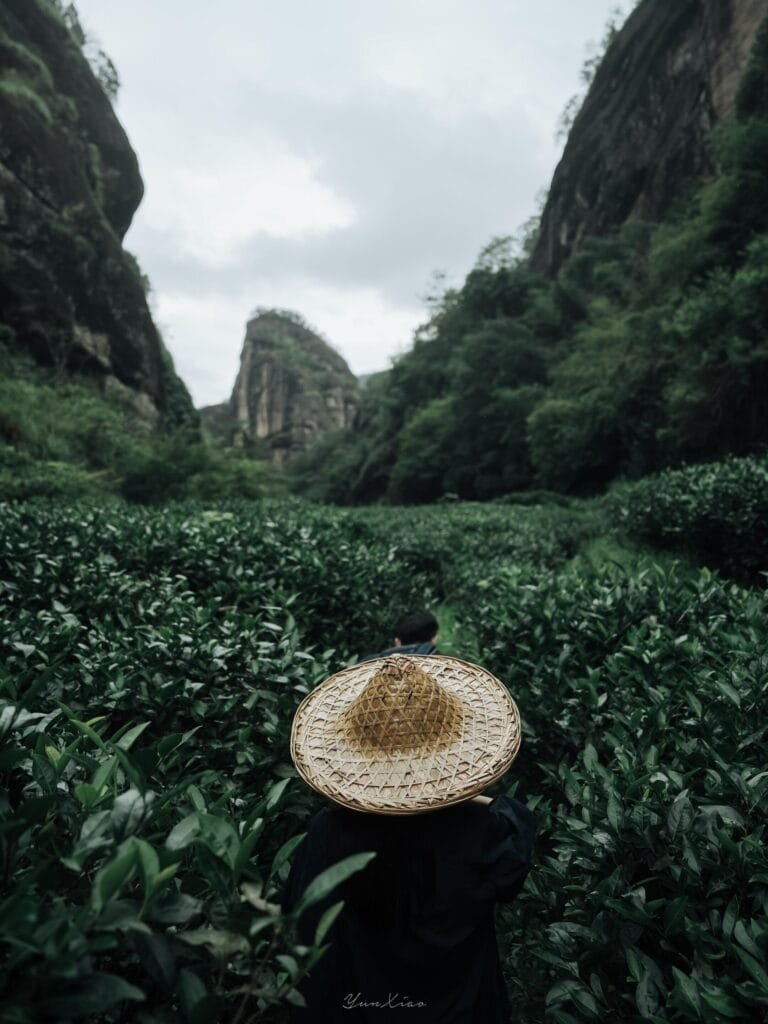
2. Wuyi Rock Tea Terroir: Zhengyan, Banyan, Zhoucha and Microclimate
Wuyi rock tea terroir is graded by distance from the core scenic cliffs. Zhengyan, or “true rock,” gives the strongest yan yun and highest price; Banyan is marginal rock-hill country with softer minerality; Zhoucha grows near rivers and is often used in blends. Within Zhengyan, a pit, a ridge, and a peak can taste completely different from the same cultivar.
Sanyang Peak, Niulankeng, Matouyan, Huiyuan, and Yanzi Ke are common Rou Gui place names. High peaks add clarity and mist; narrow pits add softness and humidity; sunny ridges add bigger upfront spice but sometimes sharper tannin. Ask for the exact plot instead of only “Wuyi.”
Danxia sandstone weathers into gritty, draining soil rich in minerals. That drainage plus mist and diffused light slows leaf growth, so Wuyi Rou Gui Oolong accumulates aroma precursors and keeps a thick body instead of turning thin.
2.1 Why Zhengyan Terroir Matters When You Buy Authentic Wuyi Cinnamon Oolong
Zhengyan Wuyi Rou Gui Oolong usually costs more because output is small and handwork is heavy. The payoff is cleaner rock finish, longer sweet return, and better stamina across infusions. Banyan can be enjoyable for daily drinking; just do not pay Zhengyan prices for it.
When a seller lists “Wuyi Rou Gui Oolong” with no plot, roast date, or harvest season, request samples. Traceable origin is the first filter for anyone learning to buy authentic Wuyi cinnamon oolong.
3. Rou Gui Cultivar and Roasting: Cinnamon, Cream, and Fruit Development
Wuyi Rou Gui Oolong starts with partial oxidation. Withering softens the leaf, tossing bruises edges and builds aroma, fixation stops enzymes, and rolling forms the twist. Doing-green control decides whether the spice stays sharp or turns floral.
Charcoal roasting then sets the final voice. Light roast keeps orchid and fresh cassia; medium roast adds caramel and peach; full roast adds cocoa, wood, and long warm return. Resting after roast matters as much as firing, because fresh fire can smell sharp and hide the tea.
A rested Wuyi Rou Gui Oolong should smell like spice supported by roast, not smoke covering weak leaf. If all you get is burnt sugar, the lot may be over-fired or hiding ordinary material.
3.1 Light, Medium, Full Roast: Who Should Buy Which Wuyi Rou Gui Oolong
Light roast suits people moving from green or Tieguanyin tea. It shows clear flower and bright cassia, pale-to-medium orange liquor, and a cool mineral aftertaste rather than heavy roast.
Medium roast is the safest daily choice. Wuyi Rou Gui Oolong at medium fire gives spice plus caramel, silky body, and 7–9 good infusions with gongfu parameters. Most beginners should start here.
Full roast suits cold weather, cheese, chocolate, and drinkers who like old-school yancha. The aroma is deeper, but caffeine is not higher just because the tea tastes stronger.
4 . 7 Gongfu Tea Brewing Method Tips for Wuyi Rou Gui Oolong
Use a 100–120 ml white porcelain gaiwan for Wuyi Rou Gui Oolong. Porcelain does not absorb aroma, so cassia, roast, flower, and rock mineral all read honestly. Avoid paper filters and huge mugs if you want layered infusions.
Tip 1: dose 5–8 g per 100–120 ml. Tighter, heavier-roast leaf can take 8 g; lighter leaf and gentle drinkers can use 5 g. This ratio gives concentration without bitter overload.
Tip 2: boil fully, 95–100°C. Wuyi Rou Gui Oolong needs high heat to open baked leaf; cool water makes it hollow and dusty. Preheat gaiwan and cups first.
Tip 3: flash rinse 3–5 seconds, discard. This wakes the leaf, removes fine dust, and improves even extraction. Do not count the rinse as a drinking infusion.
Tip 4: first drinking infusion 8–15 seconds for 100–120 ml. Light roast uses the shorter end; medium-full roast can start around 10–15 seconds. Quick pour protects silkiness.
Tip 5: add 5–10 seconds per later infusion. By steep 3–5 you should taste “falling aroma,” where cassia is not only on the lid but returns from the throat in the liquor.
Tip 6: good Zhengyan Wuyi Rou Gui Oolong can give 7–10+ infusions; some lots reach 10–12 with proper rest and roast. If it dies at 3–4 with bitter astringency, check leaf quality before blaming the method.
Tip 7: smell the cooled lid and empty cup. Real spice plus mineral after the liquor is gone is the simplest home test for authentic Wuyi cinnamon oolong.
5. Choosing Roast Level for Wuyi Rou Gui Oolong: Light, Medium, Full
Light Wuyi Rou Gui Oolong looks sandy dark-green to brown, with pale orange liquor and fresh cassia-orchid. It is best within a few months of roast rest, sealed and kept cool if the vendor recommends refrigeration.
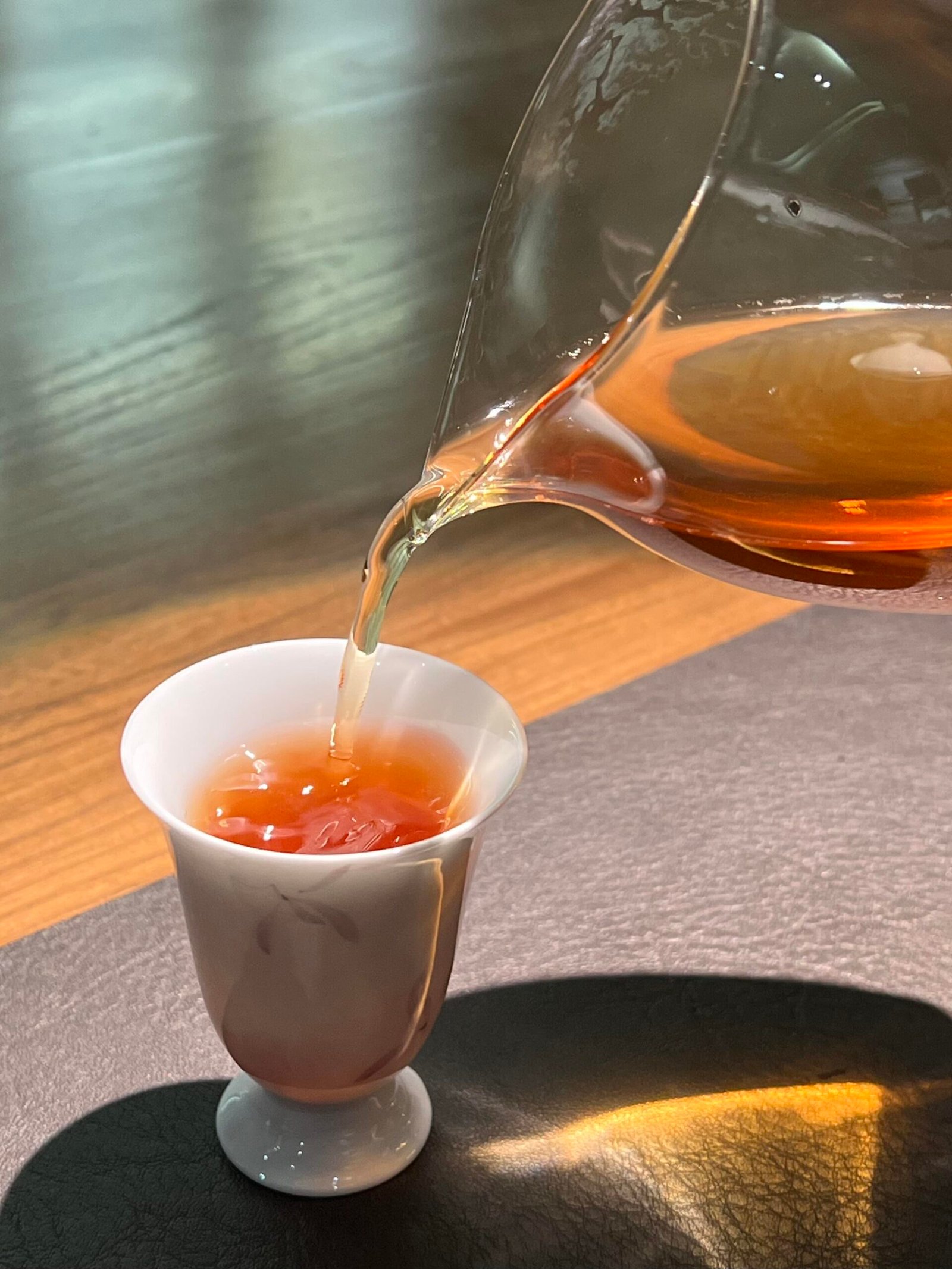
Medium Wuyi Rou Gui Oolong looks brown-black, gives golden-orange liquor, caramel and peach, and the most balanced rock body. It is the default recommendation for first-time buyers and gift sets.
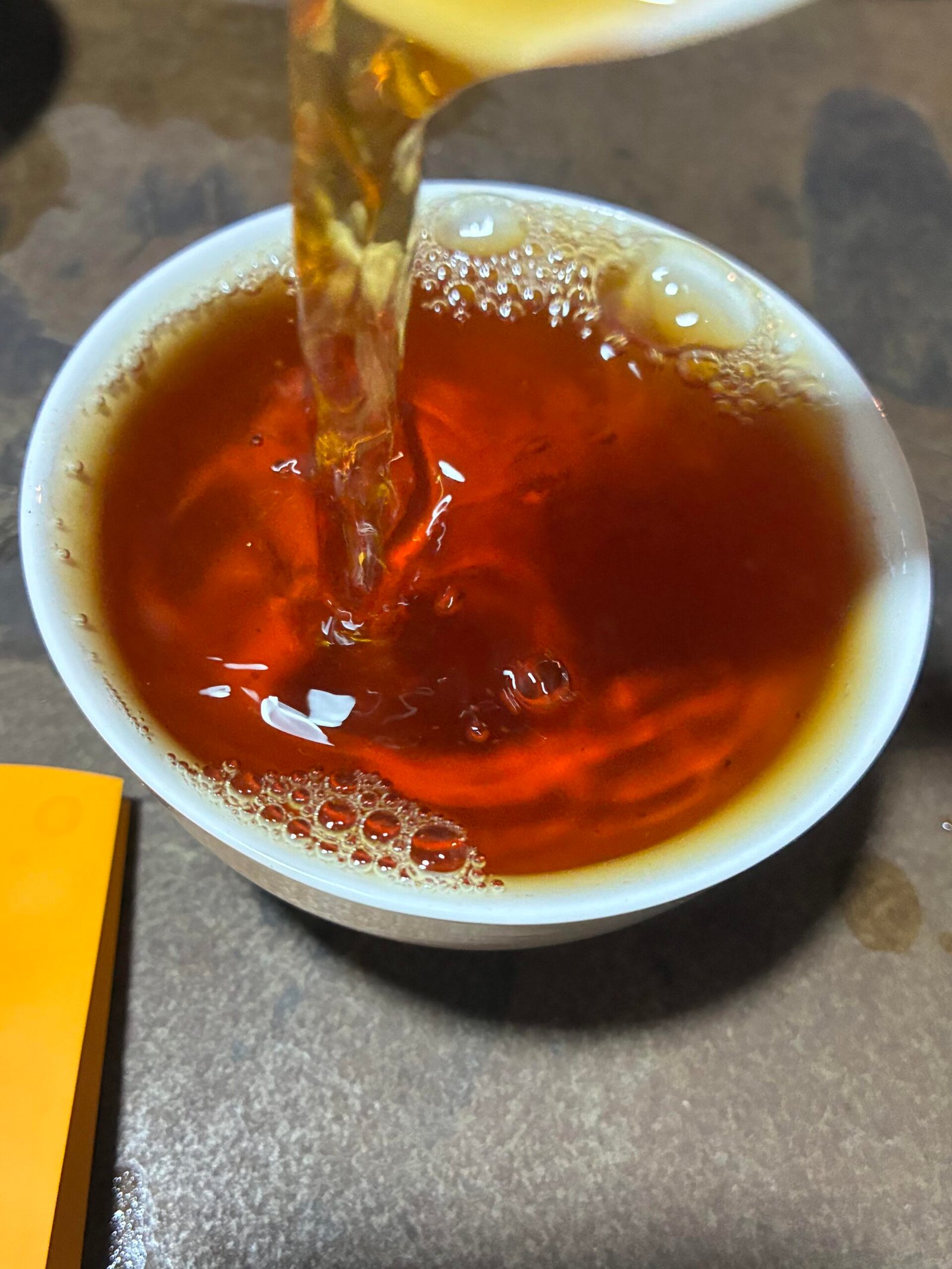
Full Wuyi Rou Gui Oolong looks near-black with oil sheen, deep orange-amber liquor, cocoa-wood finish, and long hui gan. Buy it if you already like roasted oolong or pair it with rich food.
6. How to Buy Authentic Wuyi Cinnamon Oolong Without Common Traps
Check dry leaf first. Quality Wuyi Rou Gui Oolong has tight twists, even color for its roast, and an oily sheen rather than grey dust. Loose, light, broken strips often suggest outer-mountain or poor sorting.
Smell naturally. Cinnamon, flower, roast, and ripe fruit are good; pure perfume, burnt smoke, or sour mold are bad. A sample brew is better than trust based on package words.
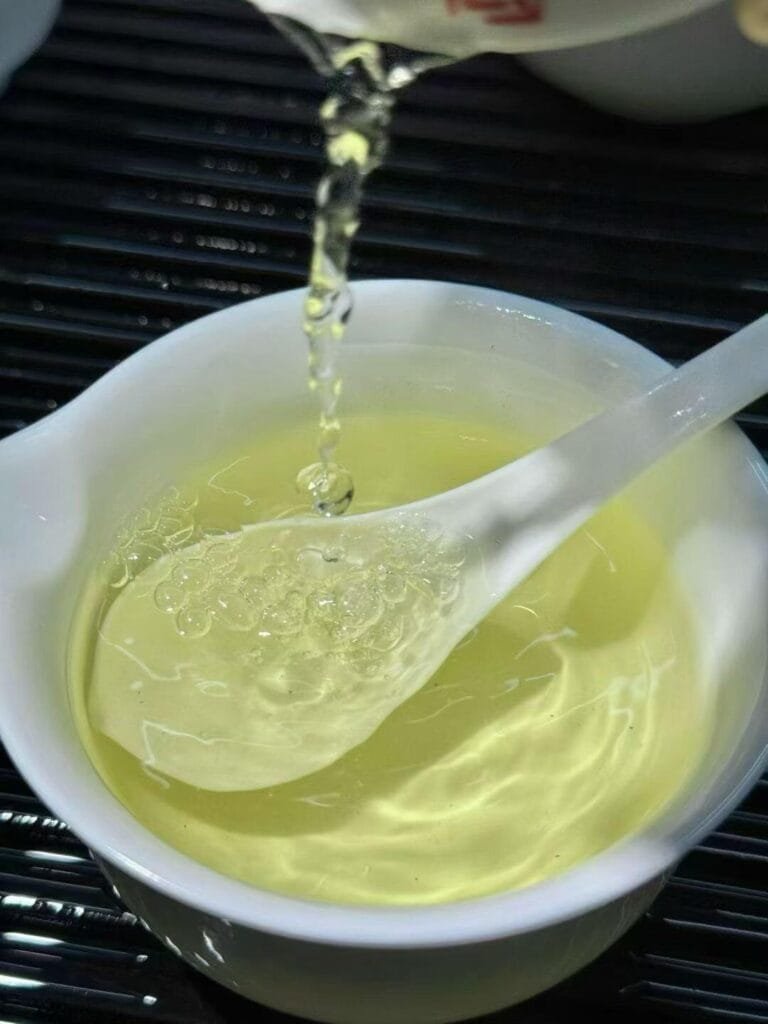
Brew and judge liquor. Real Wuyi Rou Gui Oul should be clear, not cloudy; aroma should sink into the soup; astringency should soften into sweetness. Spent leaves should be soft with some red edges, not stiff black or rotten.
Ask price by tier. Zhengyan small-plot Rou Gui costs more; Banyan is cheaper; unknown “Wuyi cinnamon” in huge bags at bargain price usually means blend or mislabel. JunxiTea lists plot, roast date, harvest season, and dry-leaf photo so you buy traced leaf, not marketing.
7. Best Chinese Oolong Tea Sets and JunxiTea Sourcing for Wuyi Rou Gui Oolong
A basic gongfu set for Wuyi Rou Gui Oolong needs a 110–130 ml gaiwan, fairness pitcher, two to four tasting cups, and a tray. Glass pitcher shows orange liquor; porcelain keeps aroma true; no flavored clay for first comparisons.
For new buyers, JunxiTea offers light sample packs, medium tins, and small full-roast lots by plot. Start with one medium Sanyang or general Zhengyan Rou Gui, one gaiwan set, and later add Niulankeng or Matouyan lots only if you enjoy the style.
If you drink Western style, use 3 g per 250 ml at 95–100°C for 2–3 minutes. It is easier but flatter; gongfu still shows more of why Wuyi Rou Gui Oolong is worth the price.
8. Cold Brew, Storage, Re-Roast and FAQs for Wuyi Rou Gui Oolong
Cold brew light-to-medium Wuyi Rou Gui Oolong with 5 g per 500 ml filtered water, refrigerate 6–8 hours. Cold lowers spice and shows sweet orchid-mineral, but it hides roast complexity, so full roast is less ideal cold.
Store sealed, opaque, dry, odor-free. Light and medium roast rest 1–2 weeks after arrival; very fresh high-fire tea may need 2–4 weeks to open. If it smells green after months, suspect under-firing; if sour or flat, storage failed.
Home re-roast only if you understand the curve. Low oven 70–80°C can refresh stale medium roast briefly; do not burn light tea. For proper restoration, buy freshly fired stock or ask a Wuyi roaster.
8.1 FAQs: Bitterness, Caffeine, Infusion Count for Wuyi Rou Gui Oolong
Bitterness usually means too much leaf, too long steep, or low temperature followed by over-extraction. Use boiling water, correct grams, and quick pours in early infusions.
Caffeine is moderate, less than many black teas per small gongfu cup because servings are tiny. Sensitive drinkers should avoid late-night full-roast infusions.
Proper Wuyi Rou Gui Oolong can reach 7–10 infusions, with top Zhengyan lots at 10–12 under good brew parameters. Outer-mountain blends often fade earlier.
Closing: Serve One Medium-Roast Wuyi Rou Gui Oolong and Let the Cup Prove Its Value
The easiest way to enjoy rock tea is not chasing the most famous name, but tasting the cup. Wuyi Rou Gui Oolong proves itself with boiling water and quick pours: cassia first, fruit and cream next, mineral return last. Start with a medium sample, a white gaiwan, and the seven gongfu tips above; move to light if you want flower, full if you want depth.
At JunxiTea we list Wuyi Rou Gui Oolong by plot, roast, and brew card rather than by hype. You do not need full terroir vocabulary to buy well: medium roast builds your baseline, light roast shows flower, full roast shows rock bone. That path saves money and makes the cup feel like a genuinely good thing.