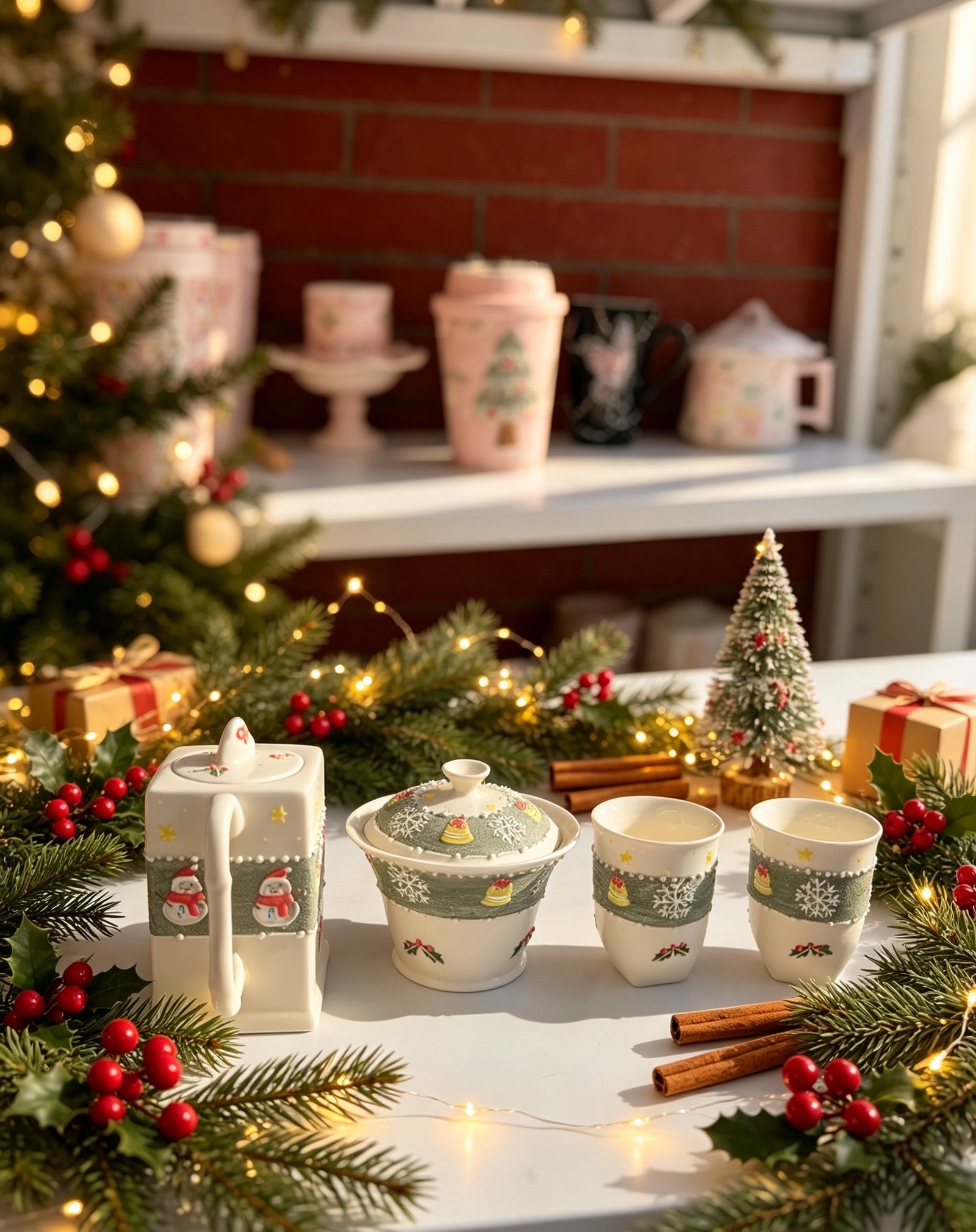
Jingdezhen Jade Clay Teaware: 7 Practical Reasons to Redefine Your Gongfu Tea Experience

Most people buy teaware by looking at patterns, price, or “does it look antique.” But anyone who brews daily knows: a good gaiwan isn’t about the painting. It’s about whether the pour is smooth, whether the lid aroma stays honest, and whether the cooled cup still holds the breath of the tea.
Jingdezhen Jade Clay Teaware is not a new gimmick. It uses the finer, more supple layer of Jingdezhen kaolin clay, fired into a dense yet warm body—like jade, not glass; like porcelain that breathes. No mysticism here. We’re talking about one practical thing: why the right jade-clay gaiwan suddenly makes teas you “couldn’t get” finally make sense.
1. What Is Jingdezhen Jade Clay? The “Warm” Side of Kaolin
Kaolin itself is named after Gaoling Village in Jingdezhen. Jade clay isn’t a separate mineral; it’s the finer fraction of premium kaolin, aged, de-ironed, and kneaded, then fired so the body comes out white but luminous, thin yet grounded.
Compared with standard porcelain, jade clay has softer light transmission. Compared with Yixing clay, it doesn’t trap flavor, yet it feels less rustic—smoother walls. Veteran drinkers say it “sounds like a chime, feels like soft jade”: crisp when tapped, velvet when held.
1.1 The Point Isn’t “Jade”, It’s Density
What really matters for brewing is vitrification. Fired jade clay is nearly non-porous but keeps a micro surface tension. The liquor touches the wall, doesn’t seep in, doesn’t get “eaten.” Aroma bounces back as-is—you smell the tea, not the clay.
That’s why Jingdezhen Jade Clay Teaware is trusted for evaluating tea, especially high-aroma oolong. It’s like a monitor with no filter.
2. Jade Clay vs Ordinary Porcelain vs Yixing: Who Steals Flavor, Who Returns It
Standard porcelain is fine, but mass-produced glaze can be thick and dull the lid aroma. Yixing is lovely, but “one pot one tea” means beginners cross-contaminate, and it takes years to season. Switching teas daily becomes a chore.
Jade clay sits in the sweet spot: the warm hand-feel of Yixing, without absorption; the cleanliness of porcelain, but more aroma-focusing than factory glaze. Brew Rou Gui in the morning, rinse, do Silver Needle at noon, ripe Pu-erh at night—no ghost of yesterday in the cup.
3. Why Gongfu Brewing Hates “Flavor Thieves”
The gongfu tea brewing method relies on small vessels, high leaf ratio, fast pours, many infusions. Each steep is 5–15 seconds—it depends on instant feedback. If the ware stores old aroma, old astringency, you can’t judge the leaf itself.
This is where jade clay earns its place: it’s transparent. Change tea, it resets. For anyone serious about tasting Chinese tea, that’s more useful than patina.
4. 7 Practical Benefits of Jade Clay Teaware (From Lid Aroma to Cooled Cup)
1. No flavor carryover: dense vitrified body, rinses clean, perfect for switching teas.
2. Honest aroma: the curve and thin wall lift cassia, orchid, honey notes into 3D.
3. Fast pour: smooth walls, leaves don’t cling, no dragging astringency.
4. Stable in hand: jade clay has weight, doesn’t scald fingertips—a hidden sign of a good gaiwan.
5. True color read: warm white glaze, not blue-white, so you see real liquor hue.
6. Durable: high-fired, survives temperature shifts better than trendy paper-thin porcelain.
7. Gets better: tea oil seasons the glaze; after three months the glow softens like old jade.
None of these are luxury fluff. They’re daily-life wins: less hassle, more clarity in the cup.
5. Which Jade Clay Shape for Which Tea
Gaiwan (110–130ml): the all-rounder. Oolong, rock tea, black tea, raw Pu-erh. Go for white-glazed jade clay.
Tasting cups (30–50ml): slightly inward rim focuses aroma—best for rock oolong.
Fairness pitcher (glass body, jade clay rim): see the color, keep the aroma. The most practical hybrid.
5.1 Why the Jade Clay Gaiwan Should Be Your First Real Brewer
Beginners often start with Yixing pots, then get scared off by “seasoning, dedicating, one pot one tea.” A jade clay gaiwan has zero ritual overhead. Wash it, use it. Longjing today, Rou Gui tomorrow, no anxiety.
That’s why we keep saying: the best porcelain gaiwan isn’t the most painted one. It’s the one you actually want to pick up every day.
6. 5 Buyer Traps to Avoid with Jade Clay Teaware
1. “Jade clay” ≠ all white porcelain: hold it to light; real jade clay glows, dead-white is usually standard ceramic.
2. Glaze too shiny: good jade clay is soft-matte, not mirror plastic.
3. Sharp knob: burns fingers; pick flat or open-work knobs.
4. Rough spout: if liquor drips on the rim, the finishing is careless.
5. No brewing context: good sellers give dry-leaf photos, lid-aroma notes, brew guidance—not just a 9-grid Instagram shot.
7. Care: Gets Better, But Don’t Worship It
No “opening ritual,” no tea-boiling. Rinse with water, wipe, air dry. No steel wool, no long soaking.
Want the glow? Brew the same tea for a month; tea oil naturally seasons the glaze. But even if you never “raise” it, it works beautifully. That’s the mark of good ware: it doesn’t perform for you, it stays with you.
8. Why JunxiTea’s Jade Clay Teaware Is Worth It
We don’t chase museum-showpiece overload. We pick jade clay that survives real gongfu use: clean pour, cool lid, aroma that lingers after cooling.
Clay comes from local Jingdezhen workshops, glaze is lead- and cadmium-free, in 110/120/130ml sizes with matching cups and pitchers. Zero learning curve—open the box, brew your first Rou Gui.
To us, Jingdezhen Jade Clay Teaware isn’t a craft label. It’s the quiet confidence of a daily cup.
Conclusion: Good Ware Is the Calm You Can Use Every Day
Half of good tea is the leaf, half is the vessel. Jade clay isn’t magic, but it’s honest: no stolen aroma, no hidden astringency, no tricks. It tells you instantly if your brew is off—and when you brew well, it catches the aroma and hands it back softly.
If you’re ready to take Chinese tea seriously, don’t fill a wall with pots. Start with one right jade-clay gaiwan, a few small cups, and a session of Zhengyan Rou Gui or old bush Shui Xian. In three months you’ll think your palate got sharper. Truth is, your palate didn’t change—your vessel finally did.
At JunxiTea we don’t sell “objects.” We help you turn every daily brew into something you don’t have to rush.