High-Quality Chinese Tea & Teaware.We focus on authentic flavors. Every tea is sourced from the best farms and made by experienced artisans to keep the complex taste. Our teaware combines beauty and practicality. Discover the essence of traditional tea culture with us. DismissSkip to content
Unbelievably Smooth! 250g of 2026 Anji Green Tea, Naturally Sweet & Low Caffeine
$88.00–$158.00Price range: $88.00 through $158.00
Discover Junxistea’s exquisite 2026 Anji Green Tea. Often called ‘Anji Bai Cha’, this rare tea is a green tea offering a savory umami taste, natural sweetness & low caffeine. 250g/125 tin. Experience the smooth, umami green tea sensation.
anji green tea: 250g of 2026’s rare “white tea” green tea – smooth, sweet, umami
Prepare to redefine your understanding of green tea. Welcome to Junxistea’s 2026 Anji Green Tea, a legendary and paradoxical treasure from the bamboo-covered mountains of Zhejiang, China. Often mistaken for a white tea due to its name “Anji Bai Cha,” this is, in fact, one of the world’s most exquisite and unique green teas. Its magic lies in a rare genetic quirk: for a brief period in early spring, the leaves of the “Bai Ye 1” (White Leaf 1) tea varietal lack chlorophyll, causing them to emerge in stunning, pale jade and white hues. Harvested at this precise, fleeting moment, the tea possesses an extraordinary amino acid profile—most notably, theanine—that is nearly double that of ordinary green teas. The result is a tea that defies all expectations: it is unbelievably smooth with zero bitterness or astringency. Instead, it offers a profound, savory-sweet flavor often described as “brothy” or reminiscent of delicate chicken consommé, followed by a lingering, honey-like sweetness that grows with each sip. Caffeine-sensitive drinkers, rejoice—this natural abundance of theanine also means it is remarkably low in caffeine, offering calm alertness without the jitters. Our 2026 early spring harvest, sealed in a 250g airtight tin, captures this rarity at its peak. This is not just a tea; it is a serene, silky, and sophisticated experience in a cup—the ultimate umami green tea for the discerning palate.
The Anji Paradox: A “White Tea” That’s Green
The story of Anji Green Tea is a fascinating tale of botanical rarity and modern discovery. For centuries, the “Bai Ye 1” tea bush grew wild and unnoticed in the forests of Anji County. It wasn’t until 1982 that a single, unique bush with pale, almost white leaves in spring was officially identified and cultivated. The name “Bai Cha” (白茶) means “White Tea,” referring solely to the albino appearance of the young leaves, not the processing method. Unlike true white teas which are minimally oxidized and withered, Anji Bai Cha is processed as a green tea, undergoing fixation (“sha qing”) to halt oxidation and preserve its fresh, verdant character. This processing locks in the leaf’s unique chemistry. The cold, misty early spring temperatures in Anji stress the tea plant, slowing chlorophyll synthesis but boosting the production of free amino acids, especially L-theanine. Theanine is the compound responsible for the savory, broth-like “umami” taste and promotes relaxation without drowsiness. When you sip our 2026 Anji Bai Cha, you are tasting the essence of a cold mountain spring captured in a leaf—a flavor profile that is bright, sweet, and deeply satisfying, with a clean, refreshing finish that is utterly unique in the world of tea. It’s a green tea for those who find others too grassy or astringent.
Crafting Clarity: The Art of Preserving Delicate Sweetness
Processing Anji Green Tea is an exercise in extreme delicacy. The goal is to preserve the leaf’s pale color, staggering amino acid content, and delicate fragrance without introducing any roastiness or bitterness.
1. The “Albino” Harvest (白化叶采摘)
The harvest window for true Anji Bai Cha is incredibly short, often just 15-30 days in early spring (late March to early April). We pluck only during the “albino” phase when the one bud with one or two leaves displays a characteristic jade-white to pale green color. As temperatures rise, the leaves turn green, and the unique chemical profile diminishes. Our 2026 harvest is from this precious early window.
2. Gentle Withering & Fixation (轻柔萎凋与杀青)
The freshly picked leaves are thinly spread to wither very briefly, just to reduce surface moisture. The critical step is fixation. Instead of high-heat pan firing used for some green teas, master processors often use precise, lower-temperature steaming or very gentle tumble-fixing. This deactivates enzymes to prevent oxidation but uses minimal heat to avoid “cooking” the delicate leaves and scorching the abundant amino acids. This is key to achieving the tea’s signature smooth, umami green tea taste with no bitterness.
3. Shaping & Drying (做形与烘干)
The fixed leaves are then carefully shaped. For the highest grades, this is done by hand or with gentle mechanical assistance to form the tea’s characteristic straight, needle-like shape. The drying is done at low temperatures to slowly remove moisture while setting the shape and preserving the volatile aromatic compounds that give the tea its fresh, floral, and bean-like fragrance.
The Tasting Experience: Silky, Savory, and Sweet
Brewing this tea is an act of anticipation, rewarded with a clarity of flavor that is both surprising and deeply comforting.
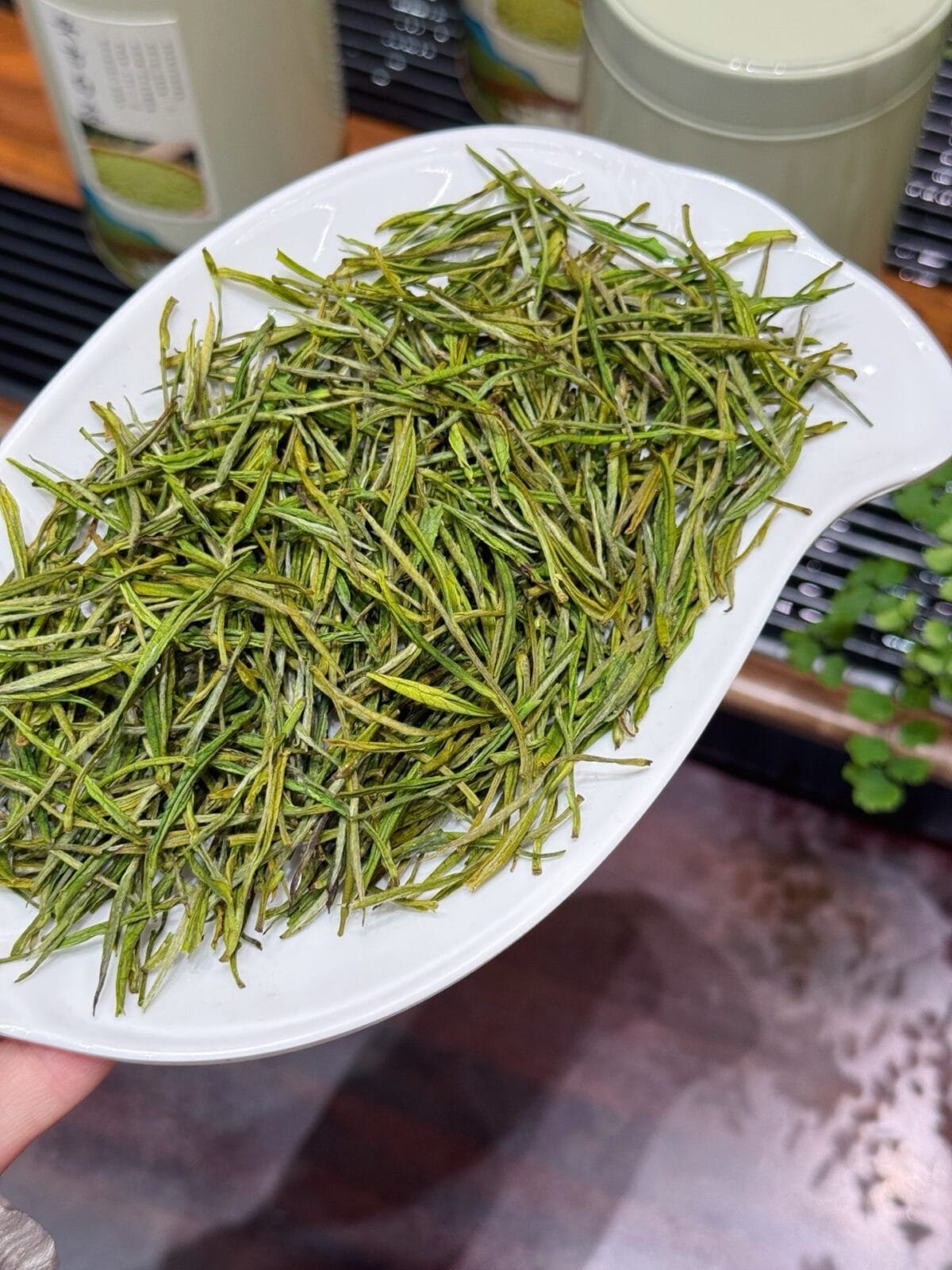
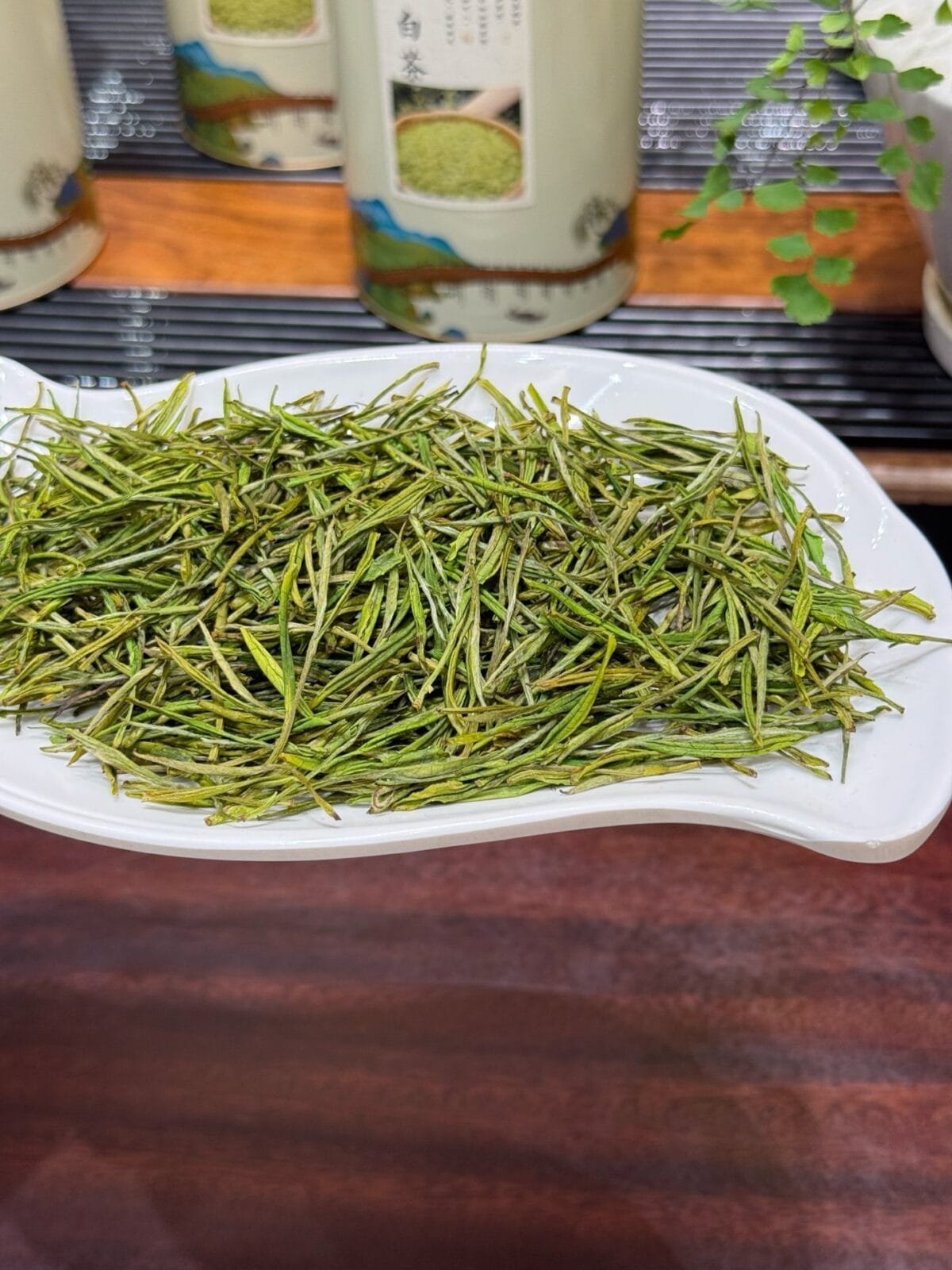
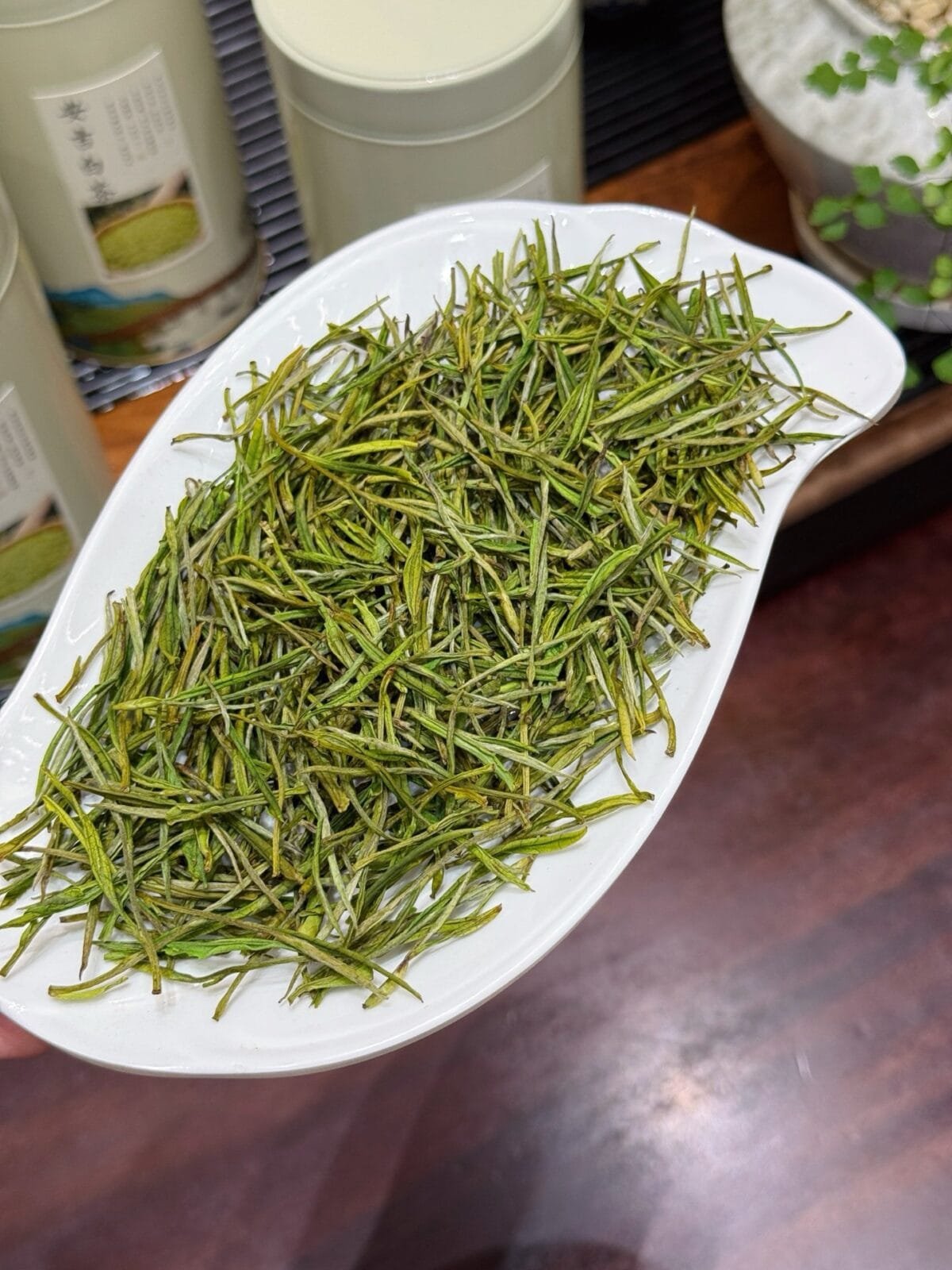
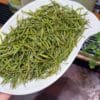
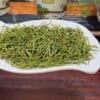
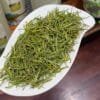
The Dry Leaf: The leaves are slender, straight, and needle-like, resembling tiny pine needles. Their color is a uniform, pale jade-green, sometimes with a slight yellowish hue, covered in a fine, downy fuzz. The aroma is subtle yet complex: fresh-cut grass, sweet chestnut, and a hint of spring flowers.
The Awakening: Warm the leaves in a preheated gaiwan or cup. The fragrance becomes more pronounced—a clean, sweet, and vegetal scent reminiscent of edamame (young soybeans) and fresh asparagus.
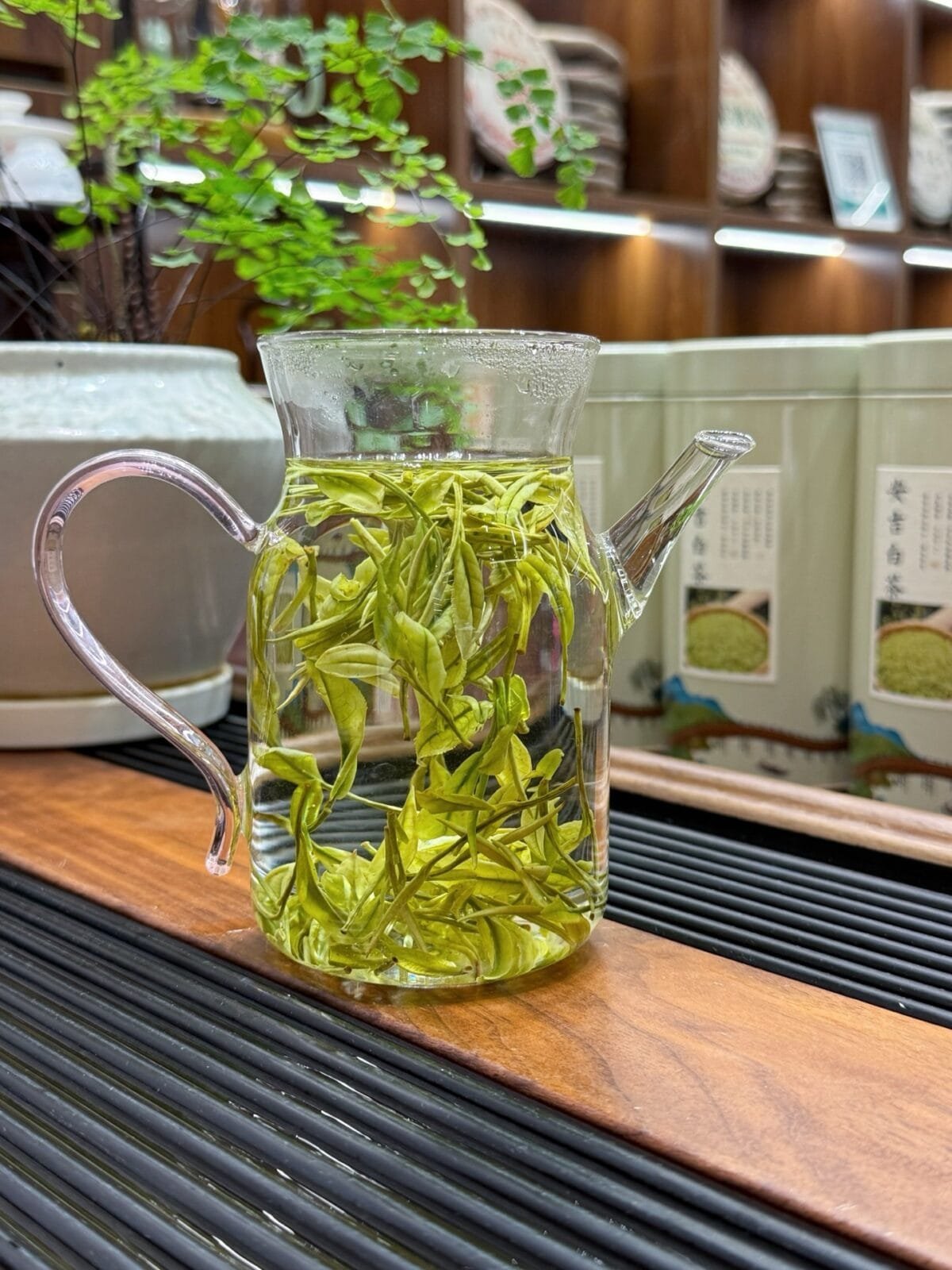
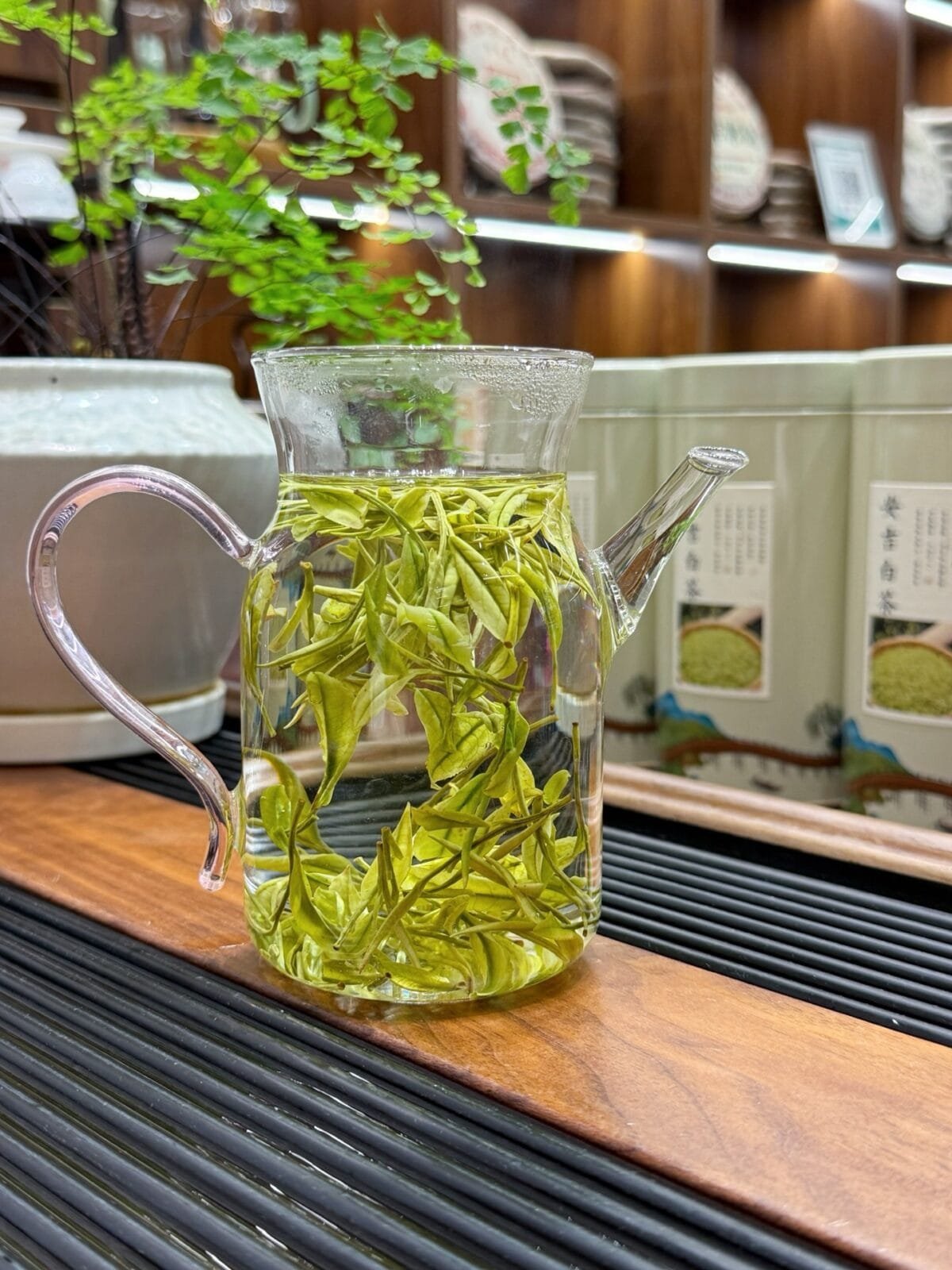
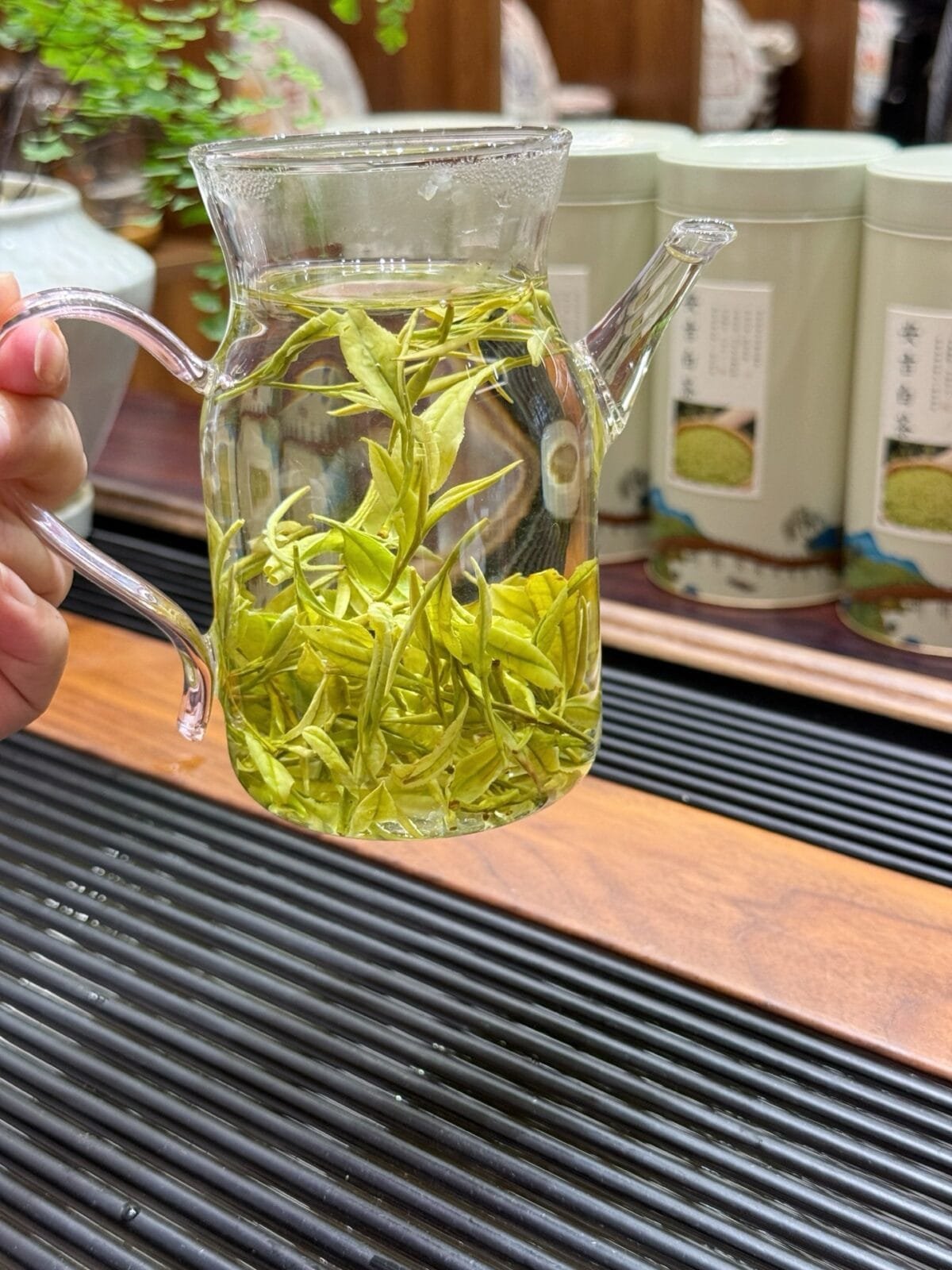
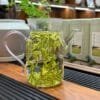
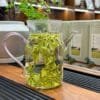
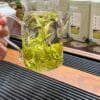
The Liquor: The brewed tea soup is the hallmark of quality. It is strikingly pale—a very light, luminous yellow-green, almost the color of light hay or champagne. It should be perfectly clear and bright, never cloudy.
The Fragrance: The steam carries a delicate, sweet aroma. Notes of steamed sweet corn, fresh bamboo shoots, and a subtle orchid florality rise from the cup. It is fresh, clean, and inviting.
The Flavor & Mouthfeel (The “Umami” Revelation): The first sip is where the magic happens. The initial sensation is one of incredible smoothness and a rounded, brothy body. The dominant flavor is a savory, satisfying umami, often described as the essence of seaweed, mushrooms, or a light chicken broth. This is followed by a clear, sweet aftertaste reminiscent of fresh sugarcane or honeydew melon. There is no trace of bitterness or astringency. The texture is silky and coating.
The Aftertaste & Sensation: The finish is long, sweet, and incredibly clean. A cooling sensation (“sheng jin”) lingers in the throat, promoting salivation and a deep sense of freshness. Despite its clarity, the tea feels substantial and satisfying in the mouth, a quality known as “thickness” or “soupiness.” The high theanine content promotes a state of relaxed, focused calm.
The Spent Leaves: After brewing, the leaves unfurl completely, revealing whole, tender buds and leaves. They should be a consistent, soft green color, showing no red edges or bruising—a sign of perfect, gentle processing.
How to Brew for Perfect Sweetness
To highlight its delicate nature, use water well below boiling to avoid releasing bitterness.
1. The Standard Method (For Daily Enjoyment):
• Teaware: Glass cup or gaiwan (200-300ml).
• Tea: 3-4 grams of tea.
• Water: 75-80°C (167-176°F) water. Let boiled water cool for 2-3 minutes.
• Process: Pour water over leaves. Steep for 2-3 minutes. Strain and enjoy. Can be reinfused 2-3 times, adding 30 seconds per steep.
2. The Grand Glass Method (For Observation):
• Teaware: A tall, clear glass.
• Tea: 2-3 grams of tea.
• Water: 75-80°C water.
• Process: Place tea at bottom, add water. Watch the leaves slowly dance and sink. Sip directly, appreciating the visual beauty and evolving taste.
3. The Cold Brew Method (For Ultimate Sweetness):
• Teaware: A glass pitcher (1L).
• Tea: 5-7 grams of tea.
• Water: Cold, filtered water.
• Process: Add tea and water. Refrigerate for 6-8 hours or overnight. Strain. Cold brewing maximizes the sweet, umami notes and minimizes any vegetal edge, creating an incredibly smooth, refreshing drink perfect for summer. This method also results in the lowest caffeine extraction.
Why Choose Our 2026 Anji Green Tea?
Authentic “Bai Ye 1” Cultivar: Sourced from gardens in Anji, Zhejiang, using the genuine, rare albino tea bush varietal. This is the only source of true “Anji Bai Cha” character.
2026 Early Spring, Pre-Qingming Harvest: Plucked during the brief “albino” window in early spring, ensuring the highest concentration of amino acids (theanine) and the most delicate flavor profile.
Unparalleled Flavor Profile: Offers a unique combination of savory umami, natural sweetness, and a complete absence of bitterness—a revelation for green tea lovers and newcomers alike.
Naturally Low in Caffeine: The high L-theanine to caffeine ratio makes this an excellent choice for afternoon or evening enjoyment, or for anyone sensitive to caffeine, providing calm focus.
Expert Low-Temp Processing: Processed with great care using lower temperatures to preserve the leaf’s delicate chemistry, resulting in the trademark pale liquor and smooth taste.
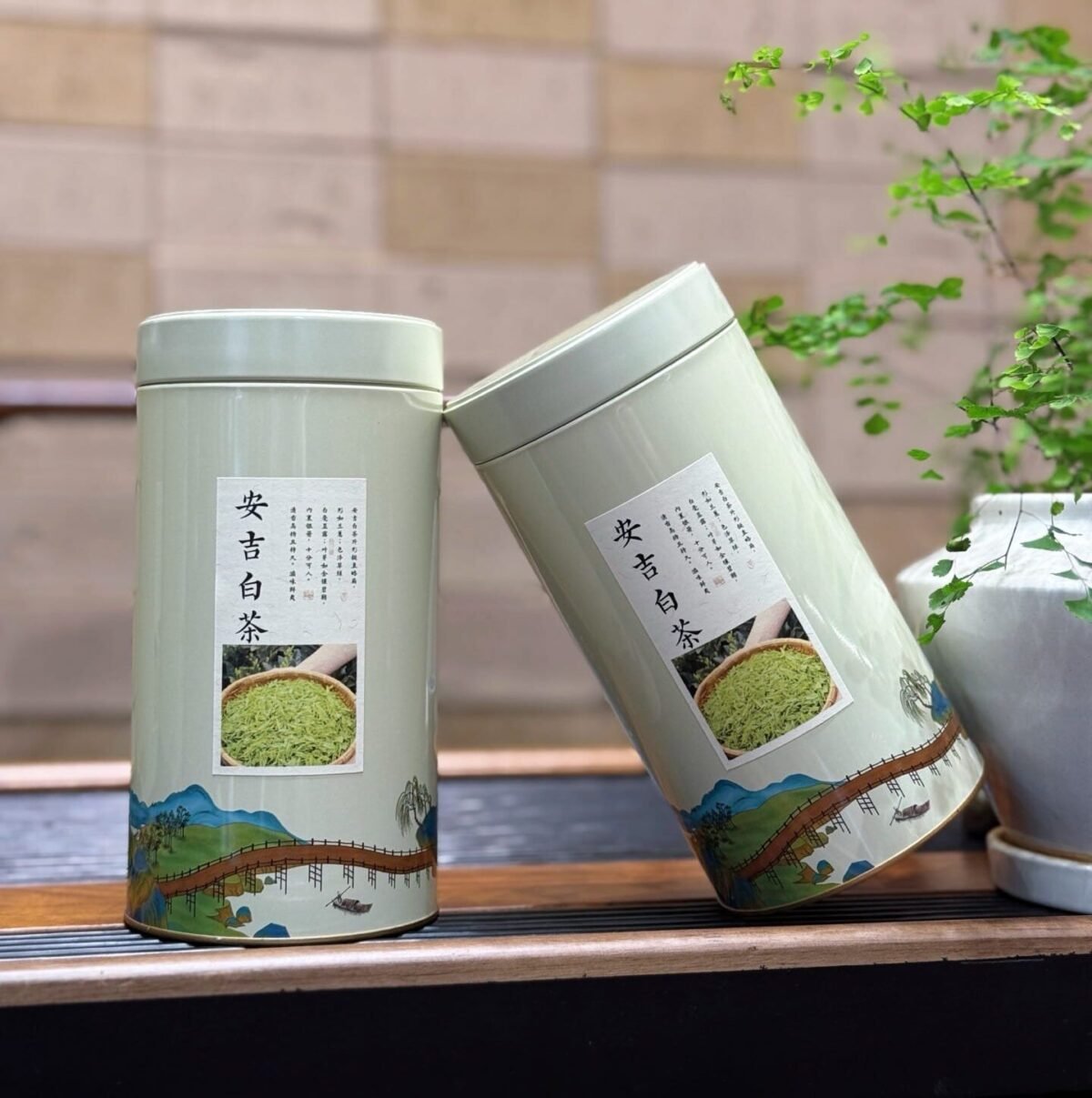
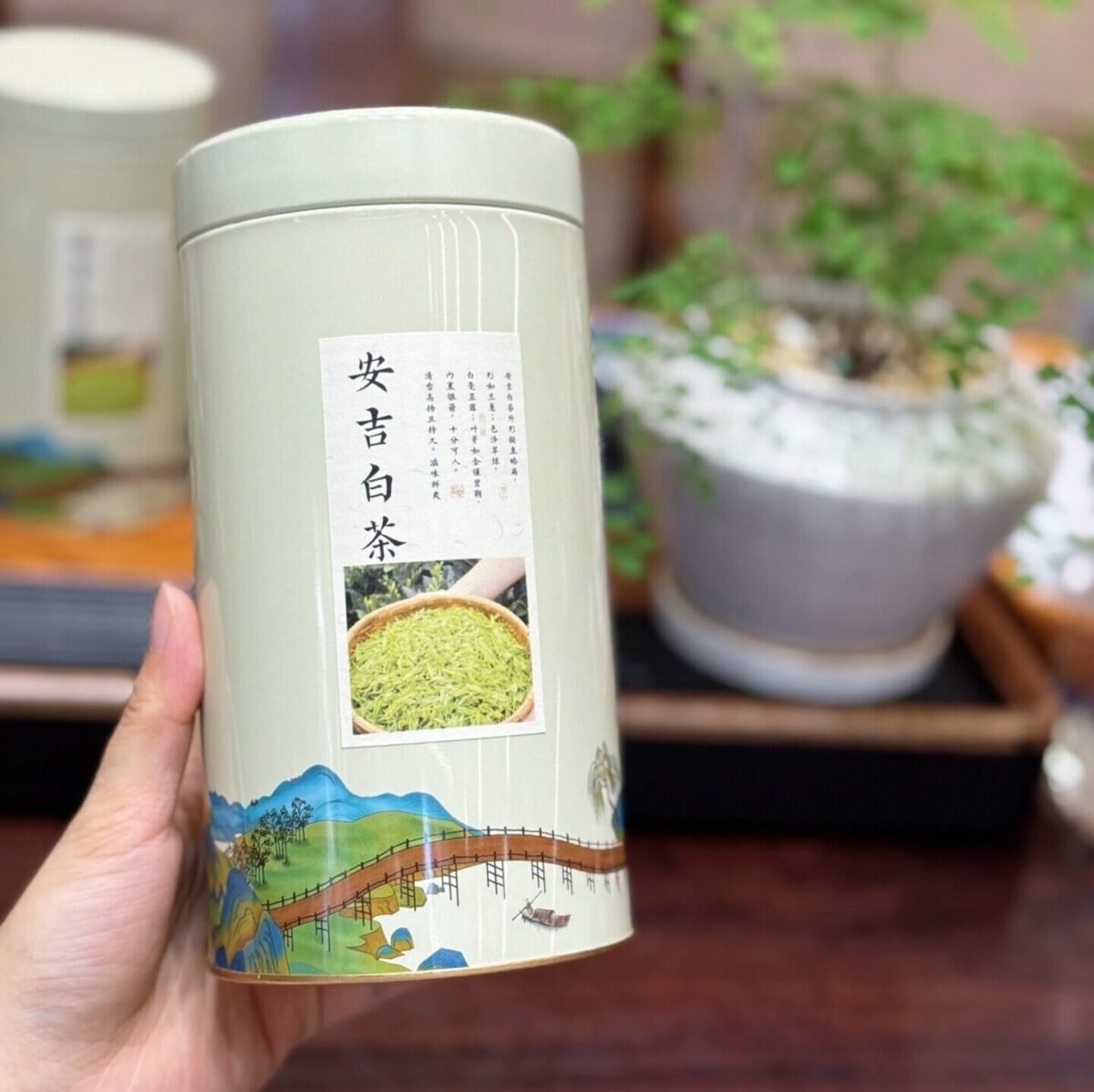
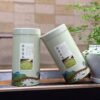
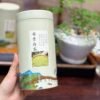
250g Airtight Tin: Packaged in a high-quality, opaque, and airtight tin to protect the tea’s delicate color, aroma, and nutrients from light, air, and moisture.
A Tea of Serenity and Sophistication
This 250g tin of 2026 Anji Green Tea is more than a beverage; it is an invitation to tranquility. It is the perfect tea for quiet mornings, mindful afternoons, or as a soothing digestif after a meal. Its gentle nature and complex flavor profile make it incredibly food-friendly, pairing wonderfully with light salads, seafood, or simply on its own as a moment of pure refreshment. For those seeking an alternative to more robust or astringent teas, this is your gateway to a new world of green tea elegance.
Experience the Anji Paradox. Discover the smooth, sweet, and savory magic of this rare green tea. Secure your 250g tin of 2026 Anji Green Tea today and taste the clarity of a Zhejiang spring.
Reviews
There are no reviews yet.
Be the first to review “Unbelievably Smooth! 250g of 2026 Anji Green Tea, Naturally Sweet & Low Caffeine”Cancel Reply




Reviews
There are no reviews yet.