🎄 A little something from our tea table to yours. Spend $100 or more and we'll tuck a Christmas tea gift set + holiday tote into your parcel — no code needed, just our way of saying thanks. While supplies last, so don't wait till the 24th.Free Worldwide Shipping · Shipped from Fujian, China. Enjoy hassle-free delivery with our double customs clearance service—all taxes prepaid, no hidden costs! Specializing in High-Quality Chinese Tea & Teaware. Our teas feature authentic flavors, sourced from the best farms and purely handmade by master artisans without any additives. Experience the true essence of traditional tea culture today. DismissSkip to content
Jade Vein Anji White Tea: 6 Amino Benefits, High Amino Green Tea, Calm Energy
$69.00–$102.00Price range: $69.00 through $102.00
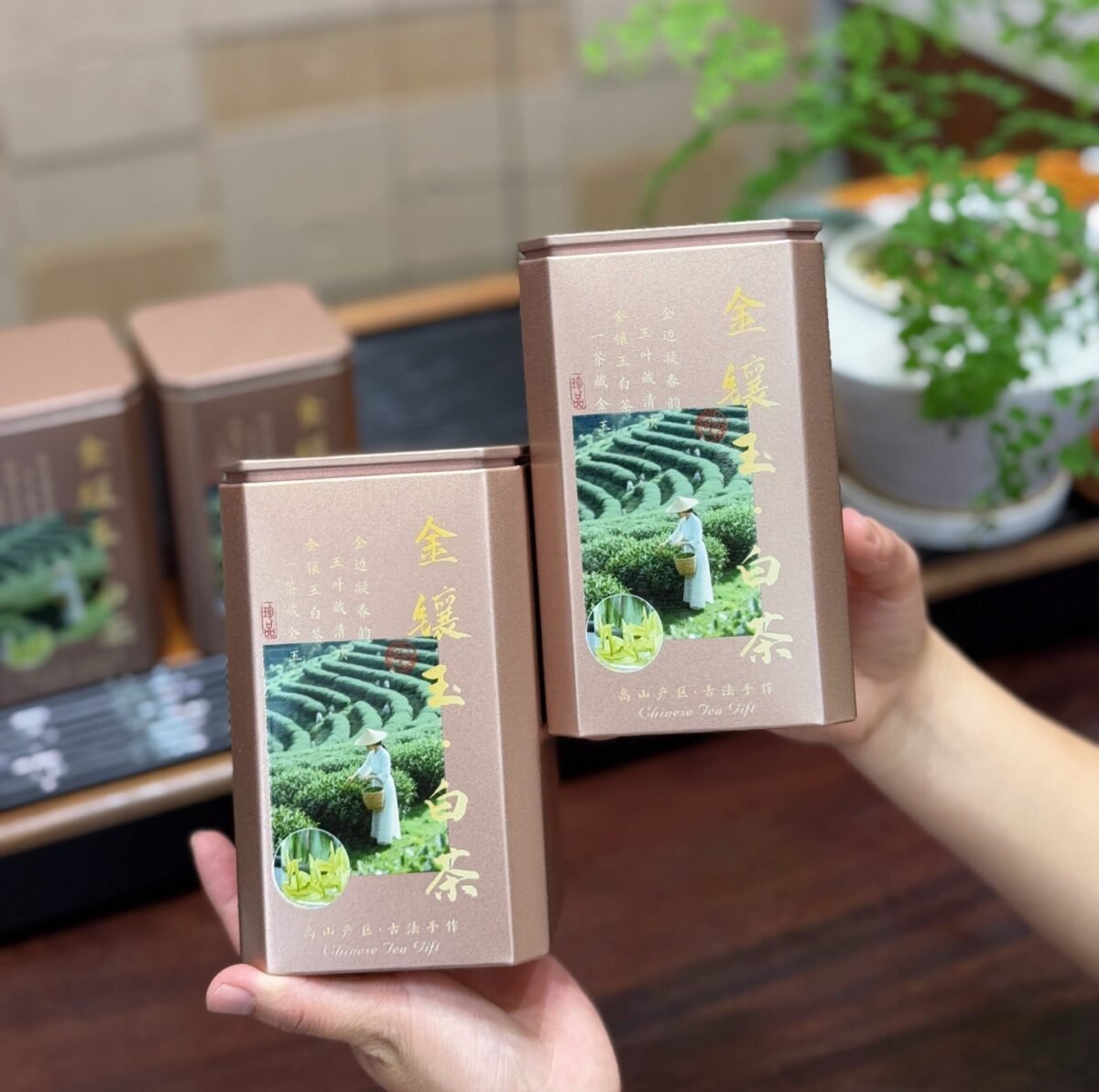
Jade Vein Anji White Tea is a rare light-sensitive albino green tea from Anji, Zhejiang. Spring buds turn white with green veins, giving high amino sweetness, low astringency, and a thicker body than ordinary Anji white tea. Choose 125g or 250g.
1. Jade Vein Anji White Tea: 5 Reasons This Albino Green Tastes Thicker Than Ordinary Anji
Jade Vein Anji White Tea is Junxistea’s upgraded interpretation of Zhejiang Anji albino tea. The name points directly to the cup: young spring leaves open pale white, while the veins stay jade green, creating the “gold-in-jade” contrast that gives this lot its premium look. Unlike generic Anji white tea, this selection is picked from stronger albino bushes, fixed with tighter temperature control, and graded for a fuller, more concentrated umami body.
In the first 10% of every tasting note we publish, Jade Vein Anji White Tea is described the same way: white leaf, jade vein, high amino, low bitter. That order matters because western buyers often expect white tea to be soft and floral. This product is different. It is a green-tea process with an albino cultivar, so the result is savory, brothy, and sweet rather than grassy or astringent.
Anji County sits in northern Zhejiang, surrounded by bamboo hills, mist, and mild spring cold. Those conditions slow chlorophyll recovery in albino bushes and allow amino acids to accumulate. The combination produces a tea that feels delicate in aroma yet surprisingly substantial in mouthfeel—exactly what “thick fresh” means for drinkers who usually find standard green tea too thin.
If you already enjoy umami-forward greens, Jade Vein Anji White Tea will feel familiar but deeper. If you normally drink oolong or lightly roasted tea, this lot offers a cleaner, almost soup-like sweetness without heavy roast. It is an ideal bridge for buyers who want health-friendly, low-caffeine-afternoon sessions with real flavor density.
2. Jade Vein Anji White Tea: 6 Spring Facts About The Light-Sensitive Albino Bush
2.1 Jade Vein Anji White Tea: 1 Temperature Window That Creates White Leaves
The mother cultivar behaves like a thermostat. When early spring temperatures stay around 19–23°C, new shoots suppress chlorophyll and appear jade-white or pale yellow-white. Veins remain green because they keep more pigment capacity than leaf tissue. Above roughly 23°C, the plant re-greens quickly and the special sweetness declines. [16](@ref)
Because the white stage is short, Jade Vein Anji White Tea is harvested only inside this cool window. The picker’s job is timing: too early means tiny yield; too late means ordinary green leaves. Junxistea contracts small family plots that report daily field temperature so the white phase is captured at peak amino value.
2.2 Jade Vein Anji White Tea: 2 Chlorophyll Changes You Can See In The Cup
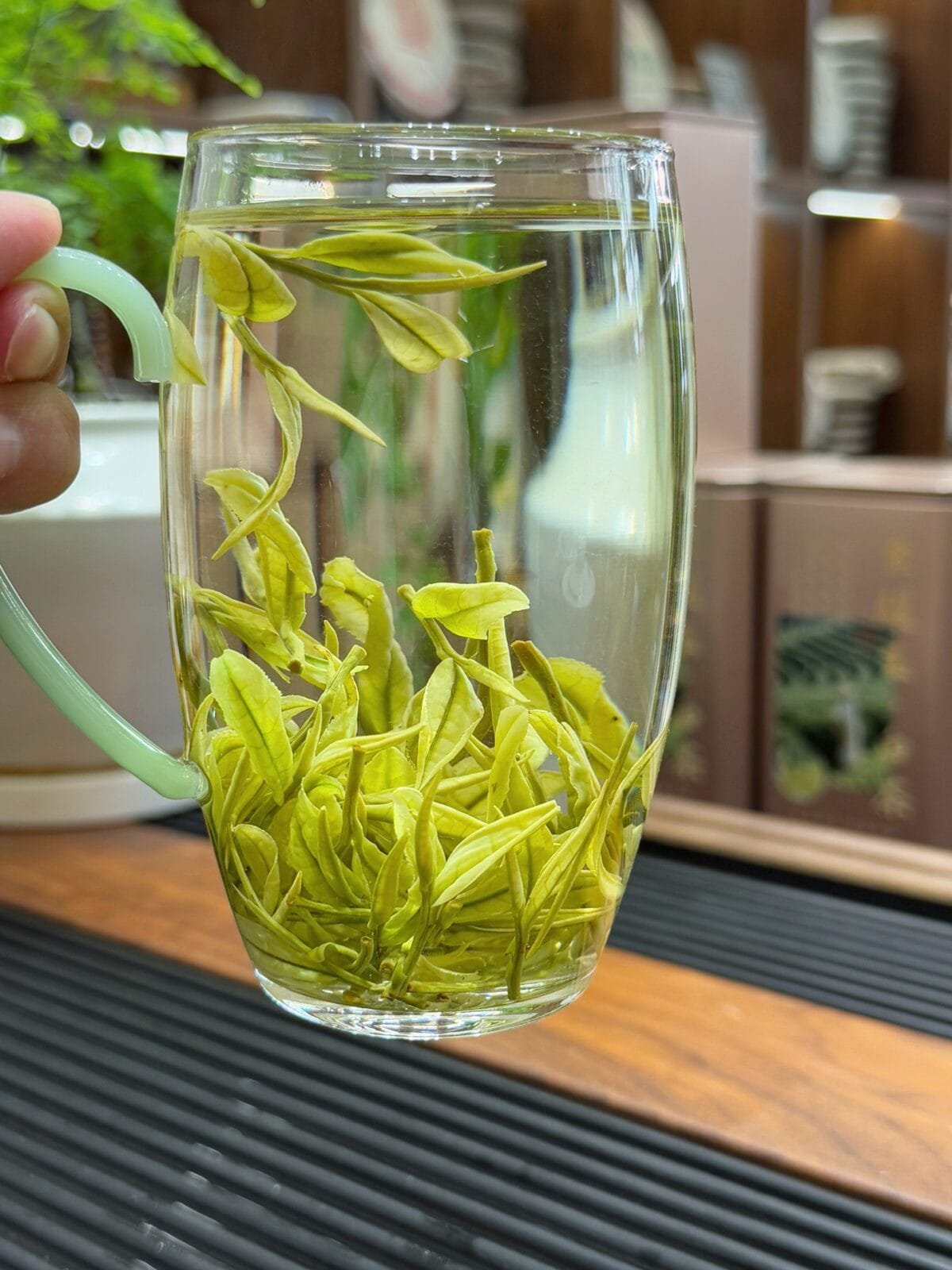
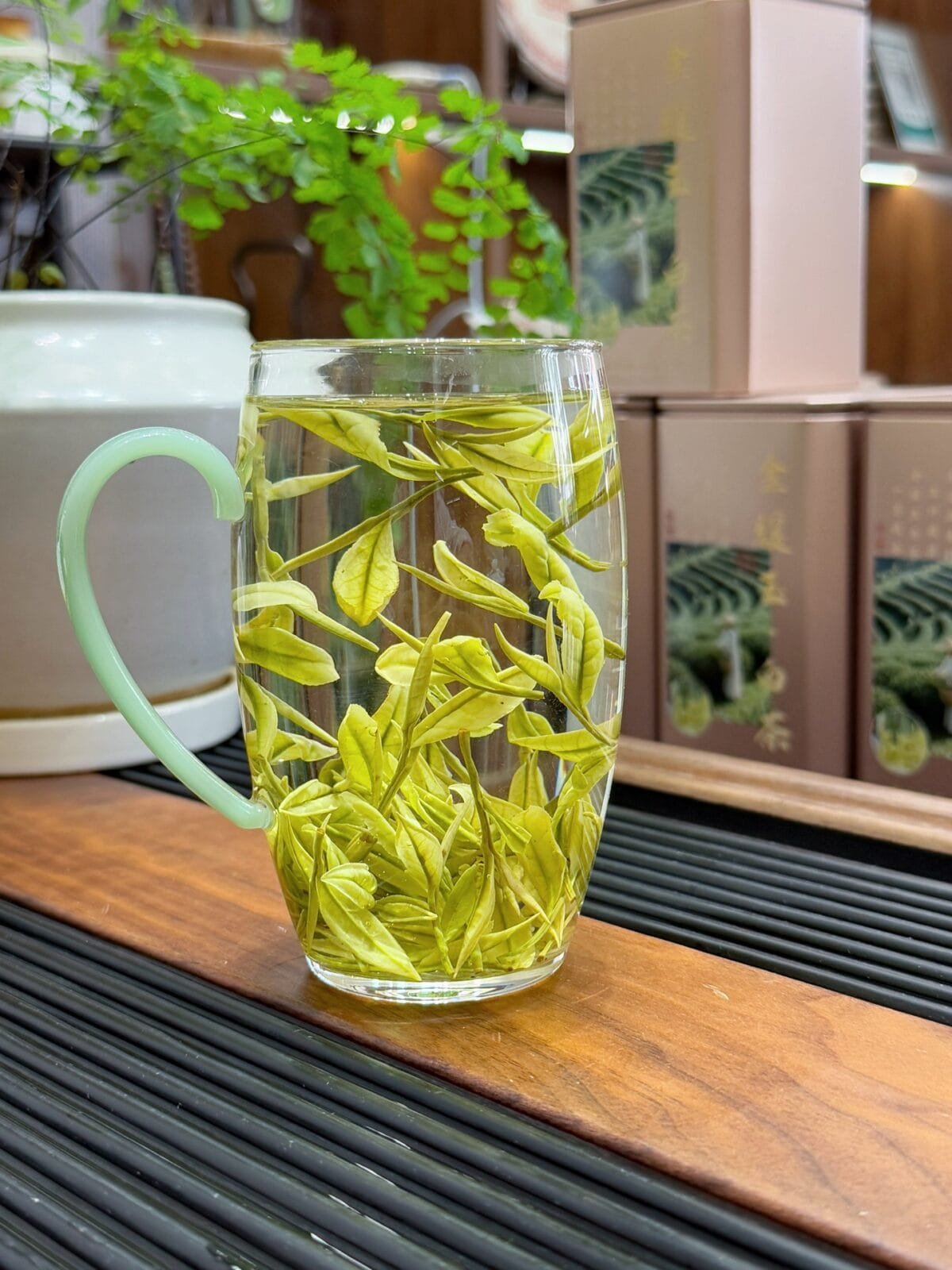
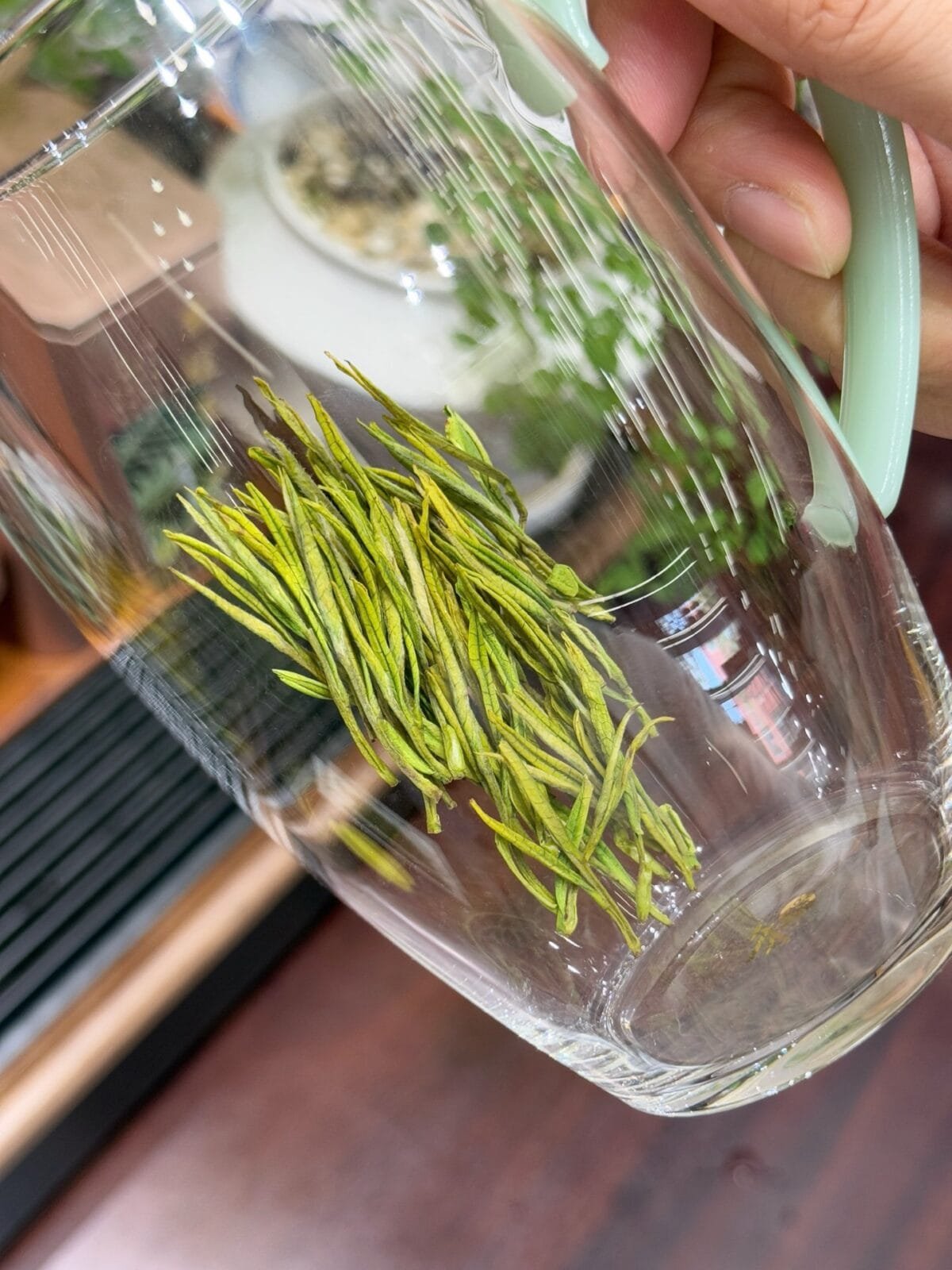
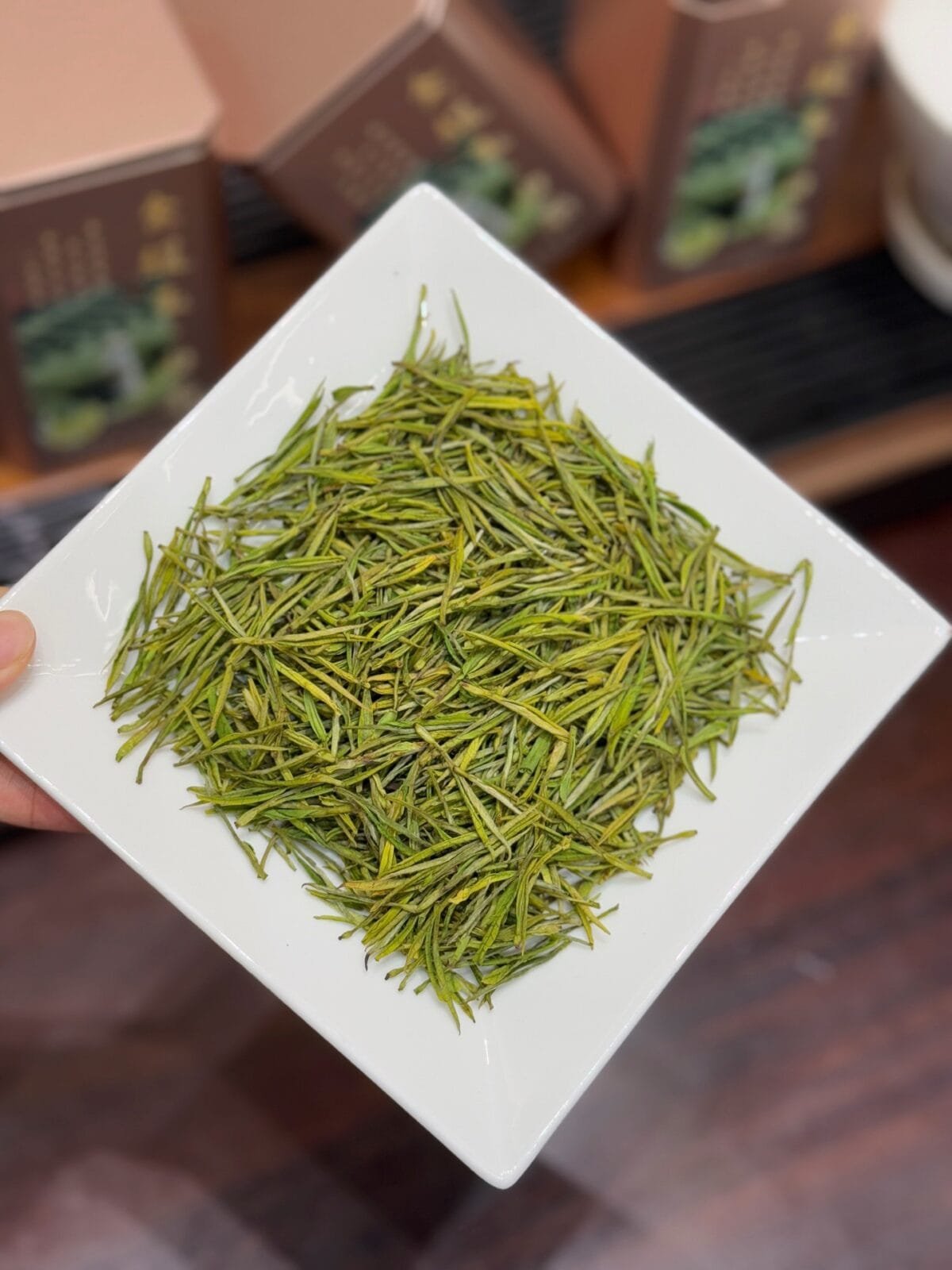
Dry leaf looks slender, slightly flat, with a mix of jade, cream, and faint yellow tones. After warming water, the leaf unfurls white while midribs and lateral veins stay green. This “white leaf, jade vein” pattern is the single most reliable visual proof of authentic albino Anji material. [16](@ref)
The liquor is not colorless. It leans pale yellow-green, sometimes called “chicken-soup jade” by Chinese tasters. The color looks light, but the texture can be rounded and creamy when the leaf is high-grade and properly fixed.
2.3 Jade Vein Anji White Tea: 3 Amino Numbers That Explain The Umami
Authentic Anji albino tea commonly tests 6–9% free amino acids, with top early batches reaching around 10.6%. Ordinary green tea often sits near 3–4%. The gap is why this tea tastes sweet rather than bitter. [16,18](@ref)
Lower polyphenol content further reduces astringency. Many laboratories report Anji albino polyphenols near 10–14%, compared with higher values in generic steamed or pan-fired greens. The resulting phenol-to-amino ratio is small, so the cup feels smooth even when brewed a little strong.
2.4 Jade Vein Anji White Tea: 4 Bamboo Terroir Notes
Anji’s bamboo forests buffer wind, raise humidity, and create dappled shade. Frequent mist lowers light stress, which helps albino leaves keep their pale color longer. Soil from decomposed bamboo litter adds organic matter that supports slow, even bud growth.
Junxistea sources from mid-elevation Anji plots rather than bulk lowlands. Mid-elevation lots usually show cleaner vein definition, steadier amino development, and a more persistent sweet finish. The bamboo environment also contributes a faint leafy sweetness that novices describe as “fresh bamboo milk.”
2.5 Jade Vein Anji White Tea: 5 Harvest Limits That Protect Scarcity
White-phase picking lasts roughly 20–30 days in spring. After the window, amino content falls and the leaf becomes a normal green cultivar. That is why Jade Vein Anji White Tea is a seasonal product, not an all-year commodity. [18](@ref)
We pack in 125g and 250g only because small quantities preserve freshness. Albino green tea loses aroma faster than heavily roasted oolong. A tighter pack size means the customer receives leaf that still smells like fresh spring beans and orchids rather than stale hay.
2.6 Jade Vein Anji White Tea: 6 Why “Jinxiangyu” Means Gold-In-Jade
“金镶玉” literally suggests gold set into jade. In the cup, the visual gold comes from warm liquor light, while the jade comes from green veins and cool leaf tone. The phrase also signals premium sorting: uniform buds, minimal broken tips, and consistent white phase rather than mixed green-and-white leaf.
For the Junxistea store, the Jade Vein name prevents confusion with basic “Anji white tea” listings. Buyers who want thicker body, higher umami, and better vein contrast get a clearly differentiated SKU instead of another generic green.
3. Jade Vein Anji White Tea: 7-Step Craft Story From Anji Garden To Your Tin
3.1 Jade Vein Anji White Tea: 1 Careful Plucking Standard
Field teams pick one bud with one leaf or one bud with two leaves, depending on white-phase maturity. Bud-only plucking gives elegance; one-plus-two gives thicker body. For Jade Vein Anji White Tea we lean toward slightly mature one-plus-one and selective one-plus-two so the cup has weight without losing sweetness.
Plucking happens in the morning after dew evaporates. Crews avoid rain leaf, damaged leaf, and over-warm afternoon picks. Bamboo baskets keep the leaf aerated during transport because compacted albino leaf heats fast and can turn yellow before processing.
3.2 Jade Vein Anji White Tea: 2 Shade And Field Sorting
Some partner plots use light shade nets during the warmest white-phase days. The goal is not full shade like matcha, only temperature buffering. Buffered bushes keep chlorophyll low a little longer, which improves amino stability and vein color.
Before factory intake, leaf is sorted by whiteness, size, and stem condition. Lower-whiteness lots are separated into everyday grades; high-whiteness lots with clear jade veins become Jade Vein Anji White Tea. This pre-sort is the first quality gate.
3.3 Jade Vein Anji White Tea: 3 Withering And Softening
Fresh leaf is thinly spread on clean bamboo trays in a cool, ventilated room. Light withering removes surface moisture and makes the leaf supple. Over-withering damages the white appearance; under-withering causes uneven fixation later.
For albino material, the room stays moderately cool and never stuffy. The leaf should soften, smell quietly sweet, and lose stiffness without fermenting. This stage prepares the bud for high-temperature fixation without scorching the delicate amino compounds.
3.4 Jade Vein Anji White Tea: 4 High-Temperature Fixation For Green-Tea Style
Although the product name contains “white,” the process is green-tea fixation, not white-tea withering. Pan or machine fixation uses high heat—common Anji guidance cites around 250–300°C for initial kill, adjusted by leaf volume—to deactivate enzymes immediately. The purpose is to stop oxidation, lock white-phase amino character, and preserve jade color.
Jade Vein Anji White Tea uses a “high first, lower later” curve. The first contact sets the green-tea baseline and removes grassy odor. Subsequent lower heat develops bean, orchid, and bamboo sweetness. Skilled makers watch leaf sound, aroma, and pliability rather than relying only on thermometer readings.
3.5 Jade Vein Anji White Tea: 5 Shaping And Straightening
After fixation, leaf passes through shaping to form the slender, slightly flat or strip-style Anji appearance. Gentle pressure straightens the bud, improves uniformity, and creates the “orchid sprout” look that premium buyers recognize.
Over-shaping breaks albino tissue and releases bitterness. Under-shaping leaves tangled leaf that brews unevenly. Junxistea requests moderate shaping: straight enough for tidy brewing, loose enough to open fully in a glass cup or gaiwan.
3.6 Jade Vein Anji White Tea: 6 Two-Stage Drying For Sweet Stability
Drying begins with initial baking at about 100°C for a short period, then cooling, then lower re-baking around 80–90°C for longer stabilization. Initial heat removes remaining surface moisture; later low heat protects aroma and prevents brown tipping.
Final moisture is kept low, commonly around 5–6%, so the leaf stores without mold risk. Because Jade Vein Anji White Tea targets thick umami, drying is tuned to retain sweet amino notes rather than chasing a toasted, high-fire profile.
3.7 Jade Vein Anji White Tea: 7 Sorting, Tasting, And Packing
Finished lot is sorted for white consistency, vein visibility, stem content, and broken pieces. A small panel brews at 80°C and scores aroma, umami, thickness, sweetness, and aftertaste. Only lots that score “thick fresh” above standard Anji samples are packed under the Jade Vein name.
Retail packing uses sealed foil with minimal air. For 125g and 250g sizes, we add a desiccant suggestion only in humid markets. Every tin or pouch carries crop window, plot elevation, and brew guidance so overseas buyers understand the seasonal, perishable nature of albino green tea.
4. Jade Vein Anji White Tea: 8 Brewing Rules For Maximum Umami Without Bitterness
4.1 Jade Vein Anji White Tea: 1 Water Temperature Rule
Use 80–85°C for glass-cup brewing and 82–88°C for gaiwan if you want more body. Boiling water damages albino leaf, extracts excess vegetable bitterness, and dulls the jade vein appearance. Lower temperature protects amino sweetness and keeps the liquor silky. [8](@ref)
If only boiling water is available, pre-warm the cup, add leaf, pour, then open the lid briefly to drop temperature. This simple step prevents “cooked” aroma and preserves the chicken-soup umami that makes premium Anji special.
4.2 Jade Vein Anji White Tea: 2 Glass Cup Method For 125g Homes
Place 3g leaf in a 250–300ml glass cup. Rinse the cup with warm water, discard, add leaf, then pour 80–85°C water to 70% full. Wait 1–2 minutes for the first observation. The white leaves float, then sink; green veins become obvious against pale liquor.
Refill two or three times. The first cup is aromatic and light; the second is thickest in umami; the third remains sweet if temperature stays correct. For Jade Vein Anji White Tea, the second infusion often tastes fuller than ordinary Anji because the leaf is graded heavier.
4.3 Jade Vein Anji White Tea: 3 Gongfu Method For Thick Sweet Body
Use 5g leaf in a 120–150ml gaiwan. Rinse 5 seconds with 85°C water to open the leaf. First steep 20–25 seconds, then increase 5–10 seconds per round. Expect 3–5 clear rounds; some dense buds give a sixth weak round.
Gongfu brewing reveals layering: first orchid and bean, middle chicken-soup umami, later soft bamboo sweetness. Customers who think Anji is “too delicate” usually change their mind after gongfu Jade Vein because the thicker grade shows more substance.
4.4 Jade Vein Anji White Tea: 4 Cold Brew Option
Add 3g leaf to 500ml cold filtered water. Refrigerate 4–6 hours or overnight. Cold extraction emphasizes sweetness and minimizes any astringency. The liquor stays pale, the aroma turns gentle, and the umami feels round rather than broth-heavy.
Cold brew is excellent for summer stores, fitness customers, and buyers who want low-irritation caffeine. Because Jade Vein Anji White Tea has high amino and low polyphenol, cold cups taste almost like sweet vegetable broth with a floral finish.
4.5 Jade Vein Anji White Tea: 5 Ratio Adjustments
Lighter drinkers: 2g per 250ml at 80°C. Umami seekers: 4–5g per 250ml at 84°C using short gongfu steeps. Avoid long western steeps over 5 minutes; albino leaf can turn vegetal and mildly sour if overheated and over-soaked.
For 250g bulk buyers, we recommend splitting the pack into weekly portions. Open only what you brew, reseal immediately, and keep the rest refrigerated. This routine preserves jade color and prevents the “flat hay” aroma that ruins cheap Anji after one month at room temperature.
4.6 Jade Vein Anji White Tea: 6 Glass Vs Gaiwan Vs Porcelain
Glass shows the white-leaf jade-vein theater, best for solo tasting and product photos. Gaiwan concentrates aroma and controls steep time, best for umami layers. Porcelain teapot suits groups because it holds heat gently without scorching the bud.
Avoid heavy clay for first purchases. Albino green tea has subtle aroma; porous clay can absorb and mute the orchid-bean notes. Once the customer understands the flavor, a light unglazed pot may be tested, but Junxistea recommends neutral vessels first.
4.7 Jade Vein Anji White Tea: 7 Re-Steep Judgment
Stop rebrewing when sweetness disappears and only plant fiber remains. With high-grade Jade Vein material, the leaf should still look white with clear green veins at the end. If the spent leaf is fully green, the pick was likely post-white-phase and not true Jade Vein quality.
Keep a small tasting log: date, water temperature, grams, seconds, aroma words, sweetness 1–10, thickness 1–10. After 125g, the customer can reorder the exact plot style—thicker umami, more orchid, or more bamboo sweetness—because the log removes guesswork.
4.8 Jade Vein Anji White Tea: 8 Common Mistakes To Avoid
Do not boil the leaf. Do not store in clear jars on sunny shelves. Do not mix old and new crop in one tin. Do not use soapy teaware; albino aroma is delicate and absorbs detergent residue. Do not judge quality by dryness alone—always brew a 3g glass sample.
Many returns in the Anji category come from wrong temperature, not bad leaf. Jade Vein Anji White Tea includes printed brew cards in English, German, French, and Spanish so European buyers can succeed on the first cup.
5. Jade Vein Anji White Tea: 9 Flavor Layers And How To Describe Them To Western Buyers
The opening aroma is usually fresh bean, snap pea, and light orchid. Western customers understand “green bean” faster than abstract tea terms, so we train support staff to say umami bean, orchid milk, and bamboo sugar.
The mid-palate delivers chicken-soup umami, not seafood umami. Think clear spring broth, sweet corn silk, and a touch of steamed zucchini. The body feels coated but not oily. High amino content gives this rounded, almost protein-like sweetness. [8](@ref)
The finish is clean, cool, and slightly floral. Good Jade Vein lots leave the tongue moist and the breath fragrant. Poor lots taste flat, grassy, or sharply vegetable. The difference is mostly white-phase timing and fixation control, not just price.
For pairing, Jade Vein Anji White Tea matches steamed fish, scallops, mild chicken, fresh tofu, spring vegetables, and lightly sweet pastries. Strong cheese, smoked meat, and dark chocolate overwhelm it. The tea wants gentle food that lets umami shine.
For mood positioning in Europe and North America, describe it as focused calm rather than stimulation. Amino-rich green tea can feel soothing yet alert. That message fits morning desk work, yoga recovery, reading, and low-sugar wellness routines.
For gift buyers, emphasize visual novelty. Few gifts show such a dramatic leaf change: pale white blade, green vein, jade cup. Include a printed “leaf color chart” so recipients understand why the tea looks unusual yet tastes sweet.
For beginners, position Jade Vein as an upgrade from generic green tea bags. It is still easy—just 80°C and a glass—but offers café-style umami that feels premium without bitter punishment.
For connoisseurs, emphasize plot, elevation, white-phase date, fixation temperature, and re-steep count. These details separate authentic Jade Vein from commodity Anji and prevent price-only comparison.
For wholesale, provide brew-standard samples and a specification sheet with amino estimate, moisture, leaf grade, and recommended retail brew. European cafés can use 3g glass service; specialty shops can use 5g gaiwan flights.
6. Jade Vein Anji White Tea: 10 Customization And Reorder Path For Junxistea Customers
Jade Vein Anji White Tea is sold in 125g and 250g standard packs. Customers who discover a preferred plot style can request a custom blend: thicker umami, lighter orchid, more bamboo sweetness, or a gongfu-grade denser cut.
To customize, send Junxistea your tasting notes through the website contact page. Include brew method, desired thickness 1–10, sweetness 1–10, and aroma preference. Our Anji team replies with a recommended ratio of white-phase lots and a small paid sample before full purchase.
For gift sets, we can combine Jade Vein with a glass gaiwan, a bamboo scoop, and printed brew cards. The presentation stresses “white leaf, jade vein” so recipients immediately understand the product story instead of assuming ordinary green tea.
For subscription buyers, we ship seasonal crop only. Because the white phase is short, spring subscription allocations are limited. Summer and autumn restocks use stored low-temperature leaf; we label them “reserve” rather than “new spring” to remain honest.
For private-label partners, Junxistea provides specifications, farm documentation, and English education copy. The Jade Vein name can be co-branded, but the quality gate remains: white leaf visibility, jade vein clarity, amino estimate, and thick-sweet cupping score.
Customers who previously bought oolong from Junxistea often fear green tea is too sharp. With Jade Vein, we recommend gongfu 5g/120ml at 84°C because the thicker grade bridges roasted oolong richness and green-tea freshness without bitter edges.
Customers who previously bought black tea may want more body. We suggest 250g gongfu cuts and second-infusion focus, because the second steep usually gives maximum umami thickness for people accustomed to malty black tea.
Customers who want low caffeine can brew at 80°C, shorten the first steep, and discard the rinse. Albino green still contains caffeine, but moderate preparation and early-day drinking reduce late-night stimulation compared with strong black tea.
Every reorder includes updated crop information. Jade Vein Anji White Tea is not a static commodity; each spring the white window shifts with weather, so transparency about harvest dates builds trust better than generic “premium” claims.
7. Jade Vein Anji White Tea: 11 Storage Rules To Keep White Leaf And Jade Vein Fresh
Store unopened packs in a cool, dark place. For long storage, refrigerate at 0–5°C after sealing; return to room temperature before opening to prevent condensation. Albino green loses aroma faster than roasted tea, so cold storage protects umami.
After opening 125g or 250g, reseal tightly. Avoid frequent open-close in humid kitchens. If the room is above 25°C or very humid, keep the working portion in a small airtight jar and store the remainder in the refrigerator.
Do not freeze unless the pack is vacuum-sealed; thaw slowly and avoid refreezing. Ice crystals damage albino cell structure and can turn the jade vein less distinct after brewing.
Keep away from spices, coffee, and strong herbs. Jade Vein aroma is delicate; absorbed odors ruin the orchid-bean profile. Use dedicated tea containers rather than shared pantry jars.
Check leaf every two weeks if stored at room temperature in summer. Signs of quality loss include dull color, flat smell, and quick bitterness. Early detection allows faster consumption before flavor fully fades.
For retail display, use opaque materials. Clear acrylic may look attractive, but light bleaches white-phase pigments and weakens the jade-vein contrast that defines this product.
For travel tins, add a small food-safe silica packet only in tropical climates. Replace the packet monthly. Too much desiccant can overdry the leaf and make the cup thin rather than broth-sweet.
For gifting, include a storage card in the language of the destination market. European buyers especially appreciate explicit “refrigerate after opening” guidance because many assume all tea can sit in a cupboard indefinitely.
For cafés, rotate stock by harvest date. Use oldest white-phase lot first, but never serve leaf older than one year for premium Jade Vein tastings. Freshness is the core selling point, not age.
For home users, buy 125g if drinking occasionally and 250g if brewing daily. Large packs save money but require stricter cold storage; small packs guarantee fresher experiments with less waste.
Finally, label every jar with opening date. Jade Vein Anji White Tea tastes best within a few months of opening and within the same spring-to-winter cycle for unopened refrigerated leaf.
8. Jade Vein Anji White Tea: 12 FAQ For Overseas Buyers
12.1 Is Jade Vein Anji White Tea true white tea?
No. It uses an albino cultivar but follows green-tea fixation, shaping, and drying. True white tea is wilted and dried without high-temperature fixation. Jade Vein is greener in process, whiter in leaf color, and umami rather than mellow-floral. [16,18](@ref)
12.2 Why does the leaf look white but the category is green?
White appearance comes from low chlorophyll during cool spring stress. Processing fixes that appearance and the high amino profile. So the visual is “white,” the botanical event is “albino,” but the craft standard is green tea.
12.3 How is it thicker than ordinary Anji white tea?
Jade Vein uses later-one-plus-one and selective one-plus-two plucks, tighter fixation, and grades for umami body. Ordinary commodity Anji often uses younger buds only, which can be elegant but thinner. The Jade Vein target is sweet thickness without bitterness.
12.4 What amino level should I expect?
Authentic albino Anji often tests 6–9% free amino acids, sometimes up to about 10.6% in early white-phase lots. Exact numbers vary by plot and year; Junxistea provides estimate ranges, not guaranteed laboratory certificates, unless requested for wholesale. [16](@ref)
12.5 Which size should I buy?
125g for trial, gifts, or occasional cups. 250g for daily gongfu, cold brew, or families. Both sizes use the same Jade Vein grade; only quantity and storage discipline differ.
12.6 Can I brew it in a regular mug?
Yes. Use 2–3g leaf, 250ml water at 80–85°C, steep 2 minutes, and refill. Avoid boiling water and long 5–10 minute soaks. A glass mug gives the best view of white leaf and jade veins.
12.7 How many steeps?
Glass method: 2–3 satisfying refills. Gongfu: 3–5 clear steeps, sometimes 6 weak steeps with dense buds. Thicker Jade Vein grade usually outperforms standard Anji by one extra flavorful steep.
12.8 Does it contain caffeine?
Yes, but typically less harsh than heavily roasted oolong or black tea when brewed at 80–85°C with short steeps. Sensitive drinkers should avoid late evening and use lower leaf ratio.
12.9 Can I blend it with other teas?
Not recommended for first purchases. Jade Vein flavor is subtle; blending with jasmine, mint, or black tea hides the white-leaf jade-vein character. After learning the base, light blending is a personal choice.
12.10 How do I explain it to gift recipients?
Say: “It is a rare spring green from Anji; the leaves turn white with green veins, taste like sweet vegetable broth, and should be brewed at 80°C.” That one sentence prevents the white-tea misunderstanding.
12.11 Why is it seasonal and more expensive?
White phase lasts only weeks, hand plucking is labor intensive, and high-grade fixation requires skilled temperature control. Limited spring volume plus high amino quality explains the premium over generic green tea.
12.12 How do I reorder a custom taste?
Send your brew notes through the Junxistea contact page. Specify thicker or lighter, more orchid or more bamboo, gongfu or glass. We prepare a small paid sample before building a 125g or 250g custom Jade Vein pack.
9. Jade Vein Anji White Tea: 13 Story Moments That Make The Tin Feel Special
The first story is the white-phase morning. Anji fields look ordinary in winter, but in cool spring the same bushes produce ghostly pale buds. Plucker families wake before full sun to catch the coldest, whitest picks.
The second story is the bamboo shade. Walking the plots, you hear wind in bamboo, not traffic. That quiet environment shapes a calmer, sweeter leaf. Junxistea chooses gardens where bamboo fragrance drifts into the tea rows.
The third story is the thermometer. Fixation masters do not rely on apps. They listen to leaf pop, smell grass turning to bean, and feel pliability. Jade Vein quality depends on that human reflex more than on any single machine setting.
The fourth story is the sort table. After drying, workers separate white from green, jade-vein from plain-vein, whole bud from broken tip. A single tin may represent several small plots unified by white-phase standard.
The fifth story is the first brew at the Junxistea lab. New samples are tasted blind by thickness and sweetness. Only lots that beat ordinary Anji in umami body earn the Jade Vein label instead of the standard albino line.
The sixth story is the customer letter. European buyers often write that they never liked green tea because it was bitter. With correct 80°C Jade Vein brewing, the same people describe “spring soup” and reorder 250g.
The seventh story is the gift opening. Recipients expect green leaf, see white leaf, and ask if the product is defective. One brew solves the doubt: jade veins appear, the room smells like orchid and bean, and the cup tastes sweet.
The eighth story is cold brew in summer. A café in a humid city prepares Jade Vein overnight, serves it clear and chilled, and reports higher repeat sales than sweetened iced tea because the natural umami needs no sugar.
The ninth story is the reorder log. Customers who record temperature and grams quickly learn their personal sweet spot. Data turns a mysterious Chinese green into a repeatable daily ritual.
The tenth story is sustainability. Small Anji plots avoid over-picking. By limiting white-phase harvest, the bush recovers, the next spring white phase returns stronger, and Junxistea secures consistent thick-sweet quality.
The eleventh story is education. Every shipment includes a one-page “white leaf, jade vein” guide. Overseas buyers stop confusing the product with white tea and start recommending it correctly to friends.
The twelfth story is customization. A buyer who loves orchid but not heavy broth can receive a lighter Jade Vein blend. A buyer who wants chicken-soup umami can receive denser one-plus-two lots. The tin becomes personal.
The thirteenth story is continuity. Spring ends, white phase closes, but the memory of jade cups remains. Junxistea stores reserve leaf properly and ships small amounts year-round so the experience is not limited to one month.
10. Jade Vein Anji White Tea: 14 Final Buying Guide For 125g And 250g
Choose 125g if you are new to albino green tea, if you drink other categories daily and want Anji only occasionally, or if you live in a hot climate where small sealed packs are easier to keep fresh. The smaller size reduces risk and storage pressure.
Choose 250g if you already enjoy umami greens, if you brew gongfu daily, if you serve guests often, or if you want cold brew batches through the week. The larger size costs less per gram but demands strict resealing and refrigeration.
For first-time western customers, buy 125g, brew in glass at 82°C, and compare first versus second steep. If the second steep tastes thicker and sweeter, you are experiencing true Jade Vein umami; upgrade to 250g next time.
For oolong-dominant households, use Jade Vein as a morning fresh alternative. The low bitterness and high amino body complement roasted tea without replacing it. Many Junxistea customers keep both a Wuyi oolong and a Jade Vein tin.
For wellness positioning, emphasize amino-supported calm alertness, low astringency, and sugar-free umami. Do not claim medical treatment. Describe sensory and lifestyle benefits only, keeping advertising compliant in EU and US markets.
For office use, pre-portion 3g sachets from the 250g pack. Staff can brew in glass or porcelain without scales. Pre-portioning also limits repeated jar opening, which protects the white leaf and jade vein aroma.
For retailers, display one glass brew jar with a spoon and a color card. Visual proof sells faster than text. Customers immediately understand “white leaf, green vein” and ask fewer white-tea confusion questions.
For holiday gifts, pair 125g Jade Vein with a simple glass gaiwan or a bamboo teaspoon. Add the English brew card and a note: “Brew 80–85°C, watch the jade veins, enjoy thick spring umami.”
Before checkout, read the crop date on the product page. Jade Vein Anji White Tea is seasonal; new spring lots appear after the white phase, while reserve lots are clearly labeled for off-season purchase.
If you are unsure which strength to choose, contact Junxistea with your usual tea type—black, oolong, matcha, or standard green—and we recommend 125g or 250g with a matching brew method.
Finally, remember that Jade Vein Anji White Tea rewards patience. The first cup may seem delicate; the second reveals thickness; the third confirms sweetness. Slow brewing is the cheapest upgrade you can make.
11. Jade Vein Anji White Tea: 15 Quick Starter Checklist
1) Use 80–85°C water. 2) Start with 3g per 250ml glass or 5g per 120ml gaiwan. 3) Rinse only if using gongfu. 4) Watch white leaf and green veins. 5) Steep short, not long. 6) Record aroma after 30 seconds. 7) Taste second steep for umami thickness. 8) Refrigerate after opening. 9) Avoid boiling water. 10) Avoid direct sunlight storage. 11) Buy 125g for trial. 12) Buy 250g for daily brewing. 13) Request custom blend after tasting. 14) Pair with light food only. 15) Contact Junxistea for plot-specific reorder advice.
Follow this checklist and Jade Vein Anji White Tea will consistently deliver white-leaf beauty, jade-vein clarity, high amino umami, and a thicker sweet body than ordinary Anji green—exactly the experience your spring tea table deserves.
Size
125g, 250g
Reviews
There are no reviews yet.
Be the first to review “Jade Vein Anji White Tea: 6 Amino Benefits, High Amino Green Tea, Calm Energy”Cancel Reply









Reviews
There are no reviews yet.