Free Worldwide Shipping · Shipped from Fujian, China. Enjoy hassle-free delivery with our double customs clearance service—all taxes prepaid, no hidden costs! Specializing in High-Quality Chinese Tea & Teaware. Our teas feature authentic flavors, sourced from the best farms and purely handmade by master artisans without any additives. Experience the true essence of traditional tea culture today. DismissSkip to content
Jingdezhen Sunflower Gaiwan Set: The 3-Piece Hand Painted Porcelain Gaiwan You’ll Regret Not Buying Sooner
$536.00Original price was: $536.00.$480.00Current price is: $480.00.
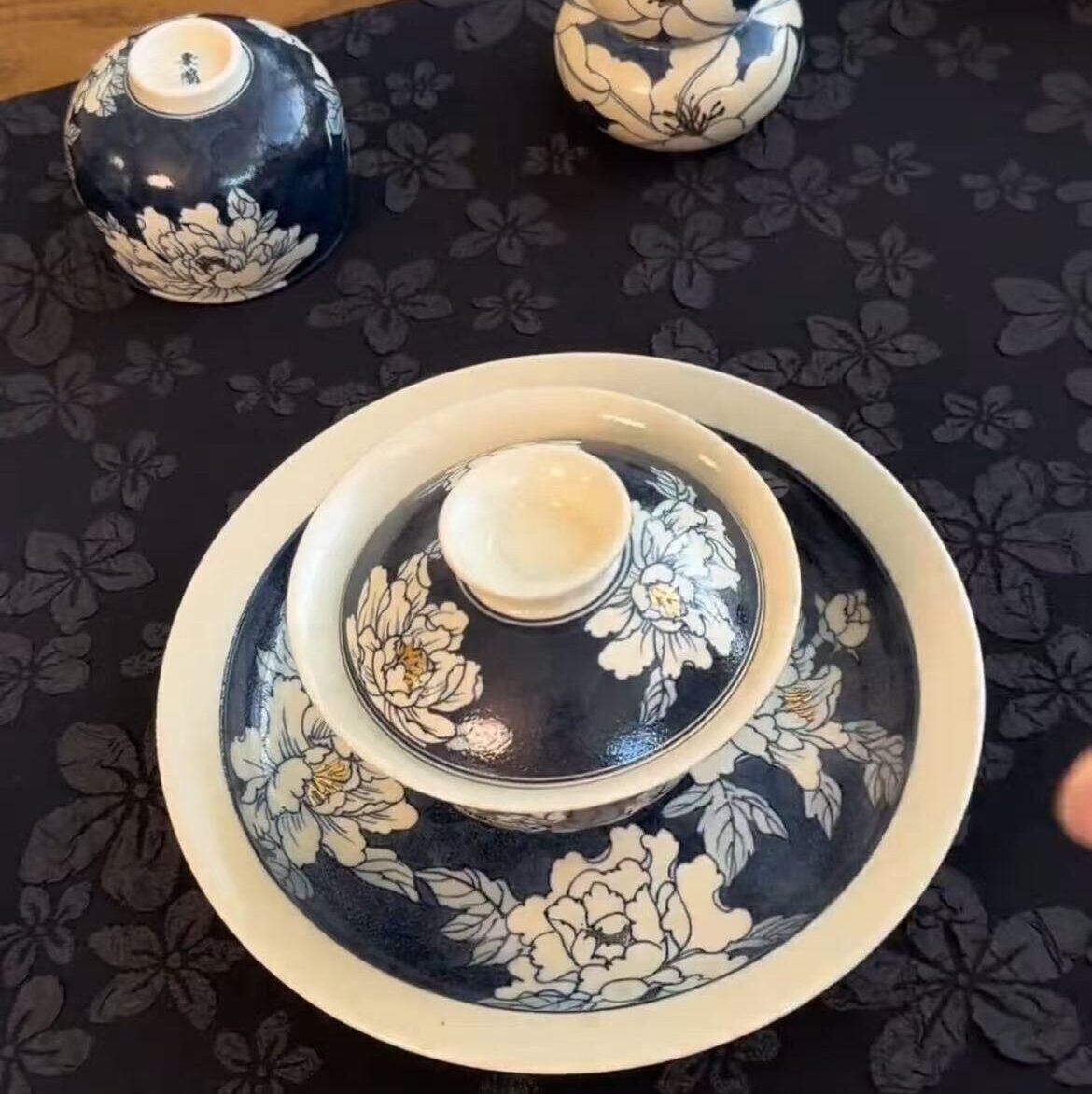
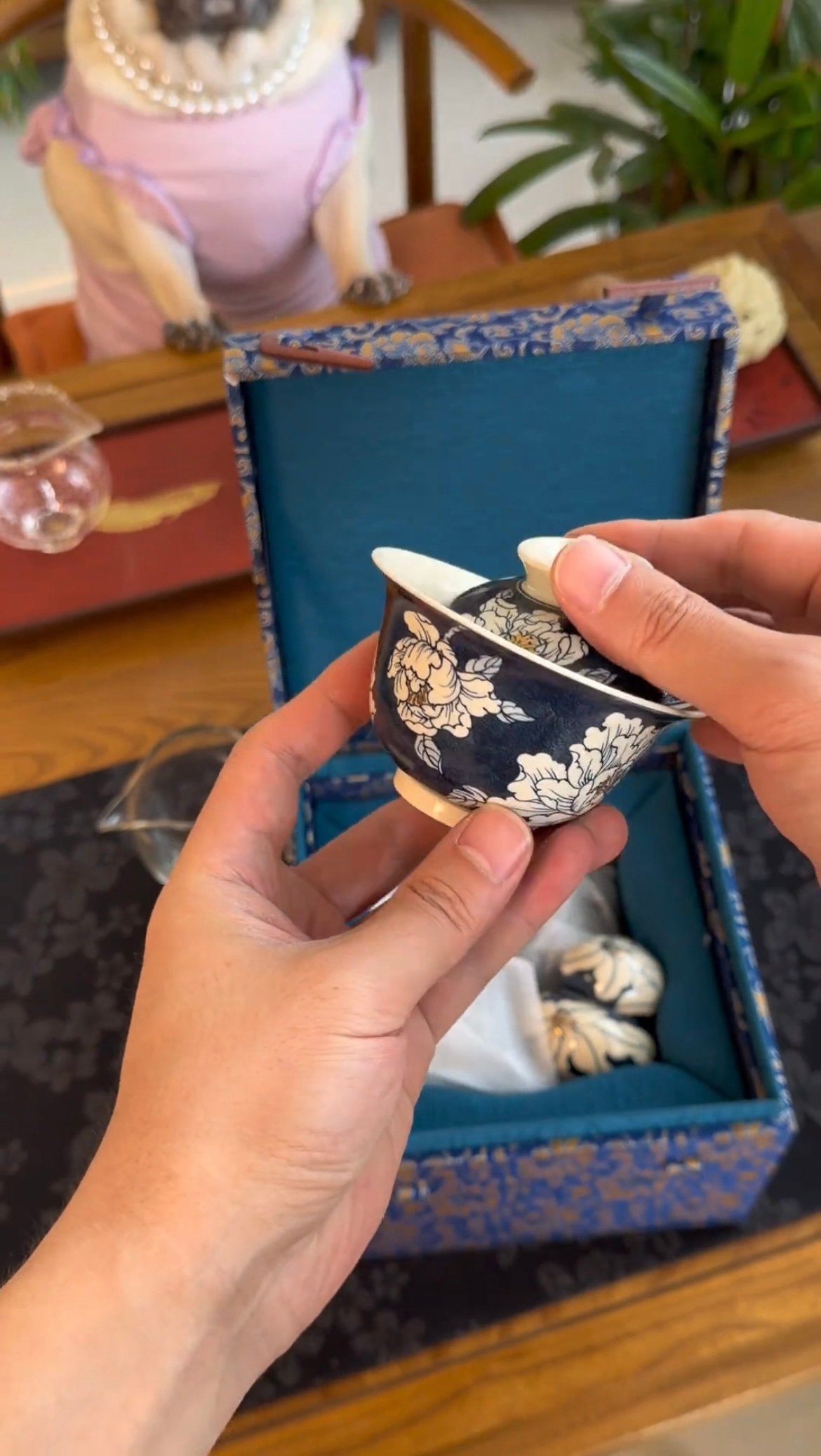
Discover the Jingdezhen Sunflower Gaiwan Set—a 3-piece hand-painted porcelain trio (130ml gaiwan + 70ml cup + 15cm tray) in iconic splashed-blue glaze with gold sunflower motifs. An authentic Chinese Tea Ceremony Set that turns every pour into art. Free shipping.
Jingdezhen Sunflower Gaiwan Set: The 3-Piece Hand Painted Porcelain Gaiwan You’ll Regret Not Buying Sooner
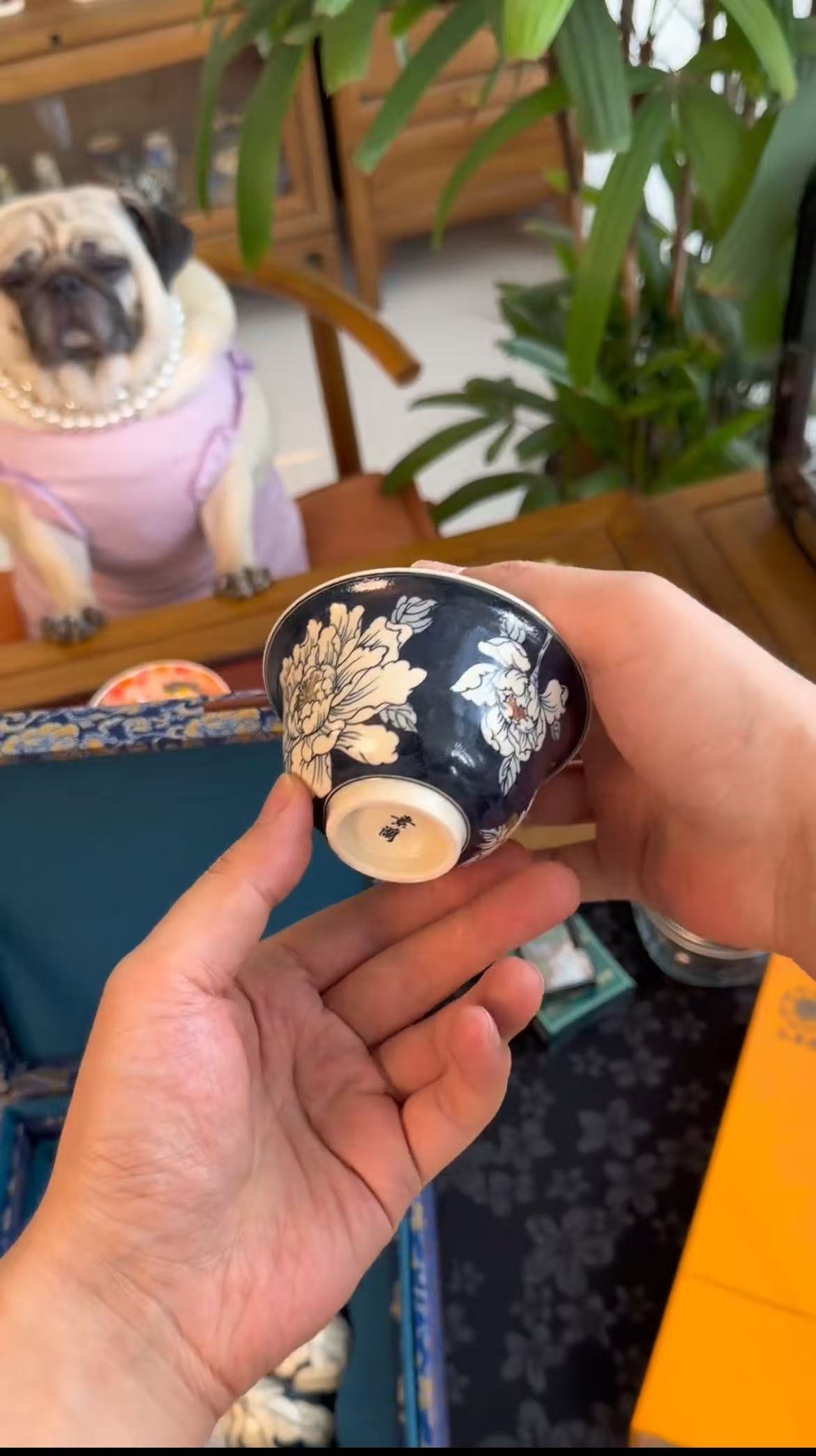
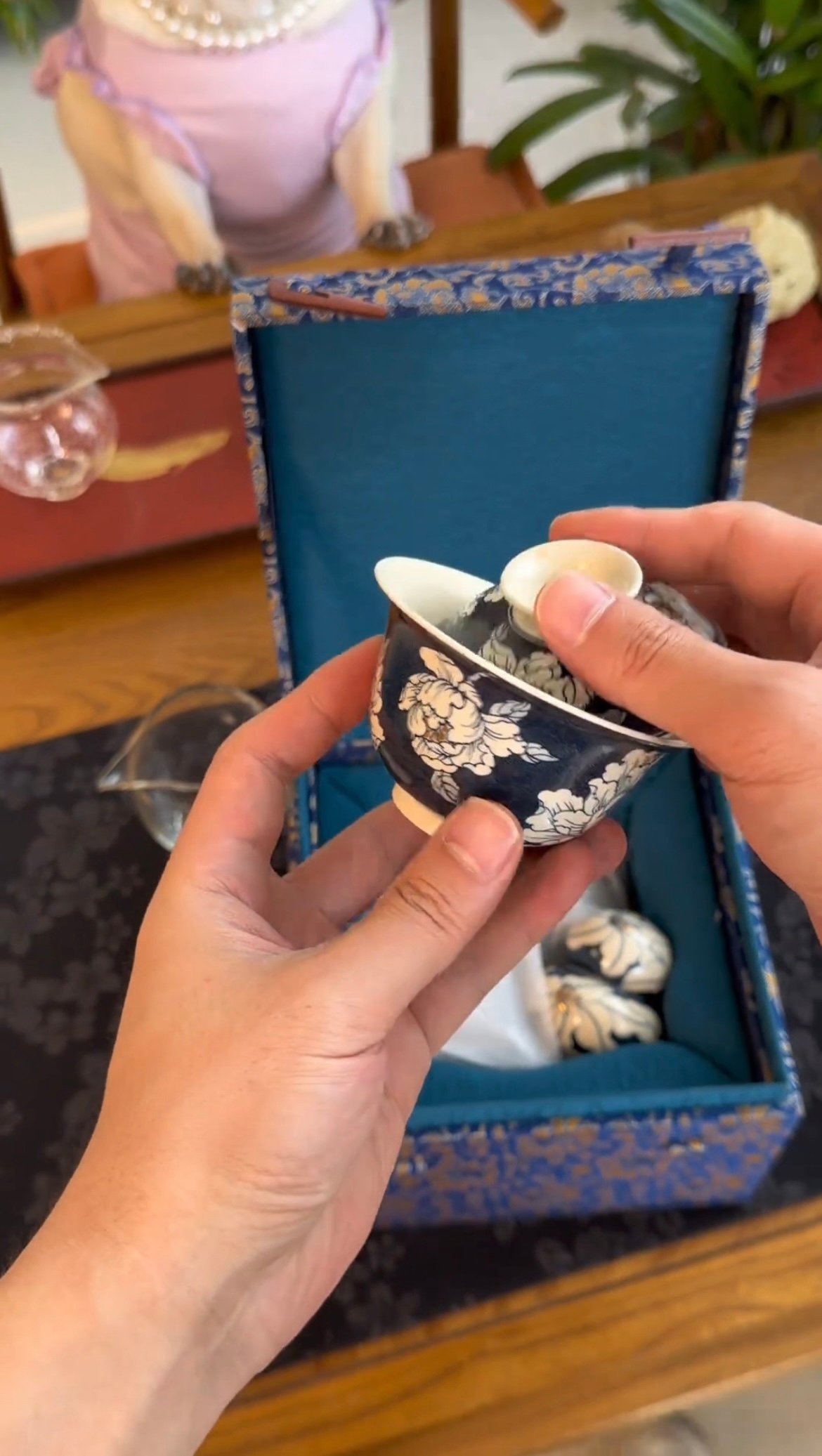
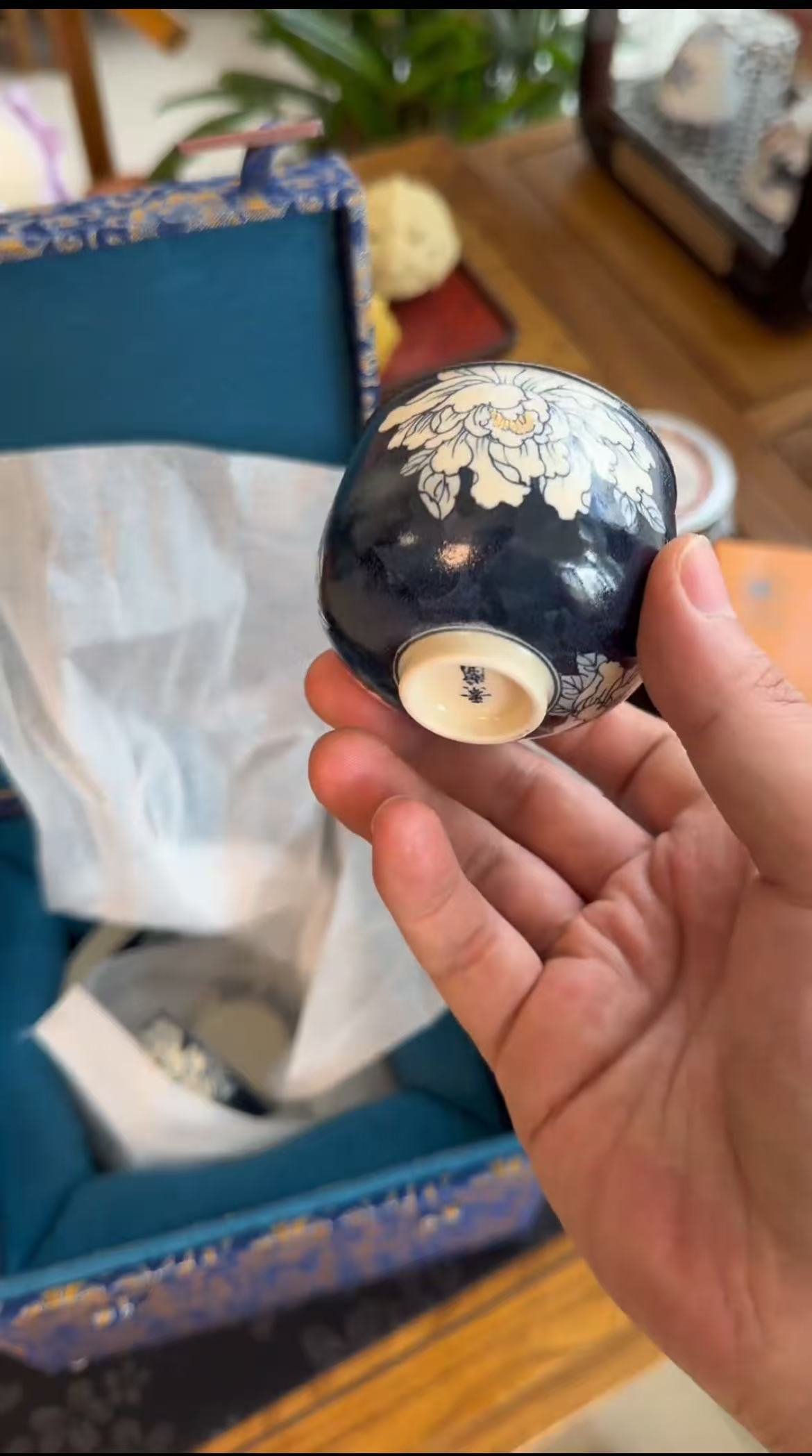
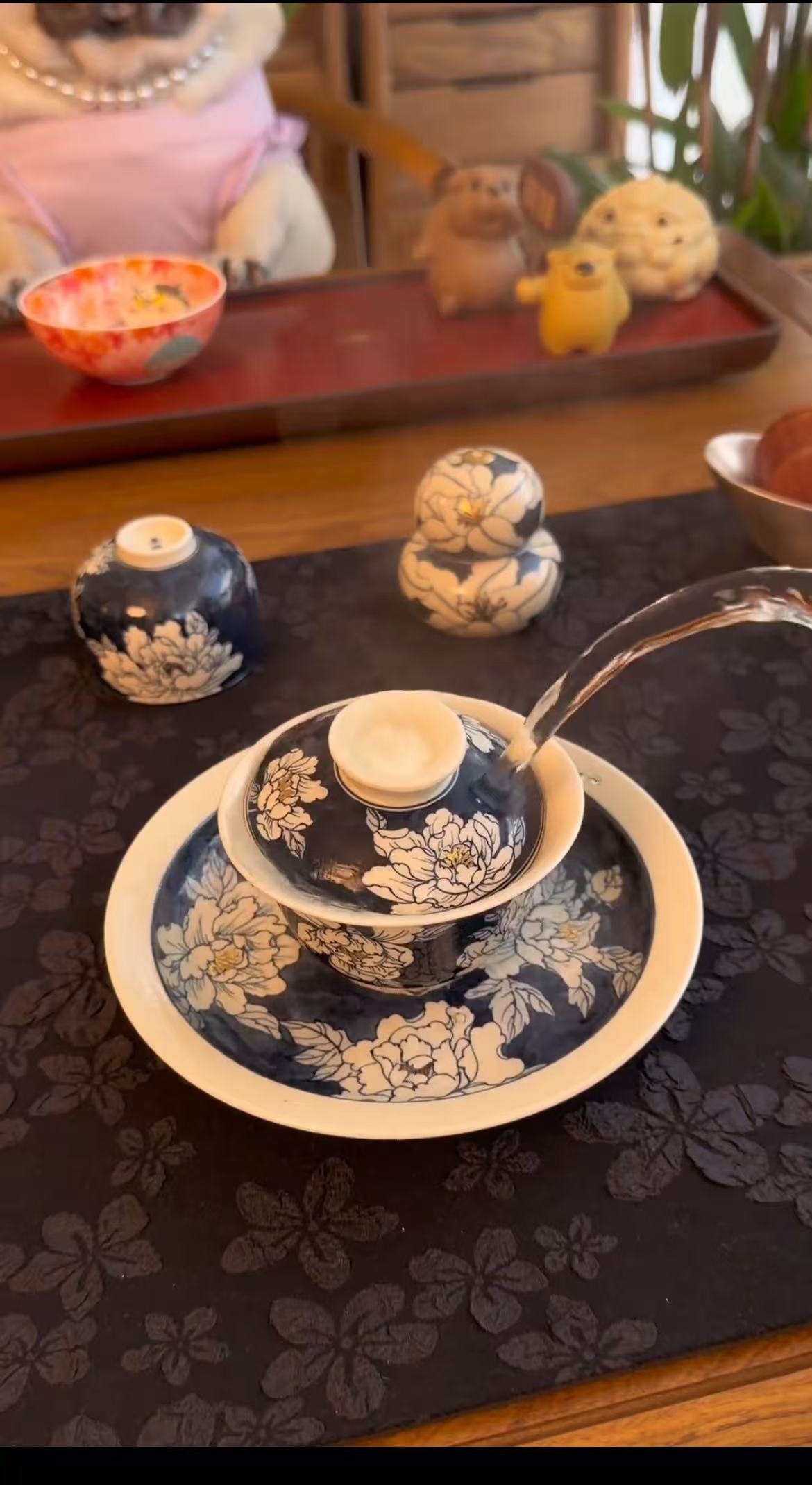
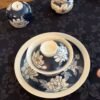
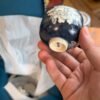
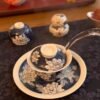
In Jingdezhen, an old saying goes: porcelain never speaks, yet it speaks for its owner. When a gaiwan is placed on the tea table—and across its deep, ink-washed splashed-blue ground a sunflower suddenly lifts its head, its gold-edged petals catching the light—the whole table holds its breath. That is the Jingdezhen Sunflower Gaiwan Set. This is not a distant cousin of mass-printed white porcelain. It is alive with studio hands—thrown, trimmed, glazed, and hand-painted in the warrens of Jingdezhen’s historic workshop alleys. One 130ml gaiwan, 70ml pinming cups, one 15cm glazed tray: three pieces bound as one set, under the title “Splashed Blue, Condensed Fragrance Glaze, Gold-within-Glaze · Sunflower”—marrying clay, cobalt, gold, fire, and a painter’s wrist into a daily tea rite.
1. Jingdezhen Sunflower Gaiwan Set: What Arrives on Your Doorstep
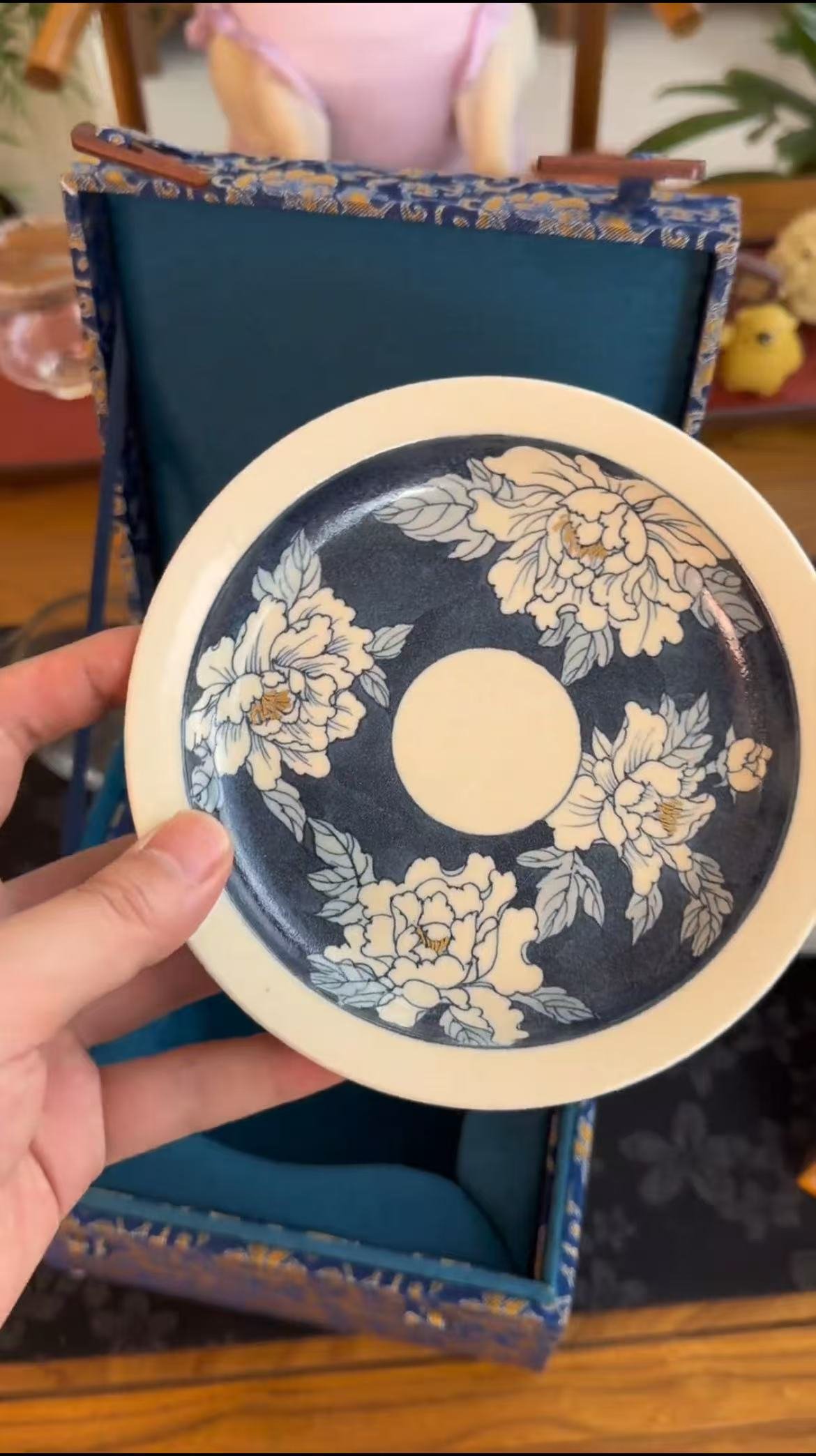
Let’s be precise about proportions first, because Gongfu tea is a geometry problem. The gaiwan (rim ~10–11cm, height ~8cm, 130ml capacity) sits right in the sweet “medium” zone: enough room for a standard leaf-load of oolong, puer, or black tea flash-infusions, yet compact enough to stay cool at the rim and keep liquor warm in the pool. pinming cups (≈70ml each) follow the small-sip philosophy—thin-walled, shallow-bellied, built for aroma-capturing, not volume-chugging. The tray (⌀15cm) catches drips, frames the micro-composition, and gives the set a grounded footprint. Total weight feels light in a bag but dense in the hand—high-white Jingdezhen porcelain, high-fired, with that unmistakable ring when you tap the rim.
2. Jingdezhen Sunflower Gaiwan Set: Why “Splashed Blue” Matters More Than You Think
“Splashed Blue” (sha lan / 洒蓝) literally means “blue glaze flung or sprinkled on”—yet it is one of the Ming court’s most disciplined techniques. First, a pale base glaze (transparent / celadon-leaning) coats the bisque. Then a sieve of bamboo gauze is held over the piece; a brush saturated with deep cobalt is snapped against the mesh so cobalt droplets atomise through the holes and rain onto the surface. From a distance: an even indigo mist. Up close: star-fall, surf-foam, midnight speckle. Multiple controlled firings lock the speckle into the glaze for a matte-silken “condensed fragrance” luster—never garish, never flat. Our sunflower is born onto that artificial night sky.
2.1 The Hand-Painted Sunflower: Gold That Tells a Story
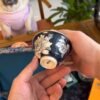
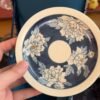
A critical distinction: the market is flooded with decal “gold sunflower” gaiwans—transfer-printed, thousand-alike, gold that feels like a sticker. The real Jingdezhen Sunflower Gaiwan Set takes the slower road. Once the splashed-blue base has set, a painter loads a fine weasel-hair brush in real gold flux (low-expansion gold formulation, over-/in-glaze depending on the studio batch) and draws—not stamps—the disk, the seed-grid, the radiating petals, the bright edge-highlight. One sunflower, center to outermost tip, typically needs seven to nine tonal passes. And because it is handwork, there is no clone: this bloom’s “gaze” tilts a hair left; that one’s petal-tip arcs more daringly. You aren’t buying an SKU; you’re buying proof that someone’s wrist steadied, one afternoon, for you.
3. Jingdezhen Sunflower Gaiwan Set: The 7-Stage Studio Timeline
3.1 Stage One: High-White Porcelain Body
Everything starts with locally sourced high-white porcelain clay (or a Jingdezhen-standard kaolin blend). After vacuum-pugging, ageing, and a second knead, the clay hits the wheel. The gaiwan’s bowl needs a curve that narrows but doesn’t choke—promoting a stable vortex on pour, while the flared rim lets the lid lift fast and the liquor drain clean. The tray is either wheel-thrown or press-moulded then foot-trimmed; the cups are quick-thrown then foot-finished. All bodies air-dry in a ventilated shed to leather-hard, then get refined (foot, rim, burrs). At this stage the bisque already feels like dry bone—cold, hygroscopic, dignified.
3.2 Stage Two: Bisque Firing – Preparing the Canvas
Packed in saggers, the greenware bisques at ~900°C. Organics burn out; the body gains handling strength and a porosity that “drinks” glaze without collapsing. Out of the kiln: a warm off-white canvas, ready for the blue.
3.3 Stage Three: The Sha Lan (洒蓝) Glaze – Rain of Cobalt
A whisper-thin transparent base glaze (sometimes leaning celadon-grey) goes on first, then dries. The sha lan cobalts are flicked through mesh. Concentration of cobalt, mesh aperture, snap-force of the wrist, even that day’s humidity—all shift the droplet distribution. It’s controlled randomness, the soul of splashed blue: you want an indigo field, but not a dead-airbrush plane. The final read: cobalt dots suspended in a paler matrix, like nebula.
3.4 Stage Four: First Glaze Firing – Binding the Blue
The splashed layer is locked in at a high-fire window (~1260–1320°C depending on formulation) so the cobalt sinters into the glaze skin—dotty but permanent. Out of the kiln: check for crawling, pinholes, then onward to the painting bench.
3.5 Stage Five: Hand-Painting the Sunflower in Gold
The painter loads a fine brush in gold flux, works outward from the disk’s centre (seed-grid hatching), fills petal bases with a broader sweep, and edges each tip with a brighter highlight. Some batches add the faintest olive line to a stalk, but the ruling chord is always blue field → gold disk → gold petals. Between petals, a sliver of splashed-blue stays exposed so the flower breathes and the blue stays anchored. After drying, a low-temperature gold-firing (typically 720–820°C range, depending on the gold system) locks the metal: matte-glow or mirror-bright.
3.6 Stage Six: Tray, Cups, Assembly
Cups follow the same bisque → clear glaze → high fire route (bodies left plain or given a splash-blue echo); the tray gets a matching clear/celadon dip, foot left raw or partially wiped. Final QC: grit-spot checking, soft rim polish if needed, then protective packing.
3.7 Stage Seven: What “Hand Painted Porcelain Gaiwan” Actually Means for Longevity
Because the gaiwan body is high-fired porcelain, the bone is tough and thermal-shock tolerant well beyond many over-glaze-only wares; the gold is low-fired onto a stable shell—so with normal brewing it stays, but dishwashers, steel wool, and marathon acidic soaks are its natural enemies. Put plainly: hand-painted asks for hand-washing. Respect earns years.
4. Jingdezhen Sunflower Gaiwan Set: How to Brew with It (And Why 130ml Is the Sweet Spot)
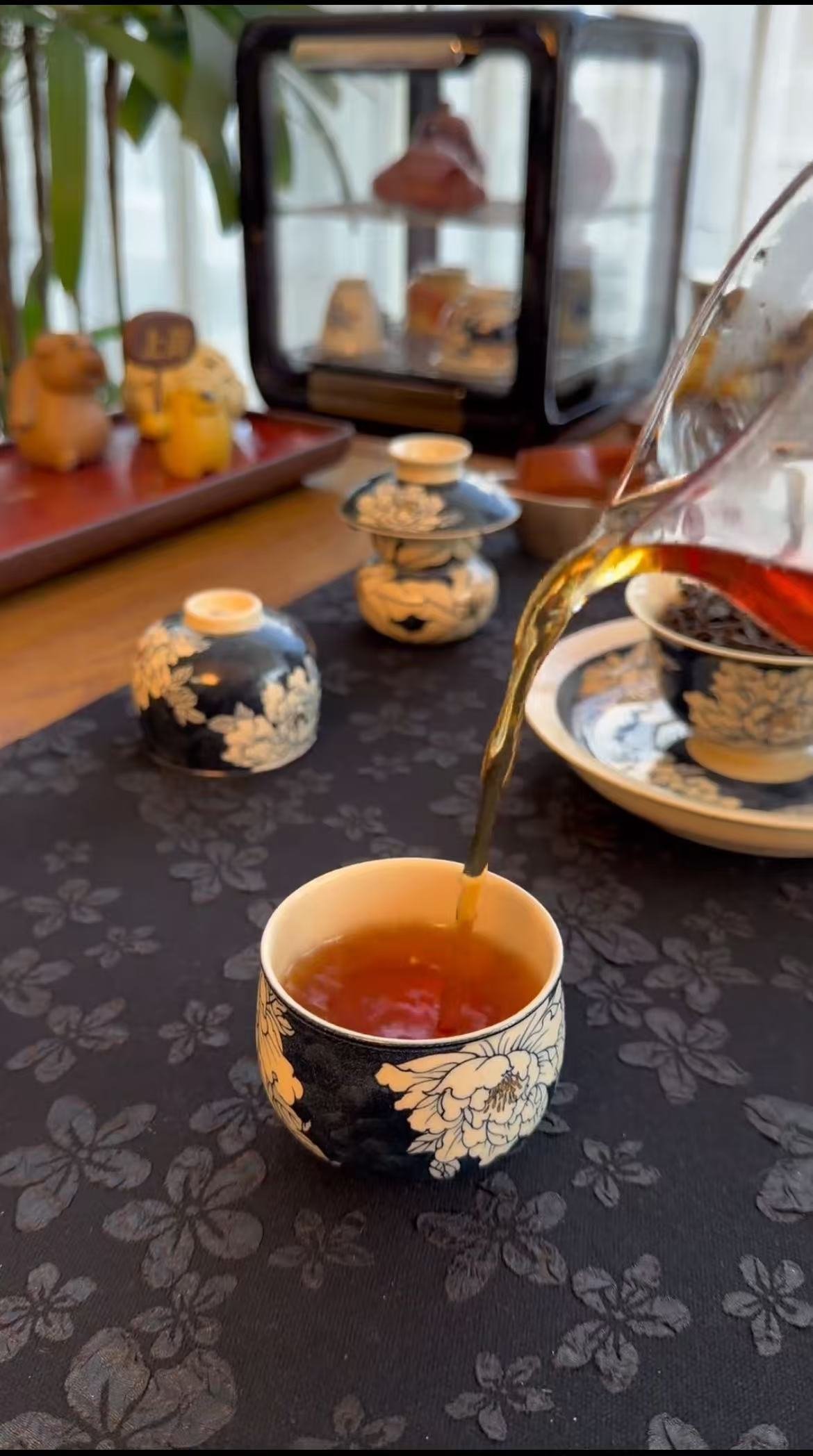
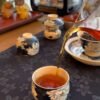
Is 130ml small? In Gongfu logic, it’s nearly perfect. Drop 5–7g of fairly condensed leaf (Yancha, compressed puer nuggets) in, hit it with 100–120ml, lid-on for 5–8s, pour—your cup lands right at that 70ml brim-line. One gaiwan-fill = one cup-fill. No top-ups, no letting tea sit cold in the bowl. The splashed-dark ground also helps you read liquor: amber or gold shows sharply against the deep blue field—your eye catches “peak” faster.
4.1 A Quick Brewing Map for the Jingdezhen Sunflower Gaiwan Set
Warm gaiwan & cups (swirl hot water, discard)
Add leaf (5–7g)
Rinse (2–3s flash, discard)
Infusion 1 @ 90–95°C, 5–8s pour
+3–5s per later steep
Rest lid slightly ajar; never slam boiling into a cold bowl despite good thermal shock rating—warm it anyway.
4.2 Why the 15cm Tray Matters
The 15cm tray is not an afterthought. It collects drips, defines your tea space, and visually anchors the gaiwan and cups. Its glazed surface wipes clean instantly. It also serves as a small presentation stand when you’re not brewing—display the set as the art piece it is.
5. Jingdezhen Sunflower Gaiwan Set: Symbolism You Can Actually Feel
In Western visual language the sunflower already carries warm, loyal, turn-toward-light associations—so it crosses cultures without awkwardness. But inside Jingdezhen’s decorative grammar, the bloom pinned against a splashed-night sky says one thing quietly: direction remains even in dark, light lives where you steer for it. Putting that on your table doesn’t just “look nice”—it tunes the ceremony’s tone. Today you’re drinking on purpose.
6. 5 Reasons the Jingdezhen Sunflower Gaiwan Set Earns Its Place on the Table
Authentic Jingdezhen Studio Lineage: High-white porcelain, high-fired, painter-led decoration. Buyers who can tell the ring of a rim know the difference immediately.
Splashed Blue (洒蓝) = Rare Surface Texture: Most blue-and-white is brush-painted cobalt underglaze on white. Splashed blue reverses the expectation: the field is the drama, the gold flower is the still point. It reads expensive because it is a harder technique to execute cleanly.
Hand-Painted Gold Sunflower—Never a Decal: You can feel the brush. Petal widths vary. The disk’s hatching has grain. Two sets side-by-side betray their individuality. That’s the premium justification in one sentence.
130 / 70 / 15 Proportions Are Ruthlessly Practical: Gaiwan not so big it’s clumsy, cups not so big the tea cools mid-sip, tray not so wide it eats half your table. A compact, complete 3-piece footprint.
An Instant-Heirloom Gift Narrative: Wrap this for a wedding, a promotion, a housewarming or a tea-obsessive friend and you aren’t giving “another mug”—you’re giving a Jingdezhen story, a hand-painted bloom, and a daily excuse to slow down.
7. Jingdezhen Sunflower Gaiwan Set: Care & Longevity (So the Gold Stays Golden)
Hand-wash preferred (warm water + soft sponge, no bleach). Gold has three enemies: dishwasher alkali heat, scrubbing pads, and long acidic baths. The splashed-blue is vitreous—normal film rinses clean; if a faint tea-ring eventually sets in, a baking-soda paste rested 1–2 min then rinse sorts it. Treat the tray the same. No thermal shock contests—porcelain forgives, but rituals include keeping it.
7.1 Storage Tips
Store the gaiwan with the lid slightly ajar (or separated) to allow airflow and prevent mustiness. Keep the cups nested but not stacked too tightly. The tray can double as a coaster or display stand. Avoid direct sunlight for prolonged periods—the gold will remain brilliant for decades if cared for properly.
8. Jingdezhen Sunflower Gaiwan Set: The Perfect Gift for Any Occasion
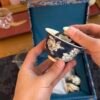
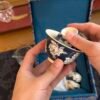
Whether you’re treating yourself or searching for a meaningful present, this set delivers. It arrives in a custom gift box with foam inserts, ready to give. The combination of Jingdezhen provenance, hand-painted artistry, and practical elegance makes it suitable for:
Weddings (a symbol of brightness and fidelity)
Housewarmings (a centerpiece for the new home)
Birthdays (for the tea lover who has everything except this)
Corporate gifts (a cultured, premium token of appreciation)
Self-gifting (because you deserve beauty in your daily ritual)
9. Frequently Asked Questions About the Jingdezhen Sunflower Gaiwan Set
Q: Can I use this gaiwan for all tea types?
A: Absolutely. The 130ml size is ideal for oolong, puer, black, green, and white teas. Adjust your leaf amount and steep time accordingly. The splashed-blue interior does not affect flavour—it’s purely aesthetic.
Q: Is the set microwave and dishwasher safe?
A: The porcelain body is microwave-safe, but the gold decoration is not dishwasher-safe. Hand washing is strongly recommended to preserve the gold. Microwaving is fine as long as you avoid metal-trimmed items (our gold is fired on, not metallic foil, but caution is advised).
Q: How long does shipping take?
A: We ship from our warehouse within 1–2 business days. Standard delivery to the US and Europe typically takes 7–14 days. Express options are available at checkout.
10. Join the Community of Jingdezhen Sunflower Gaiwan Set Owners
Every set sold supports traditional Jingdezhen craftsmanship. Our customers tell us that this set becomes the most-used piece in their tea collection. Many share photos on social media, tag us (@junxistea), and report that the sunflower motif never fails to draw compliments. You’re not just buying a product—you’re joining a circle of people who value authenticity, beauty, and the slow art of tea.
Ready to make every pour a work of art? Click “Add to Cart” and bring the Jingdezhen Sunflower Gaiwan Set into your home. Free shipping on all orders.
Reviews
There are no reviews yet.
Be the first to review “Jingdezhen Sunflower Gaiwan Set: The 3-Piece Hand Painted Porcelain Gaiwan You’ll Regret Not Buying Sooner”Cancel Reply

Reviews
There are no reviews yet.