🎄 A little something from our tea table to yours. Spend $100 or more and we'll tuck a Christmas tea gift set + holiday tote into your parcel — no code needed, just our way of saying thanks. While supplies last, so don't wait till the 24th.Free Worldwide Shipping · Shipped from Fujian, China. Enjoy hassle-free delivery with our double customs clearance service—all taxes prepaid, no hidden costs! Specializing in High-Quality Chinese Tea & Teaware. Our teas feature authentic flavors, sourced from the best farms and purely handmade by master artisans without any additives. Experience the true essence of traditional tea culture today. DismissSkip to content
Premium Da Hong Pao is a Zhengyan Wuyi rock oolong fired to a medium-to-full charcoal roast. Caramel and roasted flower up top, thick broth in the middle, a cool sweet finish that lingers. Seven plus steeps from one scoop, hand-sorted, one ingredient only. Ships free worldwide, and the parcel reaches your door with clearance already handled.
Premium Da Hong Pao starts as a Wuyi rock oolong, then goes through the old path: shake-fix, kill-green, and repeated charcoal roasting over stores well for years. The fire is not a finish coat. It is part of the structure.</p >
Medium-to-full fire means the leaf meets controlled charcoal heat several times, resting between each pass. That rest lets the roast move from the surface into the strip, so the broth carries warmth instead of a burnt edge. You taste fire as depth, not as noise.</p >
Why the roast sits in the pocket
Too light a fire leaves the tea green and thin. Too heavy buries the flower under charcoal. This lot lands where caramel, roasted fruit and orchid all get a turn, because the master stops each pass before the aroma shuts off.</p >
The result is a cup that smells sweet but drinks serious. The aroma invites you in, the broth keeps you there.</p >
Zhengyan Da Hong Pao, grown in the rock
The leaf comes from the Zhengyan core inside the Wuyi scenic zone, where tea roots push into fractured rock and red soil. Mist stays low, sunlight comes filtered, and the bush grows slow.</p >
Slow growth is the whole point. It builds the mineral density you feel as a slight grip on the tongue, then a cooling finish down the throat. Lowland leaf cannot fake that. You can call it rock bone, or just say the tea has weight.</p >
What “正岩” protects
Zhengyan means true rock, the inner belt of the reserve. Outside that line, the same cultivar tastes lighter, sweeter on the surface, shorter on the finish. Inside it, the tea carries the mountain in the broth, not just in the smell.</p >
We name the zone because the zone is the product. Move the hill, move the cup.</p >
Rock rhyme oolong, the feeling not the flavor
Premium Da Hong Pao is not just aromatic, it is resonant. Warm the empty gaiwan, drop the leaf in, cover for ten seconds, lift the lid. The dry heat gives caramel, baked dough, a little smoke.</p >
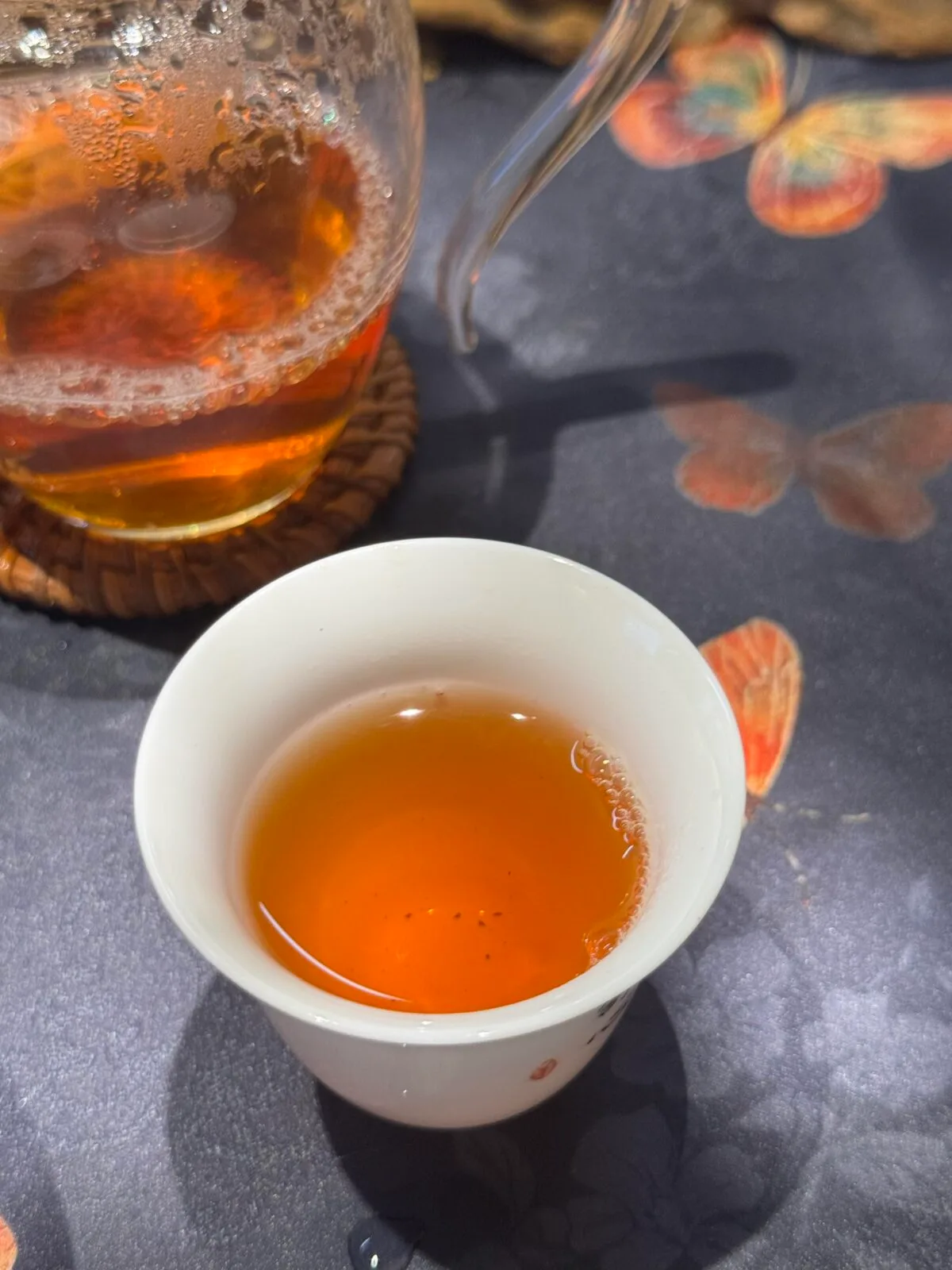
First pour is deep amber, almost orange-gold. The nose gets roasted orchid. The tongue gets a thick, rounded broth with a faint mineral line. After you swallow, the throat cools and the flower comes back through your breath. That return is the rhyme.</p >
The three movements of one session
Early steeps lead with toast and caramel, bright and warm. The middle opens orchid, stone fruit, a touch of cocoa, and the body turns silkier. Late steeps relax into sweet water with a cool rocky tail that stays longer than the cup.</p >
Most oolongs give you one voice. This one gives you a small orchestra, and it changes seating every pour.</p >
A gongfu session, pour by pour
Use a 110ml gaiwan, a pre-portioned scoop of leaf, and a full rolling boil at 100°C. Da Hong Pao needs heat to crack the charcoal seal and lift the rock mineral. Cooler water tastes flat, the caramel turns muddy, and the rhyme never shows up.</p >
Rinse once for five seconds to wake the leaf and clear surface ash. First three steeps pour at five to eight seconds. Do not linger. The broth is thick and the tannin comes fast, so quick pours keep the cup clean and let the aroma layers unfold in order.</p >
From steep four, add five to ten seconds each round. The flower widens, the fruit deepens, the finish cools. By steep seven or eight you can push longer and still get a sweet, mineral tail. The leaf does not collapse, it just gets quieter.</p >
Why no闷泡: the roast makes the surface delicate. Sitting water pulls bitter bark and kills the orchid underneath. Pour, lift, empty the bowl completely. The discipline is what gives you seven plus clean steeps instead of three loud ones.</p >
A Western pot method for slower days
No gaiwan? Use a 350ml ceramic pot, a small scoop of leaf, water just off the boil, and steep three minutes. Strain fully. The cup will be rounder and heavier than gongfu style, with less layer separation but the same caramel-orchid spine.</p >
Refill once or twice with an extra thirty seconds each time. Skip milk and sugar. They bury the rock. This tea is built to drink straight, like a slow red wine you can re-pour.</p >
Authentic Wuyi rock tea, traced not guessed
Buying Da Hong Pao online is mostly a trust problem. The name gets printed on everything from outer-mountain blends to flavored imitations. We answer with specifics: the zone, the roast, the sort standard, the lot.</p >
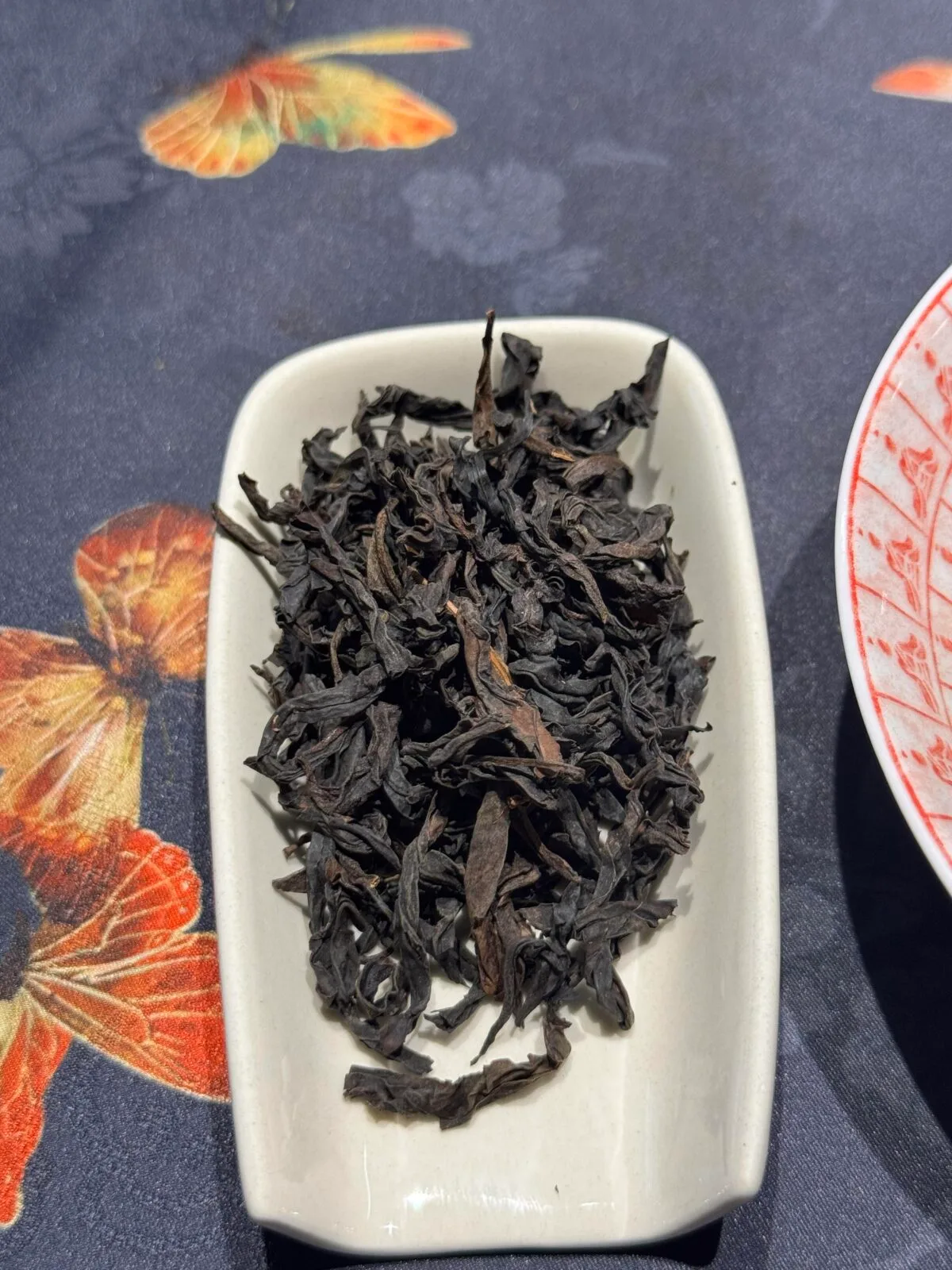
The leaf is hand-plucked in spring, then hand-sorted after final roasting so only whole twisted strips go in the pouch. No broken dust, no flavor oil, no liquid smoke, no coloring. One ingredient: Camellia sinensis.</p >
What you can check at home
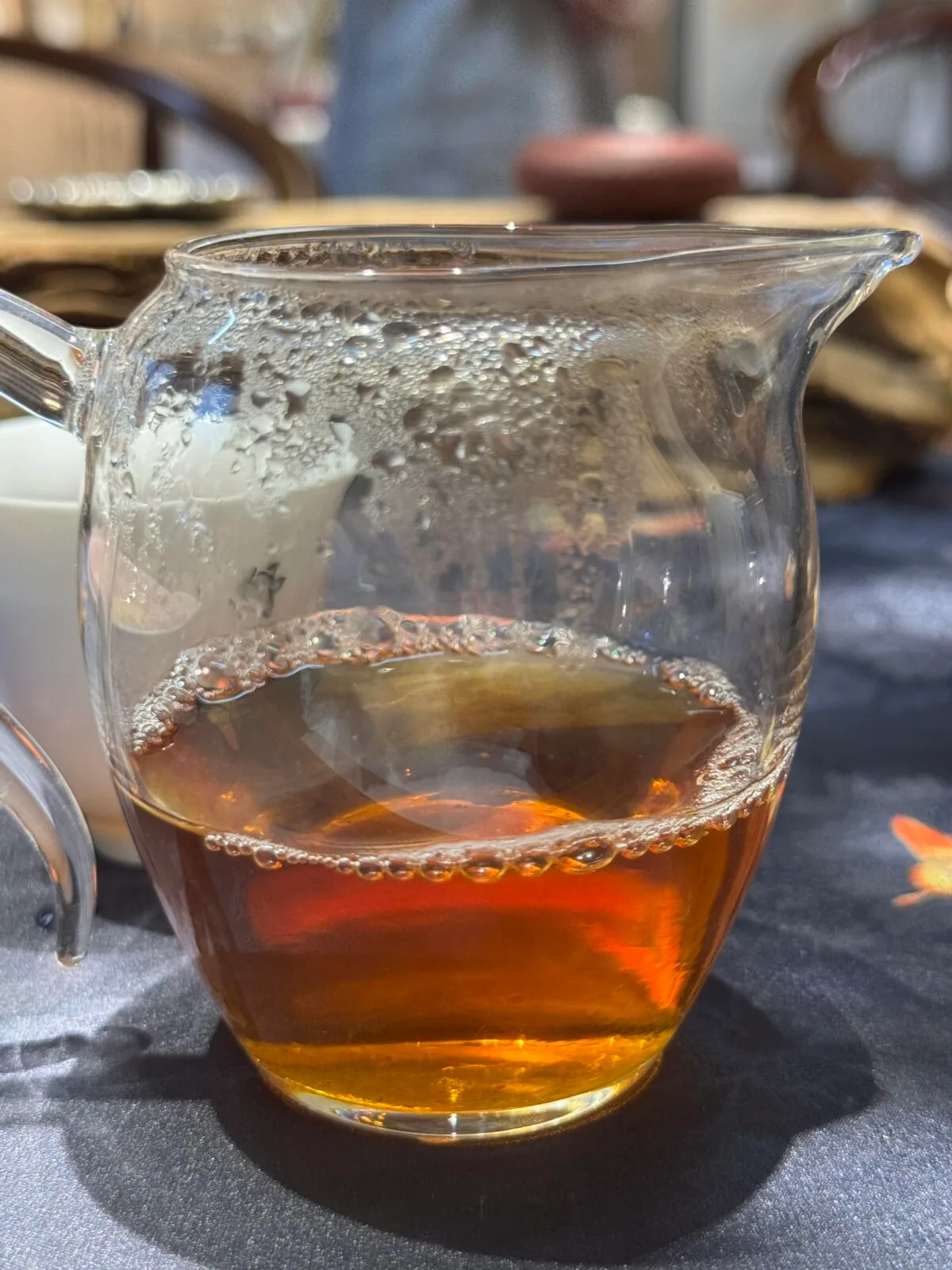
Real Premium Da Hong Pao shows tight greenish-brown strips with a precious sheen, not black and shiny from oil. The broth is clear deep amber, not murky brown. The aroma is roasted but floral, not sharp like burnt sugar.</p >
The finish tells the last truth. Imitation fades bitter. This one fades sweet, cool, and a little mineral, like water from a stone spring.</p >
Food that meets the rock
Da Hong Pao stands up to bold plates. Roast duck, braised pork belly, grilled mushrooms, aged gouda, dark chocolate, toasted walnuts. The caramel in the tea mirrors the sear on the food, and the mineral line cuts the fat.</p >
Keep desserts light. Avoid vanilla, milk chocolate and floral pastry. They make the cup taste thin by contrast. The tea wants company with spine, not something powdered and sweet.</p >
When to pour it
Late morning works best. The caffeine is steady, not sharp, and the warmth suits a slow start. After a heavy meal it feels grounding, the spice and roast settle the stomach without a crash.</p >
It also earns a quiet evening. One gaiwan, eight steeps, no phone. The tea does the talking, and it has a long sentence.</p >
Storing the fire without losing the flower
Keep the pouch sealed, dry, away from sun, coffee and spice. No fridge needed. Medium-to-full fire tea actually likes a cool cupboard, where the roast rounds and the fruit deepens over stores well for years.</p >
Open the pouch, let the leaf breathe a few minutes before the first rinse. The charcoal dust settles, the orchid comes forward, and the broth pours cleaner from steep one.</p >
Why this lot will not repeat exactly
Rock tea is a seasonal craft. The fire, the leaf and the weather shift every spring, so this batch has its own balance. What you taste now is this season’s lot, not a flavor we can clone on demand.</p >
When it is gone, the next lot will be a little different. That is not a flaw. That is the mountain keeping score.</p >
The cup that holds its weight
Premium Da Hong Pao is not a gentle everyday oolong and not a loud novelty. It is the middle crown of Wuyi: thick enough to respect, floral enough to love, long enough to remember.</p >
You do not chase the flavor. You let it build, pour after pour, until the room smells like caramel and stone and the throat still feels cool after the cup is empty.</p >
From the cliff to your gaiwan
One mountain, one fire, one cultivar at its best. Premium Da Hong Pao gives you caramel and orchid on the nose, a broth with rock bone in the middle, and a cool sweet finish that stores well for years.</p >
Grab a pouch while this lot is in stock. It ships free, clears before delivery, and is ready the moment your water hits a rolling boil. Warm the bowl, rinse once, pour fast, and let the rhyme speak before you reach for anything else.</p >
Pour the first steep, then stay
Premium Da Hong Pao rewards the person who stays for steep five. The first pour is just the handshake. By the middle the tea opens, and by the end it leaves a cool mark on the throat that keeps talking after the session ends.</p >
Keep the water at a full boil, keep the pours quick, and let the leaf set the pace. One pouch, one fire, one clear rock voice. Free shipping, cleared before it reaches your door, ready the second your kettle sings.</p >
2 reviews for Premium Da Hong Pao: Won over 7 steeps, deep rock charm
Rated 5 out of 5
Marian –
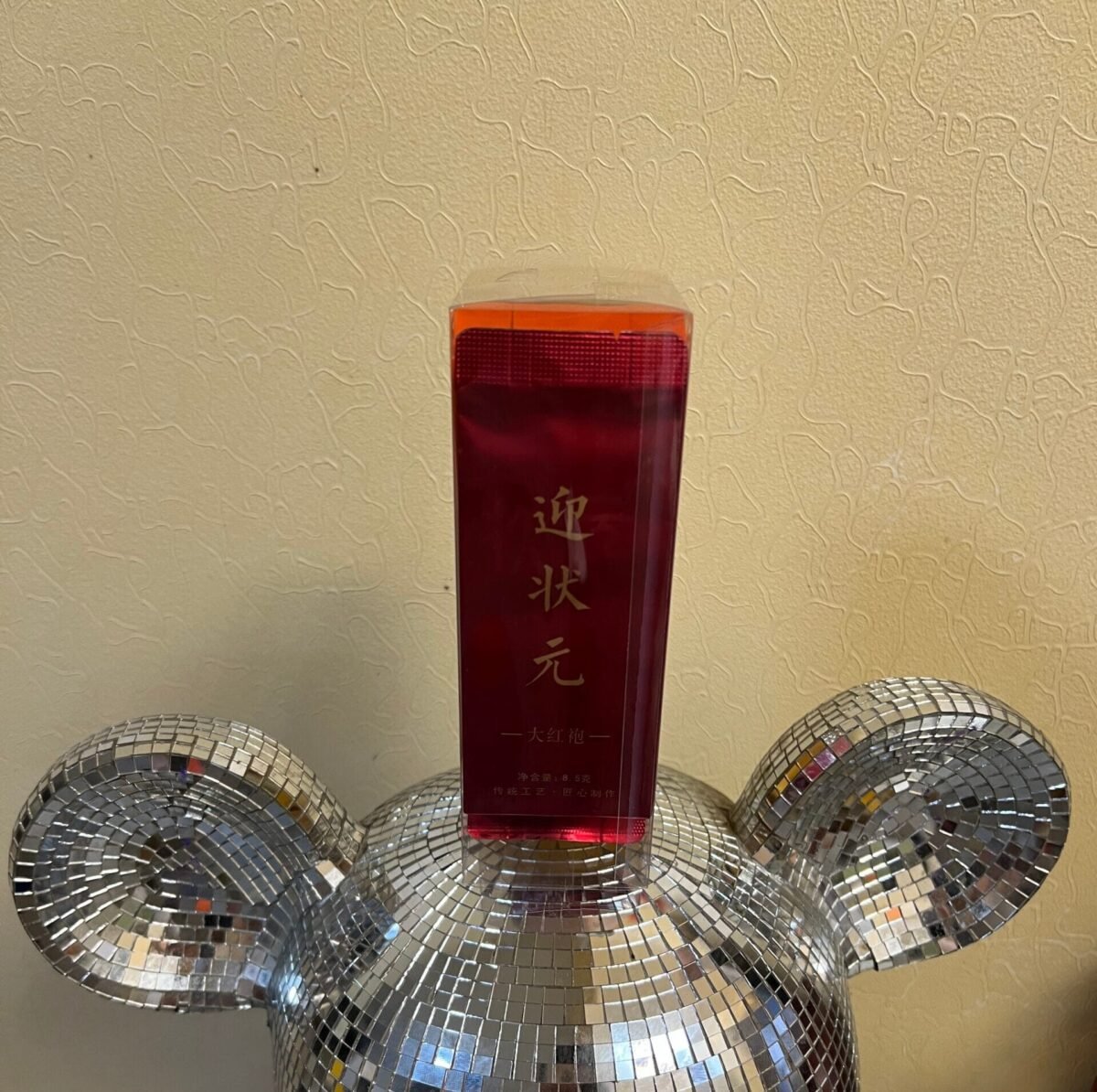
Great quality Da Hong Pao tea! Lovely aroma, rich and smooth flavour, and beautifully packaged. Really enjoyable and highly recommended!
junxistea@gmail.com –
Thank you so much for the kind words! 🍵 Da Hong Pao is one of those teas that speaks for itself — deep, rocky, and endlessly rewarding. So glad it landed well with you. If you ever want to explore more Wuyi rock teas, just let me know. 🙏✨
Rated 5 out of 5
Ethan bloomfield –
Ok so full confession i brewed a small batch western style. Prob 3 grams to 150 mil water just under boiling 4 minute steeps i had 2 steeps and half a third before i ran out of water.
First steep it really had a nori seaweed mineral taste that i thoroughly enjoyed. A much more plesant rock tea than my first forey. I got a subtle green tea taste on the back end of it. The second steep the minerals had taken the back seat and the oolong green tea flavors were driving. It had almost a matcha flavor but bolstered by the minerals and elevated. The whole tea was very silky a smoothy almost fluffy texture as i drank. Highly recommend and have enough left for a full gong fu set up soon. Will update or re review after
junxistea@gmail.com –
This is a fantastic review — and that “nori seaweed mineral” note is exactly the 岩韵 (rock rhyme) we chase in Wuyi teas. 🍵 The fact that you caught the shift from minerals to that matcha-like green depth in the second steep means your palate is already tuned in. Western style is a perfectly valid way to meet a tea — and when you do that full gong fu session, that tea will unfold even more layers for you. Can’t wait for the update! 🙏✨











Marian –
Great quality Da Hong Pao tea! Lovely aroma, rich and smooth flavour, and beautifully packaged. Really enjoyable and highly recommended!
junxistea@gmail.com –
Thank you so much for the kind words! 🍵 Da Hong Pao is one of those teas that speaks for itself — deep, rocky, and endlessly rewarding. So glad it landed well with you. If you ever want to explore more Wuyi rock teas, just let me know. 🙏✨
Ethan bloomfield –
Ok so full confession i brewed a small batch western style. Prob 3 grams to 150 mil water just under boiling 4 minute steeps i had 2 steeps and half a third before i ran out of water.
First steep it really had a nori seaweed mineral taste that i thoroughly enjoyed. A much more plesant rock tea than my first forey. I got a subtle green tea taste on the back end of it. The second steep the minerals had taken the back seat and the oolong green tea flavors were driving. It had almost a matcha flavor but bolstered by the minerals and elevated. The whole tea was very silky a smoothy almost fluffy texture as i drank. Highly recommend and have enough left for a full gong fu set up soon. Will update or re review after
junxistea@gmail.com –
This is a fantastic review — and that “nori seaweed mineral” note is exactly the 岩韵 (rock rhyme) we chase in Wuyi teas. 🍵 The fact that you caught the shift from minerals to that matcha-like green depth in the second steep means your palate is already tuned in. Western style is a perfectly valid way to meet a tea — and when you do that full gong fu session, that tea will unfold even more layers for you. Can’t wait for the update! 🙏✨