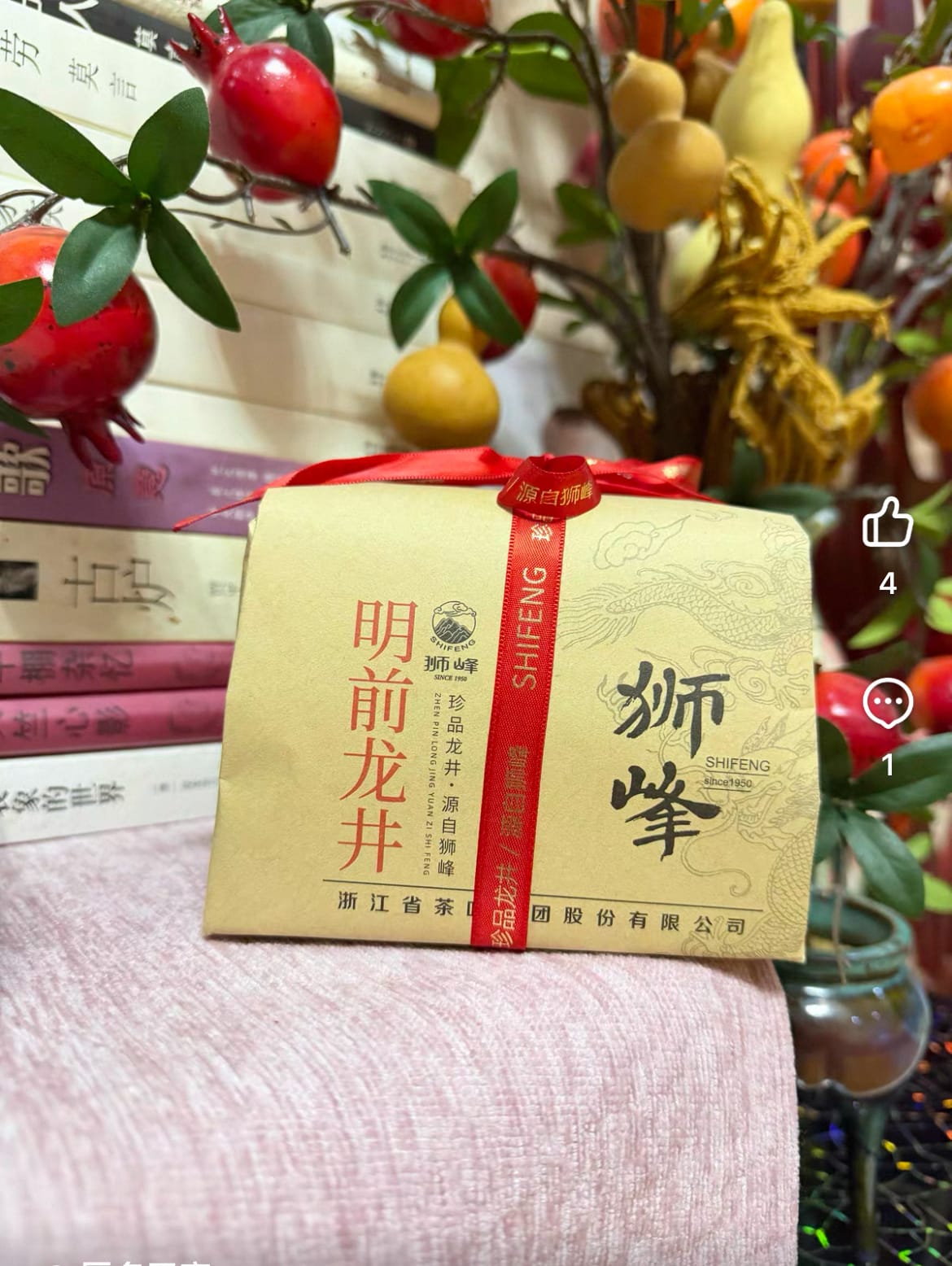
The Ultimate Guide to Shifeng Longjing Tea: 7 Core Truths About the “Emperor of Green Teas”

In the brilliant constellation of green teas, if there is a contender for the throne, it is undoubtedly Shifeng Longjing Tea. It is not a brand, but the pinnacle of a geographical indication, specifically referring to the supreme-grade Longjing tea produced in the Shifeng (Lion’s Peak) mountain area within Hangzhou’s West Lake Scenic Area. For many connoisseurs, Shifeng Longjing represents the ultimate expression of Longjing tea’s flavor and quality, the perfect embodiment of “freshness, aroma, sweetness, and mellowness.” This article delves into 7 core truths about Shifeng Longjing, from its legendary terroir and exquisite craftsmanship to the art of appreciation, fully unveiling the secrets of this “Emperor of Spring.”
Definition & Lineage: What is Shifeng Longjing Tea?
•First, a crucial clarification: Shifeng Longjing is the absolute core within the core of the “West Lake Longjing” protected geographical indication product. According to Chinese national standards, West Lake Longjing has primary and secondary production zones.
•Primary Protection Zone: The West Lake Scenic Area, encompassing the traditional “Five Core Regions”: Shi (Lion), Long (Dragon), Yun (Cloud), Hu (Tiger), Mei (Plum). Shifeng (Lion’s Peak) holds the premier position.
Secondary Protection Zone: Surrounding areas like Longwu and Liuxia.
Therefore, the definition of Shifeng Longjing is extremely strict: it must be produced within the Xihu Street area of Hangzhou’s Xihu District, centered on Shifeng Mountain (including adjacent mountains like Wengjiashan, Yangmeiling, Shangtianzhu), using fresh leaves from tea varietals suitable for Longjing (like the traditional Qunti Zhong or Longjing #43), and refined through traditional processing. Its identity is, first and foremost, West Lake Longjing, and then the representative of its highest quality. Historically, it was the tribute tea designated by Emperor Qianlong of the Qing Dynasty, establishing its unparalleled status.
2.The Terroir Code: Why is Shifeng Mountain Irreplaceable?
“The land defines the tea.” The excellence of Shifeng Longjing is fundamentally rooted in its irreplicable terroir.
2.1 Unique Microclimate
Shifeng Mountain has an elevation of about 350 meters, is lush with trees, faces West Lake to the north, and is near the Qiantang River to the south. The area is perennially shrouded in mist, receives ample diffused light, and has high air humidity. This environment allows tea shoots to remain tender longer, delays fiber formation, promotes the accumulation of fresh-tasting compounds like amino acids and aromatics, while moderating the synthesis of polyphenols (a source of bitterness).
2.2 “White Sand Soil” & Minerals
The soil of Shifeng Mountain is acidic white sandy soil formed from weathered quartzite. It is loose, well-aerated, and rich in minerals like potassium and phosphorus. This soil has excellent drainage, allowing tea tree roots to develop extensively and absorb nutrients efficiently, creating a unique material foundation. Lu Yu’s The Classic of Tea stated, “The best [tea] grows among rugged rocks,” a perfect description of this terroir.
2.3 Biodiversity
Within the core area, tea gardens intertwine with forests, forming a good ecological balance. Rich vegetation supports diverse insect and microbial communities, creating a natural, healthy growth system that avoids the drawbacks of intensive monoculture farming.
3.The Artisan’s Craft: How is a “Piece of Jade” Forged in a Wok?
The ultimate terroir requires the ultimate craft to express. The making of Shifeng Longjing is a “hand skill,” with its core being “manual finishing in the wok” (Hui Guo).
3.1 Plucking: Early, Tender, Diligent
Only spring tea is picked, with pre-Qingming tea being the most prized. The standard is a single bud with a newly opened leaf, shaped like a “sparrow’s tongue.” The bud should be longer than the leaf, and sizes must be uniform. This requires a vast number of skilled pickers working within an extremely short window.
3.2 Withering: The Prelude to Flavor
After picking, the fresh leaves must be spread in a cool, ventilated area for several hours. This allows some moisture to evaporate naturally, grassy odors to dissipate, and compounds like amino acids and polysaccharides to begin hydrolyzing and transforming, laying the foundation for subsequent aroma development.
3.3 Pan-Firing: The Ten Hand Movements
This is the soul of shaping Longjing’s “color, aroma, taste, and shape,” all done in an electric wok or traditional iron wok at about 180°C. The tea master employs ten hand movements—shaking, laying, pressing, pushing, flicking, grabbing, pushing forward, hooking, pressing down, grinding—to complete “Qing Guo” (initial shaping, fixation) and “Hui Guo” (final shaping, drying, and aroma enhancement) in about 20 minutes. Manual firing allows for millisecond-level adjustments based on leaf condition, wok temperature, and moisture changes—something machines cannot replicate. The final leaves are shaped into the classic form: smooth, flat, straight, and sharp, with a tender green color that shows a “light rice-husk yellow” hue.
4.Decoding the Flavor: How to Identify the Authentic “Shifeng Yun” (Lion’s Peak Rhyme)?
Tasting Shifeng Longjing is about pursuing a comprehensive sensory experience, known by connoisseurs as “Shifeng Yun” (Lion’s Peak Rhyme). It manifests in the following dimensions:
•Dry Leaf Aroma: Upon opening the package, an elegant, tender bean fragrance (often called “douhua xiang”—bean flower scent) mingled with a fresh, sweet orchid fragrance greets you. The aroma is pure, lifting, with no grassy or burnt notes.
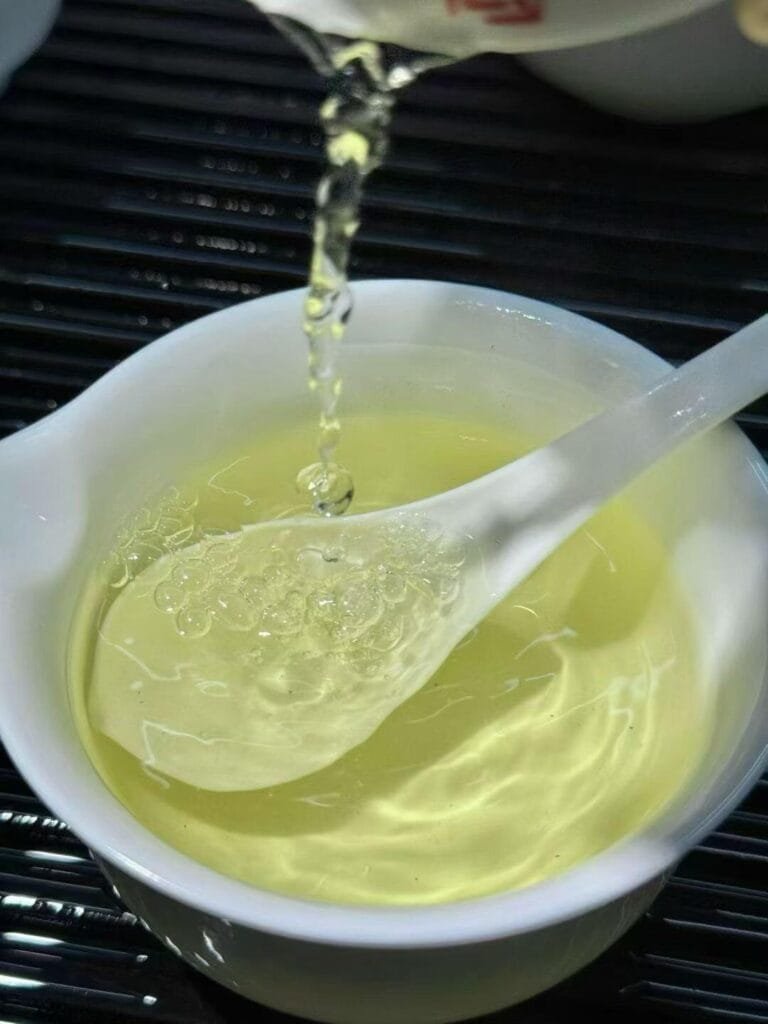
•Liquor Color: After brewing, the liquor is tender green, clear, and bright, like the juice of spring willow buds, with fine pekoe floating in the cup.
•Aroma: When hot, it’s a fresh, lively, and lasting floral-fruity complex aroma—bean flower, orchid base, with a hint of fresh, sweet chestnut. Sniffing the empty cup when cool, the aroma condenses into a sweet, honey-like sensation that lingers.
•Taste: The briskness and freshness on the palate are extremely high, as if biting into the juice of spring. This freshness quickly transforms into a lingering sweetness, stimulating strong salivation. The liquor is mellow and smooth, with no astringency or bitterness. After swallowing, the fragrance lingers between teeth and cheeks, a sweet aftertaste rises from the throat, and the finish is long, bringing a feeling of “clear satisfaction.”
•Brewed Leaves: The unfurled leaves are complete in shape, typically “one bud with one leaf” (flag and spear), tender green and vivid, even and bright, resembling blooming green orchids.
5.Grades & Selection: Understanding the Meaning of “Pre-Qingming” & “Superior Grade”
Selecting Shifeng Longjing requires understanding two key labels: Plucking Time and Quality Grade.
5.1 Plucking Time: Pre-Qingming, Pre-Guyu, After Guyu
•Pre-Qingming Tea: Plucked before the Qingming Festival. Due to low temperatures and slow growth, buds/leaves are extremely tender, high in amino acids, low in polyphenols. Beautiful appearance, taste is exceptionally fresh, sweet, and mellow—the representative of top-tier Shifeng. Scarce yield, high price.
https://junxistea.com/product/lion-peak-longjing-tea/
•Pre-Guyu Tea: Plucked before the Guyu Festival. Warmer temperatures, slightly larger leaves, more balanced inner compounds. Taste is more robust and potent, offering great value for money, a practical choice for many seasoned drinkers.
•Post-Guyu Tea: Plucked after Guyu. Larger leaves, strong taste, but reduced freshness.
5.2 Quality Grade: Superior Grade, Grade 1, Grade 2
National standards grade based on appearance, aroma, taste, liquor color, and brewed leaves, from Superior Grade down to Grades 1-5. Superior Grade Shifeng Longjing has the highest requirements: must come from core plots; appearance must be flat, smooth, straight, sharp, and even with a tender green, glossy color; aroma must be fresh, tender, and lifting; taste must be fresh, sweet, and mellow; brewed leaves tender and whole. When buying, always look for the Protected Geographical Indication (PGI) label and traceable proof of origin.
6.The Art of Brewing: The Science of Unlocking Shifeng Longjing’s Peak Flavor
mproper brewing is a “disaster” for premium tea. The customized brewing principle for Shifeng Longjing is: Handle with care to release its freshness.
•Vessel: First choice is a lidless transparent glass or a white porcelain gaiwan. A glass allows viewing the “tea dance,” a gaiwan offers control and aroma appreciation. Avoid Yixing teapots (absorb aroma) or thermoses (stew the leaves).
•Water Temperature: 80-85°C is the golden range. Let boiling water sit in a sharing pitcher for 1-2 minutes. Boiling water (100°C) instantly scalds tender buds, turning chlorophyll yellow, volatilizing aromatics, and over-extracting bitter caffeine and polyphenols, making the liquor yellow and bitter.
•Method: The “middle投法” is recommended. First pour hot water to fill 1/3 of the cup, then add the leaves (ratio ~1:50, e.g., 3g tea for 150ml water), swirl gently to moisten. After the leaves are saturated, top up with water, pouring from a height, to 70% full. This avoids direct scalding of tender buds.
•Time: No need for long steeping. After adding water, enjoy watching the leaves slowly sink and unfurl. You can start drinking after about 1-2 minutes. Refill when 1/3 of the liquor remains to maintain consistent concentration and freshness.
•Water: Use soft water with low mineral content (e.g., purified water, mountain spring water). Hard water interferes with the tea’s pure taste.
7.Authentication & Storage: Avoiding Pitfalls, Guarding the Spring Freshness
Given the prestige of Shifeng Longjing, the market is rife with issues. Mastering authentication and storage is crucial.
7.1 Key Authentication Points
1.Appearance: Authentic tea is flat, smooth, straight, and sharp—never curly or loose. The color is “light rice-husk yellow” (green with a yellow hue), not a dull or bright green (possible dyeing).
2.Aroma: Dry leaves should have an elegant bean flower/orchid scent; after brewing, the aroma should be fresh, lively, and lasting. Grassy notes, burnt taste, or an overly strong, artificial “fragrance” indicate a fake.
3.Taste: The core is “fresh, sweet, mellow, with no astringency.” Any noticeable grassiness, bitterness, or a thin, watery taste is suspicious.
4.Brewed Leaves: Authentic leaves unfurl into complete, tender, vivid green “flowers.” Fake tea may have broken, dark green leaves, or夹杂 purple buds and irregular leaves.
5.Packaging & Labels: Check for official geographical indication labels, SC production license, and traceable origin information. Prices significantly below market rate are almost certainly fake.
7.2 Scientific Storage Methods
Shifeng Longjing is extremely delicate—afraid of light, moisture, heat, and odors. The “three-layer packaging method” is essential:
1.Inner Layer: Aluminum foil bag, sealed after squeezing out air. Absolutely blocks light and moisture.
2.Middle Layer: Food-grade plastic bag, sealed again.
3.Outer Layer: Metal tin or sturdy cardboard box, blocks light and protects from crushing.
Store the packaged tea in the refrigerator (0-5°C). When taking some to drink, remove the needed amount, quickly reseal, and return to the fridge to prevent the leaves from反复 “sweating” and absorbing moisture. Do not freeze, and never leave it open at room temperature.
Conclusion: A Cup of Shifeng, A Sip of Hangzhou’s Spring
Drinking Shifeng Longjing早已 transcends mere thirst-quenching. It is a ritual, a dialogue with nature, the season, and millennia of craftsmanship. The cup holds the essence of West Lake’s landscape, the quintessence of Shifeng’s white sandy soil, and the fire control and heart invested by the tea master’s hands.
In an era that pursues efficiency, Shifeng Longjing teaches us to slow down. Use the right water temperature, wait for the leaves to unfurl; with a calm heart, feel that fleeting yet enduring freshness and sweetness. It is not flamboyant, yet inherently noble; not intense, yet profoundly resonant. When you truly understand a cup of Shifeng Longjing, you understand the pinnacle of Chinese green tea aesthetics, and you hold the brightest, most precious spring of Hangzhou in your hands.
https://youtu.be/eHMIHRuuNGU?si=OjJUUkJDA0Q6dEPM