A Symphony of Flavor: Mastering the 7 Golden Rules of Tea and Food Pairing

In the pursuit of a refined lifestyle today, we are passionate about exploring wine and cheese, coffee and chocolate pairings. However, in the East, an older, more profound, and philosophically rich art of accompaniment has thrived quietly for millennia—that of tea and food pairing. Tea is not merely a stimulating beverage; it is a dynamic flavor component, a liquid seasoning that can cleanse the palate, enhance umami, and provide a sense of completion to a meal. The right tea and food pairing acts like a key, unlocking deeper dimensions of flavor in both the food and the tea leaf, creating a sensory experience where the whole is greater than the sum of its parts. This guide will serve as your Chinese tea pairing guide, leading you beyond conventional thinking to discover the Eastern wisdom that can elevate every meal.
1. Rule One: Strive for Balance in Flavor Intensity
The foremost principle in tea and food pairing is to prevent one element from overpowering the other. Imagine a conversation: both parties need to be at a similar volume to hear each other. Think of flavor as having a “weight” or “volume.”
• Light with Light: Teas with fresh, delicate flavors, such as top-grade Baihao Yinzhen (Silver Needle) white tea or pre-Qingming Longjing green tea, have floral, umami, and subtly sweet notes that are easily overwhelmed. They pair best with equally light dishes that highlight the ingredient’s true taste, such as steamed fish, poached shrimp, fresh salads, or plain tofu dishes. This pairing seeks harmony and accentuation, not domination.
• Bold with Bold: Conversely, teas with robust, structured flavors, like aged ripe Pu-erh or heavily roasted Wuyi Rock Tea (e.g., Rou Gui, Shui Xian), possess deep “aged aroma,” “rock rhyme,” and a mellow liquor body. They require food partners that can “hold their ground.” Rich, fatty foods like braised meats, roast duck, aged cheeses, and dark chocolate can engage in a direct “conversation” with such teas, forming a complex and satisfying flavor matrix in the mouth.
2. Rule Two: Play with Flavor Complementarity and Contrast
Building on intensity balance, advanced tea and food pairing begins with creative interaction of flavors. It’s not just about matching, but about creating a new experience.
• Complementary Pairing: Look for shared aromatic or taste elements in both the food and the tea, allowing them to enhance each other. For example, an Oriental Beauty oolong tea from Taiwan, with its natural honey and ripe fruit aroma, will have its flavors echoed and amplified when paired with desserts containing similar honey or fruit elements, like honey cake or fruit tarts, creating ultimate harmony. A Longjing green tea with distinct “chestnut” or “roasted bean” fragrance can also create wonderful resonance with light pastries made with a few nuts or legumes.
• Contrast Pairing: Utilize the distinctly different characteristics of tea and food to create pleasant tension and a cleansing sensation in the mouth. This is one of the most magical aspects of tea and food pairing. The cloying sweetness of a dessert can be perfectly balanced and cut through by a cup of slightly bitter, quick-sweetness-returning raw Pu-erh, which refreshes the palate instantly, readying it for the next sweet bite. After indulging in greasy fried food or a cheese board, a cup of fragrant, polyphenol-rich oolong tea (like Tieguanyin, Phoenix Dancong) can effectively cleanse the palate of grease. Its refreshing texture contrasts sharply with the food’s heaviness, providing a experience.
2.1 A Core Technique: Leveraging Tea’s “Umami”
Many high-quality green teas, white teas, and Japanese Sencha are rich in L-theanine, which imparts a notable “umami” taste. This umami is a natural ally to seafood, mushrooms, and broths. Pairing a cup of fresh Anji Bai Cha or Gyokuro with sashimi or steamed seafood allows the tea’s umami to synergize with the food’s, creating an “umami bomb” effect that极大地 enhances the overall flavor layers and satisfaction.
3. Rule Three: Understand the Interaction of Textures
Beyond flavor, the pairing of textures (mouthfeel) is equally crucial. Tea is not just a taste; it is a liquid with a specific “body” and tactile sensation.
• Cutting Through Grease & Cleansing: This is tea’s most classic and practical function. Teas rich in polyphenols, like most oolongs and Pu-erh, often have a slightly astringent (puckering) mouthfeel. This astringency is not a flaw; when it encounters fat, it binds with it, creating a “melting” sensation, much like soap cutting through grease, instantly cleansing the mouth and palate. This makes them perfect for pairing with fried foods, barbecue, hot pot, and cheese-rich dishes, serving as a fascinating starting point for exploring tea with cheese.
• Mellow & Smooth: Teas with a mellow, silky-smooth body, such as high-quality Keemun black tea, Dianhong, or aged white tea, can act as ideal “liquid vehicles” for foods with rough or dry textures. Imagine washing down a slightly dry scone or nut pastry with a cup of honey-sweet, mellow black tea; the tea’s smoothness moisturizes the food, making the overall swallowing experience more integrated and comfortable. This is also a key consideration when searching for the best tea for desserts.
4. Rule Four: Respect the Native Bonds of Terroir and Culture
A simple, time-tested principle is: Food and tea born from the same terroir are often a natural match. This stems from their shared climate, soil microbiome, and the culinary wisdom of the local people.
• “Local Soup for Local Food”: Hangzhou’s Longjing tea is a perfect match with “Longjing Shrimp,” where the tea’s fresh briskness perfectly accentuates the sweet tenderness of river shrimp. Northern Fujian’s Wuyi Rock Tea (e.g., Da Hong Pao, Rou Gui), with its unique “rock bone” (minerality), combines seamlessly with the local smoked goose and the savory aroma of bamboo shoots. Chaozhou’s Phoenix Dancong, with its sharp floral aroma, is a classic pairing with local marinated goose meat and rice cakes on a Chaoshan Gongfu tea table. When following a Chinese tea pairing guide, starting with these classic regional pairings is almost foolproof.
• Drink According to the Season: Eastern wellness wisdom is also integrated into pairing. In spring and summer, when yang energy rises, it’s suitable to drink fresh, brisk green tea and young white tea, paired with seasonal strawberries, cucumber salad, and steamed vegetables, helping to generate fluids, quench thirst, and feel the vitality. In autumn and winter, when everything conserves energy, it’s suitable for warm, mellow black tea and dark tea (Pu-erh), paired with root vegetables, stewed meats, and chestnut cake, helping to warm the body and mind against the cold. A seasonal approach to tea and food pairing is the gentlest care for the body.
5. The Practical Guide: A Flavor Atlas of “Soulmate” Foods for the Six Tea Categories
Now, let’s apply the rules in practice. Here are specific tea and food pairing suggestions for the six major tea categories, serving as your daily reference.
5.1 Green Tea: The Ode to Spring
• Flavor Core: Fresh, brisk, clean, with bean, chestnut, or tender fragrance.
• Pairing Logic: Highlight its “freshness,” avoid greasy, heavy flavors.
• Perfect Matches: Steamed/Sashimi seafood (fish, shrimp, shellfish), poached vegetables, salted edamame, Longjing Shrimp, clear soup, very mild cheeses (like fresh mozzarella).
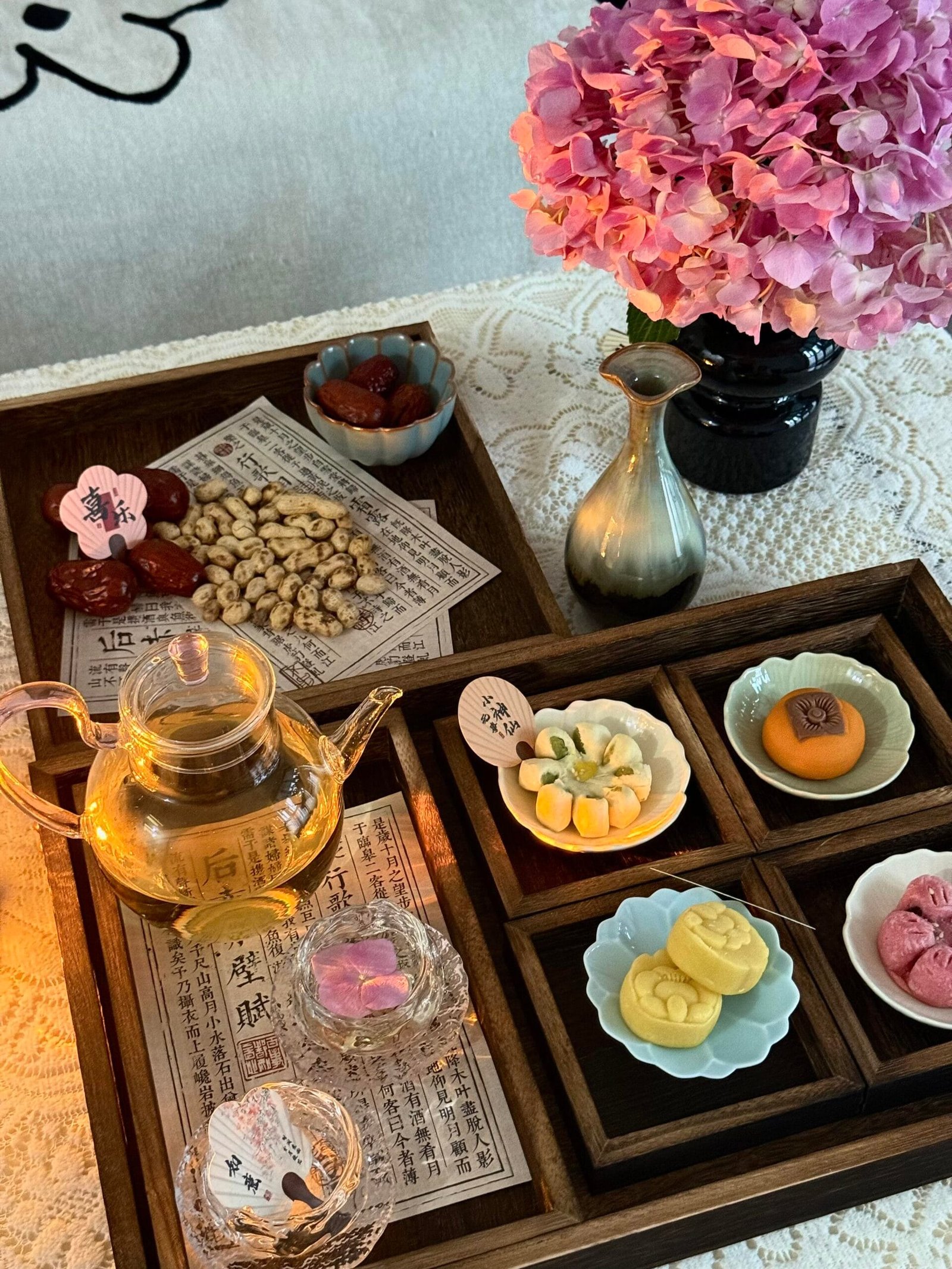
• Pro Tip: After a meal, pair a cup of warm green tea with a slightly sweet mung bean cake or osmanthus cake for a clean, sweet finish.
5.1 White Tea: A Sketch of Nature
• Flavor Core: Young tea: elegant pekoe fragrance, honey sweetness. Aged tea (3+ years): develops date, herbal notes, mellow taste.
• Pairing Logic: Match its pure, sweet, unobtrusive character.
• Perfect Matches:
◦ Young Tea (e.g., Silver Needle, White Peony): Fresh fruit (lychee, longan, peach), salad, light cheesecake, plain yogurt.
◦ Aged Tea (e.g., aged Shou Mei): Lightly roasted nuts (almonds), rice cakes, plain cookies. Also perfect for solo afternoon tea contemplation.
5.3 Oolong Tea: The Kaleidoscope of Flavor
• Flavor Core: Extremely wide range, from light to heavy aroma, the most versatile category for pairing.
• Pairing Logic: Choose based on oxidation and roasting level.
◦ Light Fragrance (e.g., Wen Shan Bao Zhong, lightly oxidized Tieguanyin): Pair with seafood, white meat, fruit, slightly sweet pastries. Ideal as an aperitif.
◦ Heavy/Roasted Type (e.g., traditionally roasted Tieguanyin, Da Hong Pao, Shui Xian): The all-rounder for Chinese cuisine. Perfect with braised pork, roast duck, Cantonese roast meats, marinated dishes, fried dim sum. Its grease-cutting ability is unmatched.
◦ Taiwan High Mountain Oolong / Oriental Beauty: Pair with salt-baked chicken, Japanese teriyaki, desserts with fruit elements (mango pudding).
5.4 Black Tea: A Global, Gentle Embrace
• Flavor Core: Aromatic, sweet, mellow, with floral, fruity, honey, sweet potato notes, full-bodied and warm.
• Pairing Logic: Its sweet, mellow character makes it a star for pairing with Western desserts and cuisine.
• Perfect Matches:
◦ Sweet Companions: Chocolate cake, strawberry pie, macarons, scones (with clotted cream & jam). The top candidate when searching for the best tea for desserts.
◦ Western Cuisine Partner: Steak, barbecue, smoked salmon. Large-leaf varieties like Dianhong are especially suitable.
◦ Adventurous Try: Pair with cheese like aged cheddar or blue cheese, experiencing the clash of sweetness and savory umami.
5.5 Dark Tea (Pu-erh): The Precipitate of Time
• Flavor Core: Ripe Pu-erh: aged aroma, mellow, smooth. Raw Pu-erh: high, sharp aroma, strong taste, quick sweet aftertaste.
• Pairing Logic: Utilize its powerful digestive aid and deep flavor to cut through heavy meals.
• Perfect Matches:
◦ The King of Cutting Grease: Hot pot, barbecue, mala spicy pot, beef/lamb steak. A must after such meals.
◦ Bold with Bold: Aged raw Pu-erh with cured meats, soy-braised beef, strong-flavored cheese.
◦ After Dessert: After an extremely sweet dessert, a small cup of raw Pu-erh instantly refreshes the palate with a cooling sensation.
6. Scene Building: Integrating Tea into Modern Life Scenarios
Theory needs application. Here’s how to apply the art of tea and food pairing in different life scenarios.
• Solo Meal: Choose one tea and design food around it. E.g., a pot of Phoenix Dancong with a plate of nuts and a few crackers; or a cup of Jasmine Pearl tea with a fruit salad.
• Afternoon Tea Break: Prepare 2-3 teas of different styles (e.g., green, oolong, black) and a snack platter (with savory crackers, mild cheese, fruit, small cake pieces). Invite friends to explore pairings freely and share discoveries.
• Chinese Family Feast: Choose tea based on the main course. For steaming-based dishes, choose aged white tea; for braised dishes, choose roasted oolong; finish the meal uniformly with gentle, mellow ripe Pu-erh.
• Fusion Western Dining Experience: Pair Taiwan High Mountain Oolong with pan-seared sea bass; pair Lapsang Souchong with chocolate lava cake. Experiment boldly and record your favorite combinations.
7. The Ultimate Tool: Choosing the Right Vessel for Tea and Food
“Water is the mother of tea, the vessel is its father.” The vessel is the final amplifier of the tea and food pairing experience, affecting the tea’s performance and thus the pairing outcome.
• Porcelain Gaiwan/Cup: The versatile choice, especially for oolong and Pu-erh. Non-absorbent, it faithfully presents every layer of the tea infusion, allowing you to clearly perceive every subtle moment of interaction between tea and food. The best tool for serious tea and food pairing tasting.
• Yixing Clay Teapot: Suitable for Pu-erh, aged white tea, roasted oolong. Its double-porosity structure mellows the liquor, making it smoother and more mellow, complementing pairings with heavy foods. Advised for “one pot, one tea” dedicated to your most frequent pairing tea.
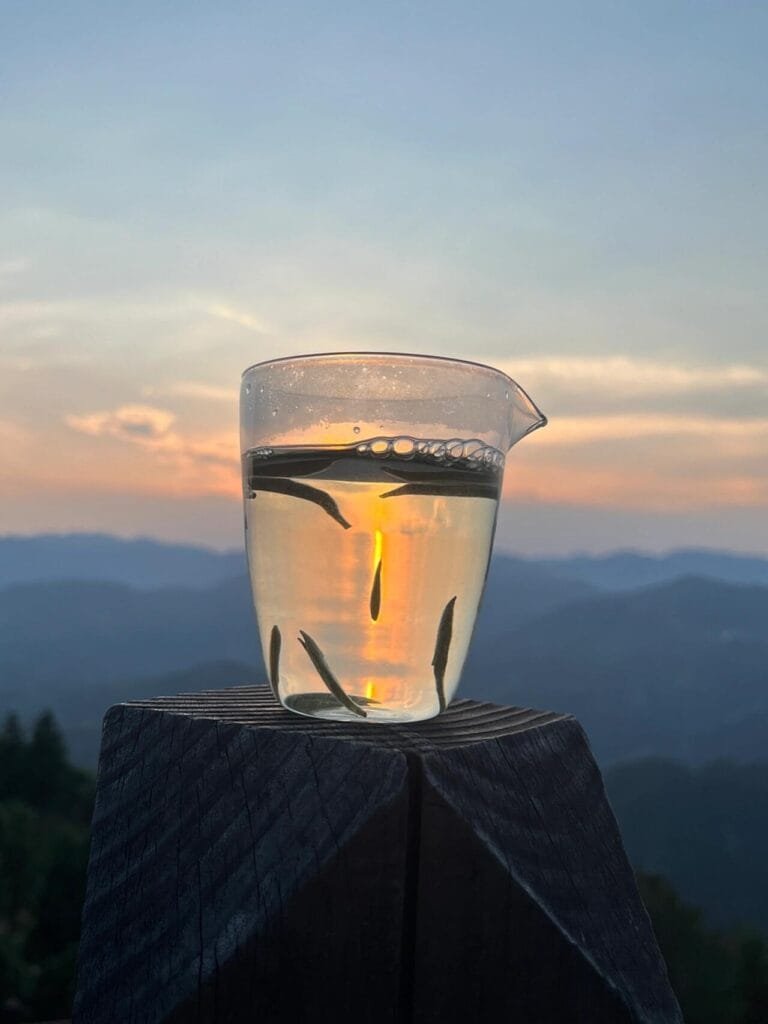
• Glass Cup/Pot: Best for visual teas like green, white, and herbal teas. When paired with light dishes, the visual clarity enhances the overall fresh, pleasant feeling.
• Travel Tea Set: Enables pairing in outdoor or office settings. A well-designed portable set allows you to practice this art anywhere, enjoying the harmony of tea and food anytime.
Conclusion: Begin Your Personalized Flavor Exploration Journey
In the world of tea and food pairing, there are no absolute commandments. The only guide is your own palate. The best pairing is always the one that brings you the greatest pleasure. It is a personalized adventure full of surprises.
At JunxiTea, we cherish the infinite possibilities brought by this small leaf. From the “rock bone and floral aroma” of Wuyi’s cliffs to the “aged honey fragrance” of Yunnan’s ancient tea mountains, each tea carries a story of its terroir. We meticulously present these authentic flavors from core origins, paired with teaware that blends traditional and modern aesthetics, aiming to be your reliable companion in exploring Eastern lifestyle beauty.
Why not start today? Consciously pour a cup of tea beside your next meal. Savor the magic of flavors intertwining and sublimating on your palate. This is not just a feast for the taste buds, but a ritual of mindfulness and self-care.
May you find your own peace, joy, and endless inspiration in the harmonious resonance of a cup of tea and a meal.

I have booked my first proper color appointment, and I am trying to arrive with a useful description instead of a heavily edited photo. My hair is naturally somewhere between light and medium brown and my skin is fair, so I am considering a cooler change rather than a bright copper or golden blonde. The photos on my phone make every shade look more polished than it might in daylight. I cannot tell which of those shades would still look balanced when I am outside or under office lighting. I hope to bring two realistic shade options. I also do not want to commit to frequent root appointments. I am using cool summer hair color ideas as vocabulary for the consultation, not as a strict rule about what I should choose. Would a few strands held near my face be a useful test? I can take pictures in natural light, but I am unsure how much to trust a phone camera’s color balance. I am also taking quite a bit off the length, so I would rather make the color decision thoughtfully than change everything at once. Starting subtly might help me learn what actually suits my routine. If you have made a similar first change, what did you ask your stylist before mixing color? I am especially interested in how you weighed everyday lighting, upkeep and the condition of your own hair.
Estoy preparando una escapada de dos noches a Granada porque me gustaria fotografiar el cielo y, al mismo tiempo, dormir en un sitio tranquilo. Me atrae la idea de una habitacion burbuja, pero las fotos de las fichas no siempre explican lo que se ve realmente desde la cama. En mi caso, la oscuridad del entorno importa mas que una decoracion vistosa. La reserva seria para un fin de semana. Tambien me preocupa que el plastico se empane o que la temperatura cambie mucho durante la noche. ?Alguien ha ido en primavera y puede contar como fue el descanso? He visto esta pagina sobre hotel burbuja granada y la estoy usando para ordenar opciones antes de preguntar a cada alojamiento por separado. Revisare la nubosidad unos dias antes. Quisiera saber cuanto espacio hay entre las burbujas y si se oyen los vecinos. Otro detalle es la llegada: llevare tripode y una bolsa de equipo, asi que agradeceria saber si el acceso desde el aparcamiento es sencillo. No necesito una recomendacion de lujo, sino informacion concreta sobre el lugar. Si alguien conoce un alojamiento de la zona, ?preguntariais primero por orientacion, calefaccion o normas para salir a hacer fotos de madrugada? Cualquier consejo sobre esas tres cosas me ayuda a acotar la busqueda. Gracias por compartir lo que os resulto comodo y lo que revisariais antes de repetir.
My next business trip involves three days of meetings, so I want a compact wardrobe with a few useful combinations. I already have navy trousers and a grey jacket, plus comfortable shoes for the walks between our meeting locations. I keep getting stuck on tops because I want some variety while still using the same trousers and jacket. For a starting point, I have been exploring color analysis yet my priority is checking existing combinations instead of replacing my wardrobe to match a seasonal label. Would a lighter shirt and a deeper knit make a useful pair, or should their tones stay fairly similar? There is also an informal dinner, and I would like to use the same jacket without looking dressed for another meeting. If you were working with these pieces and limited luggage space, which two outfit decisions would you settle first?
I am planning an online first meeting before a color appointment because the client cannot visit the salon until the day we perform an in-person strand test. I need notes that remain useful when we later compare real swatches. The difficulty is that her webcam adds warmth while the reference photographs she sent were taken under several kinds of indoor lighting. I would not treat a video frame as a precise color sample, but I would like the conversation to narrow down sensible shade families before the appointment. I found this online color analysis to organize observations that we can verify later in person. Would it help to ask for one daylight photo beside a gray card, and is it worth comparing the same image on two devices during the call? The consultation will also cover color history and upkeep. Which observations are safe to collect before an in-person assessment?
I have a hair appointment coming up and want to check whether Deep Summer or Deep Winter suits me before choosing a darker shade. I pulled out the darker scarves I already have. Black gives a strong outline, yet a softened charcoal sometimes makes my features look less tired. I cannot tell whether stronger contrast is helping. The descriptions of deep summer color palette give me useful terms, but I still need to test them against real fabric. I would keep makeup the same for each comparison. I can borrow a few scarves in different shades. I plan to compare them in daylight with my hair pulled back, so the current hair color does not dominate every impression. Would you begin with muted plum against a brighter purple? I could record the effect around my eyes for each fabric. I am especially curious whether the skin around my eyes looks smoother with one fabric, rather than simply noticing which color I like more. I would use the comparison as one input for the appointment. If you have had to separate these two palettes, which comparison pairs revealed a difference you could see consistently? I have time to check the result twice before the appointment. I would appreciate examples using ordinary clothes rather than specialized draping kits.
I tried taking a few phone photos to understand my undertone before changing my hair color. The same face looks warmer by a window in the evening and cooler under a bright bathroom light. The shifting colors make a neat online result hard to trust on its own. The starting point is light brown hair, so a small tonal change would be enough. I found skin tone analysis while looking for a way to compare images, but I still need a sensible way to use the information. The real goal is a wearable shade in everyday light, not a perfect match to one edited image. I can take pictures with the same plain background, no beauty filter, and my hair pulled away from my face. Should I keep the lighting and clothing simple when I compare possible shades? I am also thinking of holding a few fabric colors near my face rather than deciding from a single photograph. At the appointment, real hair swatches could be checked beside my skin and roots. That would give us something concrete to discuss instead of trying to prove that an app assigned the right season. I would keep the comparison photos unedited so the colors are easier to judge. For anyone who has had conflicting photo results, what helped you choose between a neutral and a cooler shade?