🎄 A little something from our tea table to yours. Spend $100 or more and we'll tuck a Christmas tea gift set + holiday tote into your parcel — no code needed, just our way of saying thanks. While supplies last, so don't wait till the 24th.Free Worldwide Shipping · Shipped from Fujian, China. Enjoy hassle-free delivery with our double customs clearance service—all taxes prepaid, no hidden costs! Specializing in High-Quality Chinese Tea & Teaware. Our teas feature authentic flavors, sourced from the best farms and purely handmade by master artisans without any additives. Experience the true essence of traditional tea culture today. DismissSkip to content
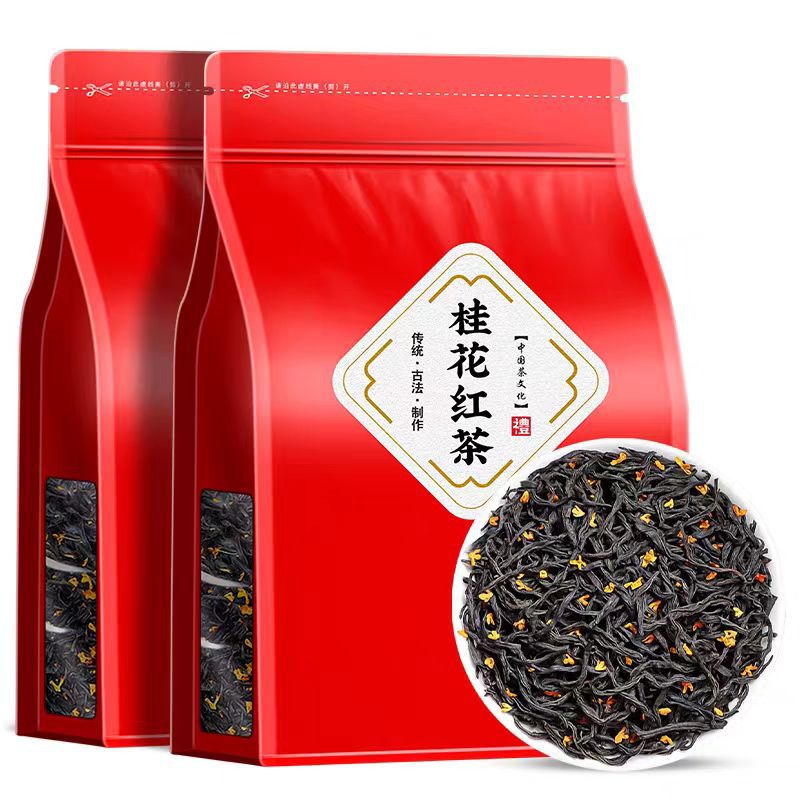
Discover our exquisite Osmanthus Black Tea, a 500g/250g gift set of Wuyi Mountain Lapsang Souchong traditionally scented with golden osmanthus. Experience a unique harmony of floral aroma and rich, smoky-sweet flavor.
Experience the Harmony of Blossom and Leaf: Our Exquisite Osmanthus Black Tea
We invite you to savor a masterpiece of traditional Chinese tea artistry: our Osmanthus Black Tea. This 500-gram gift set features premium Wuyi Mountain Lapsang Souchong, meticulously scented with the season’s finest golden osmanthus blossoms through a time-honored, multi-step process. The result is a captivating fusion where the rich, smoky-sweet “rock bone” of the tea meets the intoxicating, honeyed fragrance of the flower, creating a cup that is both comforting and complex.
This osmanthus scented tea is more than a beverage; it is the crystallization of nature’s rhythm and masterful craftsmanship. Each sip tells a story of ancient mountains, autumn blooms, and patient artisanship, offering a sensory journey that is perfect for both quiet reflection and sharing with cherished company.
The Legacy of Wuyi’s Ancient Slopes
The soul of this tea begins in the mist-shrouded, mineral-rich cliffs of Wuyi Mountain, a UNESCO World Heritage site. For centuries, the unique terroir here has nurtured tea bushes, some growing from seeds scattered by the wind and birds generations ago among the rocky crevices. While not all are ancient trees, the tea plants inherit the wisdom of this land—the “Yan Yun” or “rock rhyme”—a mineral essence absorbed from the weathered volcanic rock that gives Wuyi mountain black tea its unparalleled depth and enduring character. Our Lapsang Souchong base is sourced from these revered Zheng Yan (True Rock) growing areas, ensuring a foundation of exceptional quality that can carry the delicate osmanthus aroma without being overwhelmed.
A Tale of Two Harvests: Spring Tea and Autumn Blossoms
The creation of this tea is a dance between two perfect harvests. The robust black tea leaves are plucked in the fresh vitality of the 2026 spring, capturing the mountain’s energy. Months later, during the peak of autumn, the golden osmanthus trees burst into bloom, filling the air with their sweet, apricot-like perfume. We handpick these fragrant flowers at their aromatic peak, ensuring only the most potent blossoms are chosen for the scenting process.
The Art of Traditional Scenting: Nine Steps to Perfection
Transforming these two raw materials into one harmonious tea is an art form known as “Yin Zhi” (scenting). Unlike simple mixing, this labor-intensive, nine-step process allows the dried tea leaves to slowly and thoroughly absorb the essential oils and fragrance of the fresh osmanthus flowers.
1. Tea Base Preparation: The spring-harvested Lapsang Souchong is carefully roasted to a perfect dryness, creating countless microscopic pores ready to absorb fragrance. 2. Flower Maintenance: Fresh osmanthus blossoms are gently sorted and kept at optimal humidity to maintain their vitality and scent. 3. Blending: Tea and flowers are layered in precise golden ratios. 4. Piling & Scenting: The mixture is left in a controlled environment. As the flowers warm, they release their fragrance, which is absorbed by the porous tea leaves. 5. Heat Dissipation: The pile is turned to regulate temperature and prevent spoilage, ensuring even scenting. 6. Flower Removal: Once the flowers have withered and given their all, they are meticulously sifted out. 7. Re-firing: The tea is gently dried again to lock in the captured aroma and remove any residual moisture. 8. Final Scenting: For a richer aroma, the process may be repeated with a fresh batch of flowers. 9. Even Blending & Resting: The finished tea is blended for consistency and rested, allowing the flavors to fully marry.
This meticulous craft results in an osmanthus aroma that is “bone-deep”—integrated into the very essence of the tea soup, not just a surface note. It’s what makes our Lapsang Souchong osmanthus tea linger beautifully through multiple infusions.
A Multi-Sensory Experience
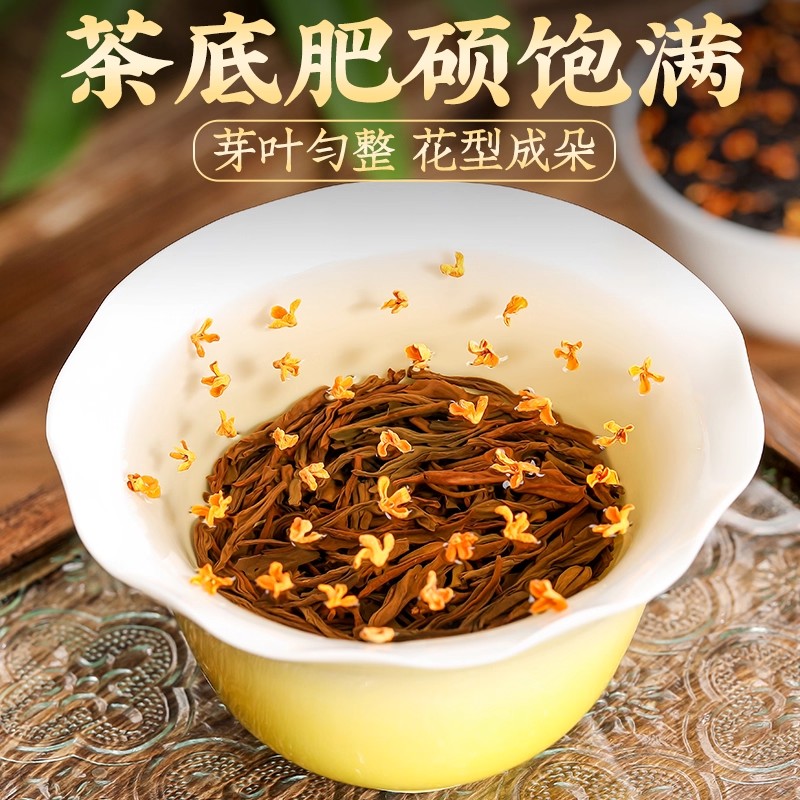
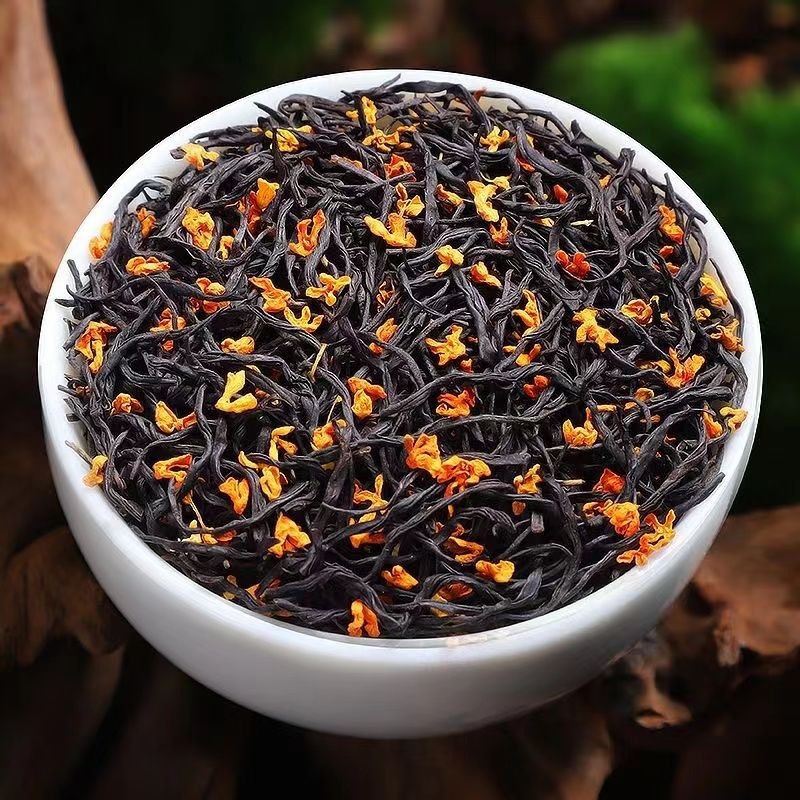
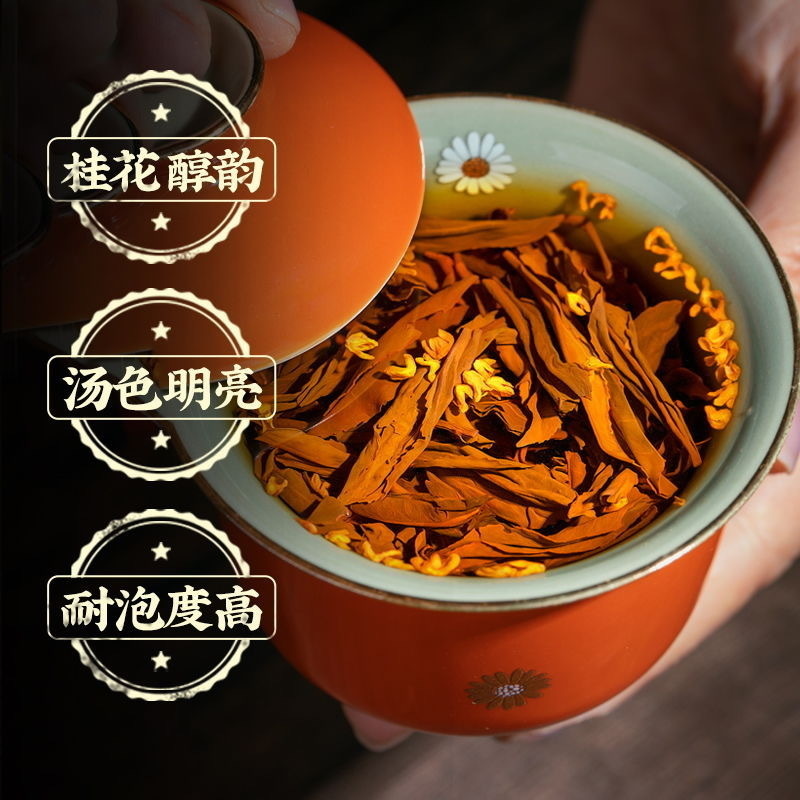
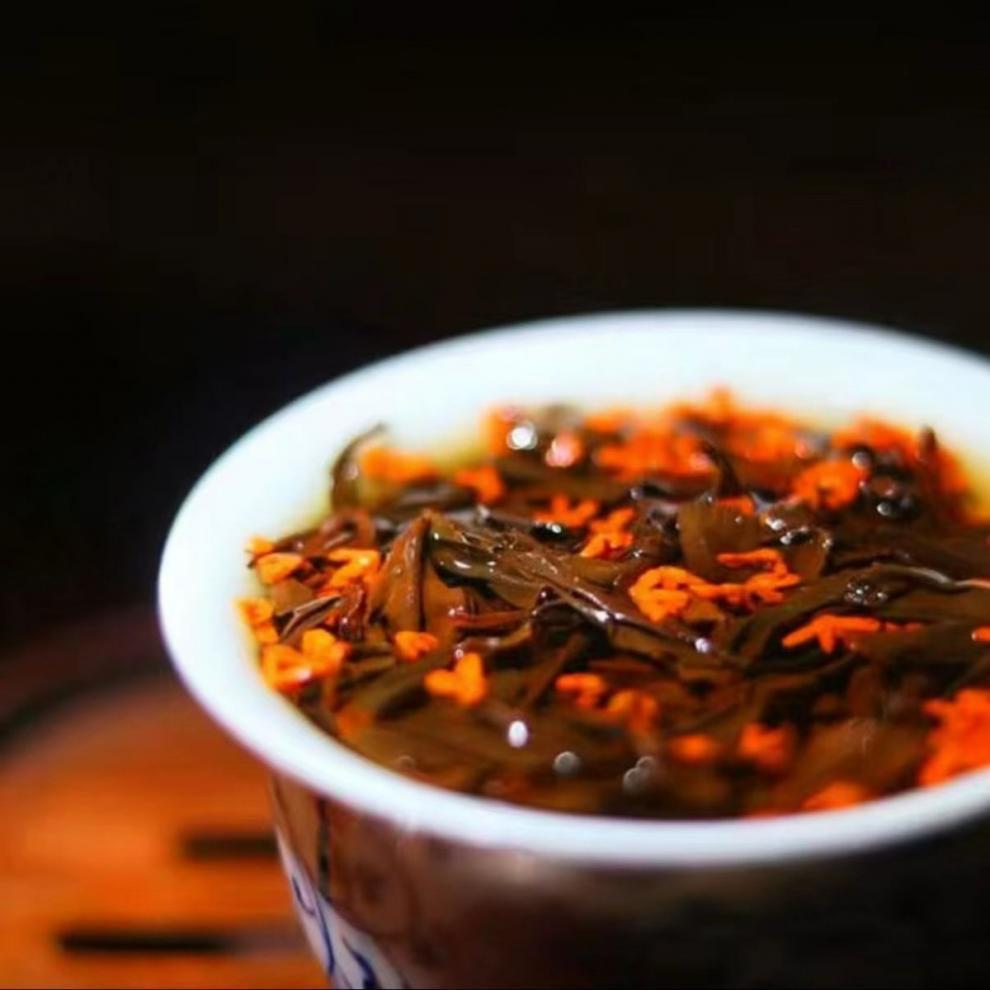
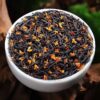
Appearance: The dry leaves are dark, tightly twisted, and glossy, occasionally adorned with a few spent golden osmanthus petals—a beautiful testament to its handmade origin.
Aroma: The dry leaf offers a complex and inviting bouquet—a delightful fusion of sweet osmanthus honey, the mellow, smoky notes characteristic of Lapsang Souchong, and a subtle fruity sweetness reminiscent of dried longan.
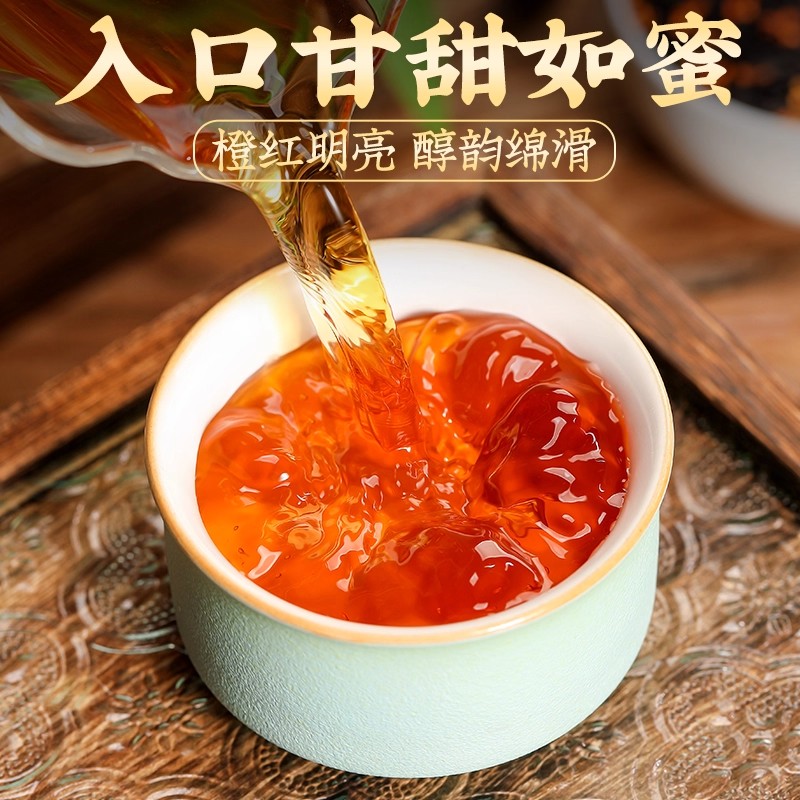
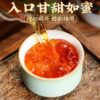
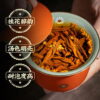
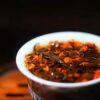
Liquor: The brewed tea yields a bright, clear reddish-amber liquor, lustrous and inviting like a precious gem.
Taste & Mouthfeel: Upon the first sip, the warm, sweet osmanthus fragrance blossoms on the palate, swiftly complemented by the characteristic malty sweetness and gentle smoky depth of the Lapsang Souchong. The liquor is smooth, full-bodied, and rounded. The robust “bone” of the rock tea provides a clean structure, while the osmanthus’s “lush sweetness” fills the space. The aftertaste is sweet, promotes salivation, and lingers pleasantly.
Effect: In traditional Chinese wisdom, osmanthus is believed to help regulate Qi and warm the stomach, while black tea is inherently warming. This combination makes our osmanthus black tea particularly comforting during cooler autumn and winter months or for those seeking a soothing, aromatic cup.
Brewing Your Perfect Cup
Western Style:
• Tea: 3-4 grams per 250ml cup.
• Water: Freshly boiled water at 95-100°C (203-212°F).
• Steep: 3-5 minutes for the first infusion. Adjust to taste.
• Re-steep: Yields 2-3 flavorful infusions.
Gongfu Style (Recommended):
• Tea: 5 grams for a 100-150ml gaiwan or teapot.
• Water: 95-100°C boiling water.
• Rinse: Quick rinse (3-5 seconds) to awaken the leaves. Inhale the captivating aroma from the rinse.
• Steep: Start with 5-8 seconds for the first infusion, increasing by 5-10 seconds for each subsequent brew.
• Re-steep: A high-quality base like this can yield 8-10+ nuanced infusions, evolving from floral prominence to a deeper tea sweetness.
Ideal For: A Gift of Aromatic Serenity
This elegant 500g tea gift set, presented in two sealed bags, is perfect for:
• The Aroma Enthusiast: Anyone who loves floral teas like jasmine or rose will adore this sophisticated osmanthus twist.
• The Adventurous Drinker: Perfect for those looking to explore beyond classic black teas into the world of scented teas.
• The Connoisseur: A must-try for lovers of Wuyi teas and traditional Chinese processing techniques.
• The Perfect Hostess Gift: Its beautiful aroma and complex flavor make it an impressive gift for gatherings.
• Your Cozy Moment: The ultimate companion for a relaxing afternoon, a good book, or a moment of mindfulness.
Storage & Care
To preserve the captivating aroma of your osmanthus black tea:
• Store in a cool, dark, dry place away from strong odors.
• Keep the bags tightly sealed after opening.
• For optimal freshness, consume within 18-24 months.
• Consider transferring to an airtight ceramic or tin container for daily use.
Bring the Autumn Harvest to Your Cup
Our Osmanthus Black Tea is an invitation to experience a timeless tradition. It captures the essence of a Wuyi Mountain spring and an autumn osmanthus bloom in every fragrant cup.
Indulge in this unique harmony of flavor and aroma. Click ‘Add to Cart’ to bring this 500g gift of serenity into your home today.
Size
250g (Loose), 500g (Original Pack)
1 review for Exquisite Osmanthus Black Tea | 500g Fragrant Lapsang Souchong Gift Set
Rated 5 out of 5
Marco Serrano –
I want to start by saying that I am by no means an experienced tea drinker. I’m still learning about the different varieties of tea and how to recognize their flavors and aromas. These are simply my impressions as someone relatively new to the world of tea, exploring and discovering what I enjoy along the way.
My first impression of this tea was its aroma. The dry leaves reminded me of dried fruit, which made me excited on what’s to come next.
The first steep caught me completely off guard. The aroma reminded me of forest bark with an underlying sweetness, but the flavor was something entirely different. It had a strong, earthy, almost medicinal quality to it, like something you might expect from an old-fashioned homemade remedy. I even found myself wondering if this is what willow bark tastes like. There was also something subtle and relaxing underneath that initial intensity.
I wasn’t entirely sure I liked it at first, and I was actually a little hesitant to try the second steep. To my surprise, it was considerably smoother, almost creamy. I never thought I would describe tea as creamy, but that’s exactly how it felt. The earthy flavor was still there, but it had become much more enjoyable.
By the third steep, the bitterness from the first was completely gone. The tea had become smooth, soothing, and surprisingly rich. This isn’t a tea I would compare to dessert; it’s more like a meal. It has a pronounced, earthy character that really commands attention.
The fourth steep was particularly interesting. The aroma had become lighter but still carried that dried-fruit sweetness, while the flavor remained predominantly earthy. If I were blindfolded, I might have thought the aroma and flavor came from two entirely different teas. That contrast was probably the most intriguing part of the experience. I also noticed that as the tea cooled, a sweetness emerged that reminded me much more of the dried fruit I had been smelling all along.
By the fifth steep, the flavor had softened considerably, and I could finally taste the sweetness that had been present in the aroma from the beginning.
What an interesting tea. It started out almost intimidating, but with each steep, it revealed something different. I genuinely thought I wasn’t going to enjoy this one after my first cup, and I’m glad I was wrong.
I’m glad this wasn’t my very first experience with tea, because I don’t think I would have appreciated it nearly as much. It’s certainly not something I would describe as delicate, but the way it developed with every steep made it an experience.
junxistea@gmail.com –
This is a masterclass in tea observation. 🥹 The way you tracked the journey — from that intimidating first steep to the creamy second, the meal-like third, and that fascinating aroma-versus-flavor split in the fourth — that’s exactly what this tea is meant to teach. It doesn’t greet you warmly; it earns your trust steep by steep. And the fact that you stayed with it, even after hesitating, is the whole point. Thank you for this. 🙏🍵✨





Marco Serrano –
I want to start by saying that I am by no means an experienced tea drinker. I’m still learning about the different varieties of tea and how to recognize their flavors and aromas. These are simply my impressions as someone relatively new to the world of tea, exploring and discovering what I enjoy along the way.
My first impression of this tea was its aroma. The dry leaves reminded me of dried fruit, which made me excited on what’s to come next.
The first steep caught me completely off guard. The aroma reminded me of forest bark with an underlying sweetness, but the flavor was something entirely different. It had a strong, earthy, almost medicinal quality to it, like something you might expect from an old-fashioned homemade remedy. I even found myself wondering if this is what willow bark tastes like. There was also something subtle and relaxing underneath that initial intensity.
I wasn’t entirely sure I liked it at first, and I was actually a little hesitant to try the second steep. To my surprise, it was considerably smoother, almost creamy. I never thought I would describe tea as creamy, but that’s exactly how it felt. The earthy flavor was still there, but it had become much more enjoyable.
By the third steep, the bitterness from the first was completely gone. The tea had become smooth, soothing, and surprisingly rich. This isn’t a tea I would compare to dessert; it’s more like a meal. It has a pronounced, earthy character that really commands attention.
The fourth steep was particularly interesting. The aroma had become lighter but still carried that dried-fruit sweetness, while the flavor remained predominantly earthy. If I were blindfolded, I might have thought the aroma and flavor came from two entirely different teas. That contrast was probably the most intriguing part of the experience. I also noticed that as the tea cooled, a sweetness emerged that reminded me much more of the dried fruit I had been smelling all along.
By the fifth steep, the flavor had softened considerably, and I could finally taste the sweetness that had been present in the aroma from the beginning.
What an interesting tea. It started out almost intimidating, but with each steep, it revealed something different. I genuinely thought I wasn’t going to enjoy this one after my first cup, and I’m glad I was wrong.
I’m glad this wasn’t my very first experience with tea, because I don’t think I would have appreciated it nearly as much. It’s certainly not something I would describe as delicate, but the way it developed with every steep made it an experience.
junxistea@gmail.com –
This is a masterclass in tea observation. 🥹 The way you tracked the journey — from that intimidating first steep to the creamy second, the meal-like third, and that fascinating aroma-versus-flavor split in the fourth — that’s exactly what this tea is meant to teach. It doesn’t greet you warmly; it earns your trust steep by steep. And the fact that you stayed with it, even after hesitating, is the whole point. Thank you for this. 🙏🍵✨