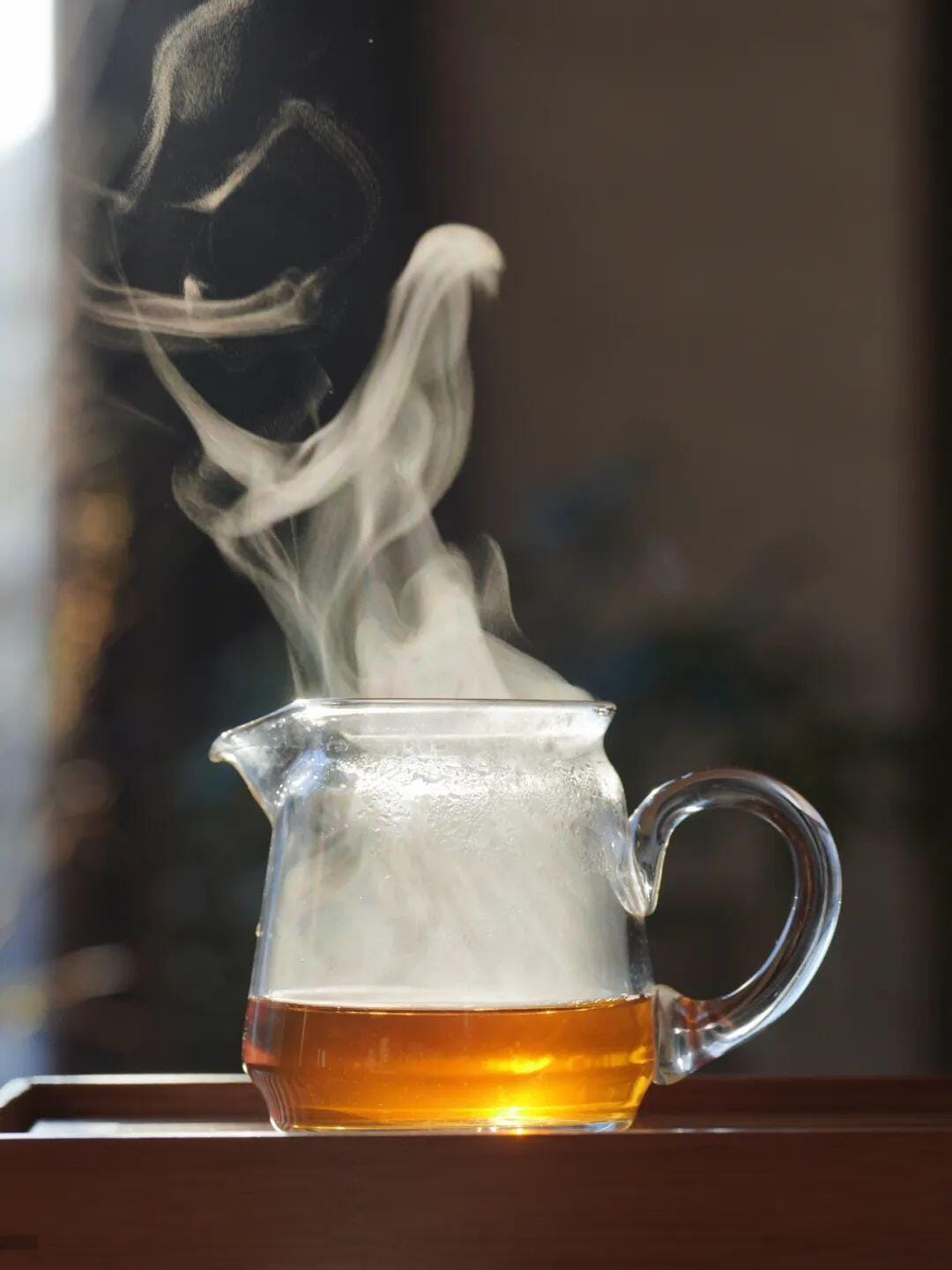
Tea Flavor Science: 5 Shocking Truths That Will Change How You Drink Tea

Have you ever wondered how a simple leaf, when steeped in water, can transform into a universe of flavors—from the brisk freshness of green tea and the delicate sweetness of white tea, to the rich aroma of oolong and the robust depth of rock tea? The answer lies in the leaf’s microscopic world. Understanding tea flavor science is mastering the code to tasting tea. This article will simplify the complex, revealing the four core compounds that define your cup: caffeine for bitterness, polyphenols for astringency and color, L-theanine for umami and sweetness, and aromatic compounds for the myriad of scents. Understanding their interplay and transformation will elevate your tea appreciation from the superficial to the fundamental.
1. The Source of Bitterness: Caffeine—Tea’s “Chemical Weapon”
When you taste bitterness in tea, the first compound you often perceive is caffeine. It is stable in tea leaves and does not decrease during processing. So why are some teas intensely bitter while others are pleasantly sweet? The key lies in the content.
1.1 What Determines Caffeine Content? A Story About “Pests”
Caffeine is, in essence, a natural defensive compound for the tea plant, a “chemical weapon.” When pests nibble on the leaves, the tea plant activates its defense mechanism, synthesizing more caffeine to deter the attackers. Therefore, greater pest pressure leads to higher caffeine content.
This explains one of the most famous rules in tea: Why are top-tier green teas (like Pre-Qingming Shifeng Longjing) mostly plucked in early spring? Because early spring has low temperatures and minimal pest activity, so the tea plant doesn’t need to produce much caffeine for defense. The buds or “one bud, one leaf” plucked at this time have the year’s lowest caffeine levels, forming the material basis for their “brisk and non-bitter” taste. In contrast, summer tea, with its high temperatures and more pests, has significantly higher caffeine content, making the liquor more prone to bitterness.
2. Astringency & Transformation: Polyphenols—Tea’s “Sunscreen” & Flavor Canvas
If caffeine governs “bitterness,” then astringency (the drying, puckering sensation on the oral mucosa) comes primarily from polyphenols, specifically catechins. Polyphenols are the most abundant active compounds in tea, acting like a blank “flavor canvas” waiting to be painted.
2.1 Polyphenols vs. L-Theanine: A Battle Governed by Temperature
The synthesis of polyphenols and L-theanine in the tea plant has an inverse relationship, directed by temperature.
• Polyphenols are the “Sunscreen”: Under intense light and high temperatures, the tea plant synthesizes more polyphenols to resist UV damage. Therefore, tea from summer, low-altitude, or hot regions generally has higher polyphenol content, resulting in a stronger, more astringent taste.
• L-Theanine is the “Winter Coat”: In cool, low-light environments (like high-altitude misty mountains), the tea plant produces more L-theanine to protect itself from cold. This is the core scientific basis for the saying “the best tea grows in high, misty mountains”: the cool temperatures at high altitude promote L-theanine accumulation while suppressing polyphenol production, giving the leaves an inherent potential for “high umami/sweetness, low bitterness/astringency.”
This also explains why China’s famous green tea regions (e.g., Zhejiang, Anhui, Jiangsu) are concentrated in the more northern temperate zones rather than the hotter south. Suitable cool temperatures are the natural prerequisite for developing “fresh, brisk” flavors.
2.2 The Magic of Processing: The Transformation Journey of Polyphenols
One of the greatest roles of tea processing is to guide the transformation of polyphenols. Through processes like withering, rocking/tumbling, oxidation, and pile fermentation, driven by enzymes or microbes, the astringent catechins polymerize and oxidize, transforming into compounds like theaflavins, thearubigins, and theabrownins.
• Theaflavins: Contribute to the “brightness” of the liquor and a brisk “golden ring,” key indicators of quality in black tea.
• Thearubigins: Determine the “redness” and mellow body of black tea.
• Theabrownins: Found more in dark teas and aged teas, contributing to the dark liquor color and aged, mellow flavor.
Therefore, teas with higher oxidation/fermentation levels (e.g., black tea, dark tea, ripe pu-erh) have more complete polyphenol transformation, resulting in lower astringency and a mellower, sweeter taste. Processing accomplishes the second shaping of the tea leaf’s innate “character.”
3. The Soul of Umami: L-Theanine—Tea’s “Sweet Winter Coat”
That savory, sweet, broth-like freshness in tea, along with the relaxing, pleasant experience, is largely thanks to a unique amino acid—L-theanine. It constitutes about 1-2% of tea’s dry matter but contributes to over 50% of the flavor’s “sense of well-being.”
3.1 L-Theanine’s Terroir Imprint & Physiological Benefits
As mentioned, L-theanine is a product of cool temperatures. Therefore, first-flush tea, high-mountain tea, and shaded tea (like Japanese matcha) have significantly higher L-theanine content than summer tea or lowland tea. It is a direct chemical expression of the tea’s “terroir.”
Even more fascinating, L-theanine can cross the blood-brain barrier, promoting the release of alpha brain waves, inducing a state of calm alertness. It has both synergistic and antagonistic effects with caffeine: it can mitigate the jittery anxiety caffeine can cause, while also binding with it to prolong and optimize the energizing effect. This is why drinking high-quality green tea (high in L-theanine) often feels “energizing yet not overstimulating,” quite different from the coffee experience.
4. The Mystery of Aroma: Aromatic Compounds—A Duet of Variety and Craft
Tea aroma is not a single compound but a precise symphony composed of hundreds of volatile aromatic compounds in varying proportions. It originates from two main sources:
4.1 Varietal Aroma: Innate Talent
Different tea plant varieties have different aroma precursors. For example, the “Huang Dan” varietal used for Tieguanyin has a natural orchid base; the “Wu Ye” lineage used for Fenghuang Dancong can produce “Ya Shi Xiang” (silver flower aroma); while small-leaf varietals more easily develop clean “bean” or “chestnut” aromas. The varietal determines the base color and potential of the aroma.
4.2 Process Aroma: The Sublimation of Craftsmanship
Tea processing is key to releasing and fixing aromas.
• Fixation (Green Tea): High heat rapidly deactivates enzymes, locking in fresh compounds like “leaf alcohol,” creating a “fresh green” aroma.
• Bruising/Rocking (Oolong Tea): Physical bruising causes leaf edges to oxidize, promoting the hydrolysis and oxidation of aroma precursors, releasing complex floral/fruity notes (e.g., Tieguanyin’s orchid, Dancong’s honey-orchid).
• Roasting/Baking: Maillard reactions and caramelization produce roasted nut, caramel, toasty aromas (e.g., Yancha’s “rock bone floral,” Longjing’s roasted bean).
• Smoking (Traditional Lapsang Souchong): Pine wood smoke imparts a unique pine smoke, dried longan aroma.
• Aging (Aged White Tea, Pu-erh): Time allows aromas to slowly transform, from fresh to date, herbal, aged aromas.
5. The Ultimate Flavor Sculptor: How Tea Processing Orchestrates the Four Key Compounds
Understanding the four key compounds allows us to interpret the essence of tea processing from a “designer’s perspective”: a precise orchestration of caffeine, polyphenols, L-theanine, and aromatic compounds.
• Green Tea (Non-oxidized): The primary goal of high-temperature fixation is to rapidly deactivate polyphenol oxidase, maximizing the retention of polyphenols (antioxidants) and L-theanine (umami), while locking in chlorophyll (green color) and fresh aromatics. Its processing logic is “locking in freshness.”
• White Tea (Lightly Oxidized): No frying or rolling. Through prolonged natural withering, inner compounds undergo slow, slight transformation via enzymatic action. Some polyphenols oxidize, reducing astringency, while aromatic compounds form, creating “pekoe and honey charm.” Its logic is “go with the flow, transform slowly.”
• Oolong Tea (Partially Oxidized): Through bruising (rocking, withering), the degree of partial polyphenol oxidation (10%-70%) is finely controlled, generating vast amounts of new aromatic compounds during oxidation. Subsequent roasting fixes the aroma and develops flavor. Its logic is “creating infinite aromatic possibilities through oxidation.”
• Black Tea (Fully Oxidized): Rolling breaks cell structures, allowing polyphenols to fully oxidize enzymatically into theaflavins and thearubigins, forming “red liquor, red leaves” and a sweet, mellow taste. Its logic is “complete oxidation, pursuing sweetness and mellowness.”
• Dark Tea (Post-fermented): During pile fermentation, enzymes from microbes cause intense oxidation, hydrolysis, and polymerization of polyphenols, etc., producing abundant probiotics and new flavor compounds (e.g., “Golden Flower” fungus). Its logic is “microbe-driven deep transformation.”
6. The Science of Bitter First, Sweet Later: The Truth About “Hui Gan” (Lingering Sweetness)
“Good tea has a quick Hui Gan (returning sweetness)” is a consensus, but what’s the science behind it?
1. Taste Contrast & Adaptation: After bitterness receptors on the tongue are temporarily occupied by caffeine and astringent catechins, they become briefly adapted. When these compounds are washed away by saliva or swallowed, the tongue’s sensitivity to sweetness increases relatively. Then, the soluble sugars (mono-/disaccharides) and partially hydrolyzed amino acids (like the sweetness of L-theanine) naturally present in the liquor become prominent, creating the “bitter first, sweet later” contrast.
2. Compound Transformation: During drinking, amylase in saliva may break down trace amounts of polysaccharides from the tea into sweet-tasting monosaccharides, another source of Hui Gan.
3. Throat Feel & Body Sensation: High-quality tea is rich in compounds like L-theanine and soluble sugars that bring comfortable physical sensations. After the bitterness/astringency dissipates in the mouth, the pleasant feeling of lasting salivation and a sweet aftertaste rising from the throat takes over, forming the profound, lingering “sweetness after bitterness.”
7. Practical Application: Using Flavor Science to Select & Brew Tea
Mastering theory is ultimately for better practice. You can apply today’s knowledge:
• Seeking Freshness, Low Bitterness: Choose high-altitude, pre-Qingming, first-flush green or white teas. These teas are inherently high in L-theanine, lower in caffeine and polyphenols.
• Preferring Mellow Sweetness: Choose well-oxidized black teas, aged dark teas, or properly roasted oolongs, where polyphenols have been sufficiently transformed into sweet, mellow compounds.
• Reducing Bitterness/Astringency in Brewing:
1. Control Water Temperature: Use 80-90°C water for tender green/white teas to slow the extraction of caffeine and polyphenols.
2. Shorten Steeping Time: Quick pours for the first few infusions.
3. Mind the Leaf Amount: Avoid overloading.
4. Choose the Right Vessel: Use a porcelain gaiwan instead of a small Yixing pot to avoid over-steeping.
• Evaluating Tea Quality: If a tea has only sharp bitterness/astringency without transforming into sweetness and salivation, it often indicates an imbalance in its compounds (poor harvest season, flawed processing) or excessively high levels of caffeine/astringent polyphenols.
Conclusion: From Molecules to Mindfulness
The flavor of a cup of tea is a chemical reaction and a soulful resonance spanning thousands of miles—from the tea garden’s terroir, through the artisan’s craft, to its completion in your cup. Tea flavor science provides us with a rational key to decipher the code of umami, aroma, bitterness, and sweetness. But it never seeks to replace the感性 experience. On the contrary, when you understand how L-theanine brings calm, how polyphenols transform, how aromas are born from rocking… you will greet each cup with deeper reverence and perception.
Just as life has its ups and downs, tea has bitterness, sweetness, umami, and aroma. Understanding the science behind it allows us to more clearly recognize what is truly “good” amidst the complex flavors, and thus choose a fine tea worthy of mindful savoring for oneself. This is not just a feast for the palate, but a practice leading to inner tranquility.
https://junxistea.com/product-category/chinese-tea/
https://www.youtube.com/watch?v=eHMIHRuuNGU&list=PLbOHzzHkitUy87iM9Wb7gVtN0vX3V2dxs&index=7