
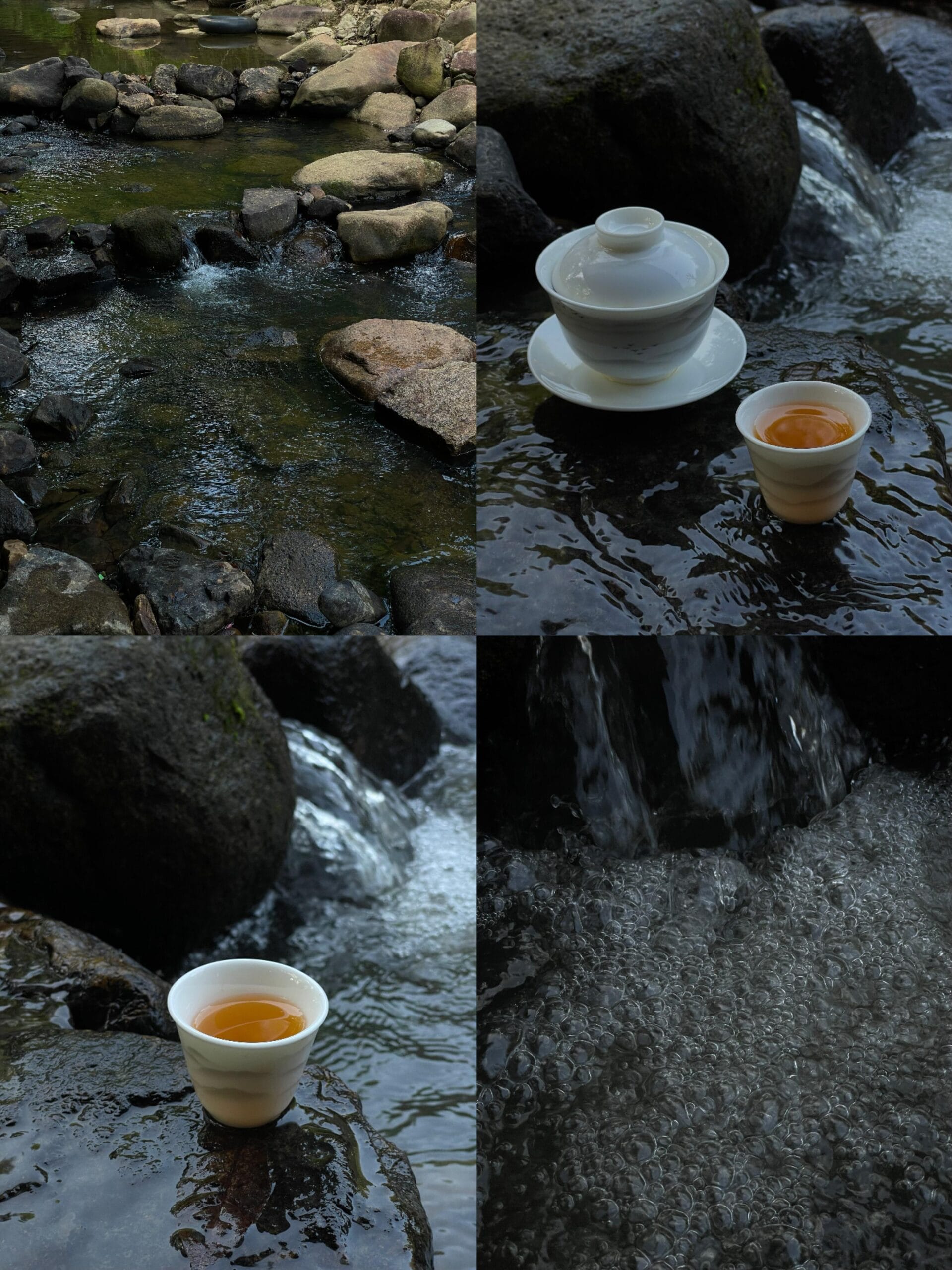
Water for Tea Exposed: Your Fine Tea Has a 90% Chance of Being Ruined by Wrong Water

Have you ever wondered why that precious cake of Pu-erh tea never tastes as good at home as it did in the tea shop? Why the same green tea can be fresh and sweet one day, dull and bitter the next? The answer often lies not in the tea leaves themselves, but in the most overlooked component that makes up over 99% of your cup—water. Wrong water is a “silent killer” of flavor, capable of easily reducing a fine, expensive tea to a bland, cheap-tasting brew. This article will completely deconstruct the science of water for tea, providing you with a simple, actionable system to take ultimate control of your tea’s flavor, and finally put an end to the disappointment of “good tea ruined by bad water.”
1.The Core Science: Understanding Water’s “Persona” – TDS & Hardness
When choosing water for tea, price and brand should be the last factors you consider. The first task is to understand the water’s intrinsic “personality,” defined by two core scientific metrics: TDS (Total Dissolved Solids) and Hardness.
1.1 TDS: The “Concentration” Gauge of Water
A TDS meter measures the total concentration of all dissolved minerals, salts, and organic matter in water, in milligrams per liter (mg/L). Think of it as the water’s “mineral concentration.”
•Low TDS (< 30 mg/L): e.g., distilled water, purified water. This water tastes “soft,” flat, and lacks structure.
•High TDS (> 150 mg/L): Typically mineral-rich spring water or hard tap water. Tastes “hard” with a pronounced texture.
1.2 Hardness: The “Strength” of Calcium & Magnesium
Hardness specifically refers to the concentration of calcium and magnesium ions in water, a major component of TDS. The white scale in your kettle is its visible proof. Hard water is an arch-nemesis of tea, especially for delicate teas, because calcium and magnesium ions form complexes with tea polyphenols and aromatics, causing:
1.The liquor to become dark and turbid.
2.The aroma to be suppressed and dull; lifting fragrances cannot be released.
3.The taste to become coarse, astringent, and unresolved, stripping away all freshness.
1.3 The Golden Zone: The Secret of “Just Right”
Experiments and widespread experience show that soft water with a TDS between 30-80 mg/L and low hardness (<75 mg/L as CaCO₃) is the “golden partner” for the vast majority of teas. Water in this range has sufficient minerals to impart a clean sweetness and a subtle “structure” to the liquor, without overly interfering with the precise expression of the tea’s flavor.
2.The Pairing Principle: Finding the “Soulmate” Water for Six Tea Types
Understanding the science of water allows us to perform precise “tea-water pairing.” The core principle is: The nature of the tea determines the nature of the water.
2.1 Delicate Teas (Green, Yellow, Light Oolong, Young White Tea)
•Tea Character: Pursues the ultimate freshness, briskness, sweetness, and aroma; flavor compounds are delicate and precious.
•Water Prescription: Must use soft water. Recommended TDS: 30-60 mg/L.
•Reasoning: Very low-mineral soft water can extract amino acids and aromatic compounds from the leaves without obstruction, presenting a clear, bright liquor, lifting, fresh aroma, and a brisk, sweet taste. Hard water completely “suffocates” its freshness.
2.2 Robust & Complex Teas (Wuyi Rock Tea, Raw Pu-erh, Bold Oolong, Aged White Tea)
•Tea Character: Taste is strong, rich, full-bodied, and layered, emphasizing “rock bone,” “woody taste,” and “aged aroma.”
•Water Prescription: Suitable for soft to medium-soft water. Recommended TDS: 60-120 mg/L.
•Reasoning: Slightly higher mineral content can synergize with the tea’s rich inner compounds, making the liquor feel more mellow, smooth, and substantial, and can support and stabilize the complex layers of aroma. Pure water can make the liquor seem “hollow” and lack strength.
2.3 Mellow & Sweet Teas (Black Tea, Dark Tea, Ripe Pu-erh)
•Tea Character: Primarily defined by sweet mellowness, warmth, and smoothness.
•Water Prescription: Broadly adaptable, from soft to moderately hard water. Recommended TDS: 80-150 mg/L.
•Reasoning: These teas are fully fermented and stable. Slightly harder water can enhance the liquor’s sweetness and viscosity; softer water can present a cleaner, purer taste. Fine-tune based on personal preference.
3.The Practical Guide: 3 Steps to Lock Down Your Perfect Tea Water
After theory comes simple action. You only need three tools: a TDS meter, a kettle, and your curiosity.
3.1 Step 1: Diagnose – Measure Your Current Water
Purchase a reliable TDS meter (inexpensive). Measure all water sources you commonly use:
1.Tap water (measure before and after filtration).
2.Bottled/jugged water.
3.Water filter output.
Record the readings. You will instantly understand why a certain water always makes a certain tea taste “off.”
3.2 Step 2: Pair – Select Water Based on Tea Type
Based on the guide in the previous chapter, select the water whose TDS best matches the tea you are brewing. For example, for Pre-Qingming Longjing, choose the water from your sources that is closest to 40 mg/L.
3.3 Step 3: Fine-tune – Record & Optimize
When brewing tea, simply note: Tea name, Water used (brand/TDS), Brief taste notes. Soon you will build your own “tea-water database” and gain mastery over pairing. This is the key leap from “drinking tea” to “understanding tea.”
4.Advanced Pitfalls: The Secrets of Water Filters, Temperature, and Oxygen
Beyond TDS, three hidden details profoundly affect the outcome.
4.1 The “Double-Edged Sword” of Water Filters
Home Reverse Osmosis (RO) filters produce water with very low TDS (often <10). While a savior in areas with extremely hard water, it can be too “soft” for tea, resulting in a weak brew. Solution: If RO water TDS is too low, mix it with a small amount of higher-TDS mineral water (e.g., 1:1) to reach the ideal zone.
4.2 Water Temperature: More Than Just a Number
“Freshly boiled” matters not just for temperature, but for dissolved oxygen. Water just off the boil is rich in oxygen, which better helps aromatic compounds volatilize (“releases the tea’s fragrance”). Water kept in a thermos for too long or re-boiled repeatedly is low in oxygen—“dead water”—resulting in a dull, lifeless tea aroma.
4.3 A Mental Experiment: Conduct Your “Tea Water Blind Test”
Choose one tea (e.g., a mid-range Maofeng or light Tieguanyin). Brew it simultaneously under identical conditions using three waters (e.g., hard tap water, purified water, mineral water with ~50 TDS). Compare the liquor color, aroma, and taste side-by-side. The cognitive impact of this experiment is worth more than a thousand words.
Appendix: Exclusive Tea Water Pairing Cheat Sheet
1.Green Tea
Core Flavor Profile: Fresh, brisk, fragrant, sweet. Pursues ultimate freshness and a clear, bright liquor.
•Recommended TDS Range: 30 – 60 mg/L
•Ideal Water Type: Must use very soft to soft water. Low mineral content allows unimpeded release of amino acids and aromatics, preventing a dark liquor and astringent taste.
•Water to Avoid: Any hard water with TDS above 100 mg/L. Hard water is the “number one killer” of green tea flavor, completely suppressing its freshness.
•Example Teas: West Lake Longjing, Biluochun, Huangshan Maofeng, Xinyang Maojian, Anji Bai Cha.
2.Yellow Tea
•Core Flavor Profile: Mellow, sweet, with a warm, smooth mouthfeel, carrying the unique “sweltered” aroma from its processing.
•Recommended TDS Range: 40 – 80 mg/L
•Ideal Water Type: Soft water. Needs soft enough water to express its delicate sweetness, but slightly more minerals than for green tea to support its mellower body.
•Water to Avoid: High-hardness hard water (causes astringency) and very low TDS purified water (may result in a thin taste).
•Example Teas: Junshan Yinzhen, Mengding Huangya, Huoshan Huangya.
3.White Tea
•Young White Tea (e.g., Bai Hao Yin Zhen, Bai Mu Dan)
◦ Core Flavor Profile: Elegant pekoe fragrance, floral notes, fresh and honey-like sweetness.
◦ Recommended TDS Range: 30 – 80 mg/L
◦ Ideal Water Type: Very soft to soft water. Similar to green tea, requires soft water to protect its delicate freshness and abundant pekoe.
◦ Water to Avoid: Hard water.
•Aged White Tea (Aged 3+ years)
◦ Core Flavor Profile: Mellow, date-like aroma, herbal notes, aged fragrance; tea nature becomes warming.
◦ Recommended TDS Range: 80 – 150 mg/L
◦ Ideal Water Type: Soft to medium-hardness water. Slightly higher minerals help draw out and support its deep aged character and thick liquor.
◦ Water to Avoid: Very low TDS purified water (may fail to fully extract its flavor).
•Example Teas: Fuding Bai Hao Yin Zhen, Zhenghe Bai Mu Dan, Shou Mei, Aged White Tea cakes.
4.Oolong Tea
•Light/Fragrant Style Oolong (e.g., Light Tieguanyin, Taiwanese High Mountain Oolong)
◦ Core Flavor Profile: Elegant floral, milky notes; fresh, sweet, smooth taste.
◦ Recommended TDS Range: 60 – 100 mg/L
◦ Ideal Water Type: Soft water. Requires clean, gentle water to clearly present its rich yet delicate aromatic layers without interference.
◦ Water to Avoid: Hard water (masks floral notes, introduces astringency).
•Bold/Rock Tea Style Oolong (e.g., Wuyi Rock Tea, Phoenix Dancong)
◦ Core Flavor Profile: Intense flavor, “rock bone and floral fragrance,” pronounced woody/bushy taste, strong returning sweetness.
◦ Recommended TDS Range: 100 – 150 mg/L
◦ Ideal Water Type: Soft to medium-hardness water. A moderate amount of minerals interacts with the tea’s rich content, enhancing its “bone” (mellowness and minerality), making the aroma and taste more settled and layered.
◦ Water to Avoid: Very low TDS purified water (may result in a “hollow” liquor lacking strength).
•Example Teas: Anxi Tieguanyin, Dong Ding Oolong, Da Hong Pao, Rou Gui, Shui Xian, Phoenix Dancong.
5.Black Tea
•Core Flavor Profile: Sweet, mellow, warming, often with honey, fruity, or floral notes; smooth mouthfeel.
•Recommended TDS Range: 80 – 150 mg/L
•Ideal Water Type: Soft to medium-hardness water. Highly adaptable. Soft water highlights its pure, sweet aroma; medium-hard water can add body and sweetness to the liquor. Choose within this range based on the specific tea and personal preference.
•Water to Avoid: Extremely hard water (may cause unpleasant astringency) and purified water (may lead to a thin taste).
•Example Teas: Keemun Black Tea, Yunnan Dianhong, Lapsang Souchong, Jin Jun Mei, Yingde Black Tea.
6.Dark Tea / Pu-erh Tea
•Young Raw Pu-erh / Young Loose Leaf Dark Tea
◦ Core Flavor Profile: Fresh, mellow, with floral or honey notes, slightly astringent but quick to transform, strong returning sweetness and salivation.
◦ Recommended TDS Range: 60 – 120 mg/L
◦ Ideal Water Type: Soft water. Brewing with soft water better presents its lively aroma and refreshing character, preventing premature coarseness and astringency.
◦ Water to Avoid: Hard water.
•Ripe Pu-erh / Aged Dark Tea (e.g., Anhua Dark Tea, Liupao Tea, Aged Pu-erh)
◦ Core Flavor Profile: Mellow, smooth, with pronounced aged, woody, date-like aromas; tea nature is温和.
◦ Recommended TDS Range: 120 – 200 mg/L
◦ Ideal Water Type: Medium-hardness water. Higher mineral content interacts with the tea’s rich soluble sugars, pectin, etc., significantly enhancing the liquor’s mellowness, smoothness (congee-like texture), and sweetness, and better drawing out its aged fragrance.
◦ Water to Avoid: Very low TDS purified water (fails to fully express its mellow-smooth traits; liquor may taste “watery”).
•Example Teas: Raw/Ripe Pu-erh cakes, Anhua Fu Zhuan, Guangxi Liupao Tea, Ya’an Tibetan Tea.
(Cheat Sheet Usage Tips):
•The TDS values in this sheet are general recommendations, the “sweet spot” for flavor expression. You can fine-tune slightly up or down based on personal taste.
•TDS is the primary reference. When TDS is suitable, prioritize water with lower hardness (i.e., less calcium/magnesium).
•When you find a “soulmate water” that pairs exceptionally well with a certain tea, note its brand and TDS to build your personal water archive.
Conclusion: Starting Today, Take Control of Every Cup’s Peak Performance
Water for tea is the final and most crucial bridge between the tea leaf and the drinker. It should not be a vague, mystical concept, but a clear, quantifiable scientific choice. Investing in a TDS meter yields returns far beyond its cost—it can not only “save” good teas buried by unsuitable water but also ensure that every brew you make consistently presents the tea at its peak.
From now on, choose your water as carefully as you choose your tea. Because when you get the water right, you will truly understand that what’s in your cup is not just the story of a leaf, but the harmonious resonance of terroir, craftsmanship, and natural forces within a perfect medium. Your tea journey will thereby enter a new dimension, full of control and delightful surprises.

This is such a helpful breakdown! I’ve always wondered why my expensive young white tea never tastes as bright and sweet at home as it does at my local tea shop—turns out I’ve been using my tap water which I just checked is over 200mg/L TDS. I can’t wait to try a low TDS water for it this weekend. It’s so good to finally have clear, actionable guidelines instead of just vague “use good water” advice. This really is the most overlooked part of brewing good tea!
Thank you for sharing this wonderful insight! It’s comments like yours that make writing these blogs so rewarding. You’ve hit on a point that so many tea lovers discover: the water makes all the difference. Using water with a high TDS (over 200mg/L) can indeed mask the delicate, bright notes of a fine young white tea. It’s fantastic that you’re going to experiment with lower TDS water—you might be amazed at how those floral and sweet notes you experienced at the tea shop suddenly come alive in your own cup. It’s the simplest change that often yields the most dramatic improvement. Happy brewing this weekend, and please let us know how it turns out!