The Wuyi Rock Tea Origin: Discovering the Deepest Old Bush Shui Xian in Huiyuan Pit

In the sanctuary of Wuyi rock tea—the “Three Pits Two Streams”—if Niulankeng is the shining star famous for Rou Gui (Cassia), then Huiyuan Pit is like a silent, seasoned tea farmer, crouched deep in the Wuyi Mountains. It does not compete for attention, yet it guards the weightiest secrets of flavor. For seasoned tea drinkers who pursue the authentic taste at the Wuyi rock tea origin, Huiyuan Pit is a name that cannot be casually overlooked. It is the largest and highest-altitude tea garden within the “Three Pits Two Streams,” blessed with a unique microclimate and soil composition. This article will lead you into this slow-paced secret realm to uncover why the Old Bush Shui Xian from Huiyuan Pit is hailed as the pinnacle of rock tea, and share an unforgettable visit to this origin.
1. Understanding the “Terroir Sanctuary” of Wuyi Rock Tea: Three Pits Two Streams
Before diving into Huiyuan Pit, one must understand the status of the “Three Pits Two Streams” in the world of Wuyi rock tea. This special terrain, composed of Niulankeng (Cattle Pit), Huiyuan Pit, Daoshui Pit (Inverted Water Pit), Liuxiangjian (Flowing Fragrance Stream), and Wuyuan Stream, is the heart of the entire Zhengyan (core) tea region in the Wuyi Mountains. It is revered as the central sanctuary of the Wuyi rock tea origin. The soil here is weathered volcanic rock debris, locally known as “rotten stone”—loose, breathable, and mineral-rich. This is precisely the ideal earth that Lu Yu described in the Classic of Tea: “The best tea grows on rotten stone.” The unique valley topography regulates sunlight, humidity, and temperature variation, creating optimal conditions for the tea bushes to grow slowly and accumulate rich inner content.
1.1 Huiyuan Pit: The Largest Hidden Gem
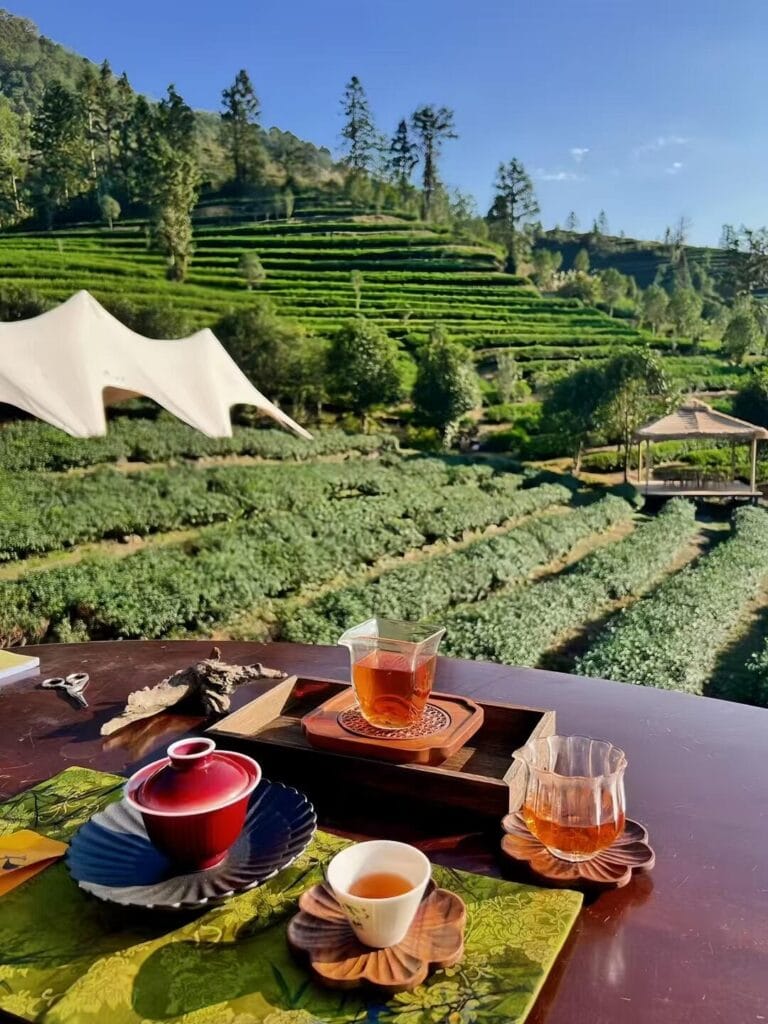
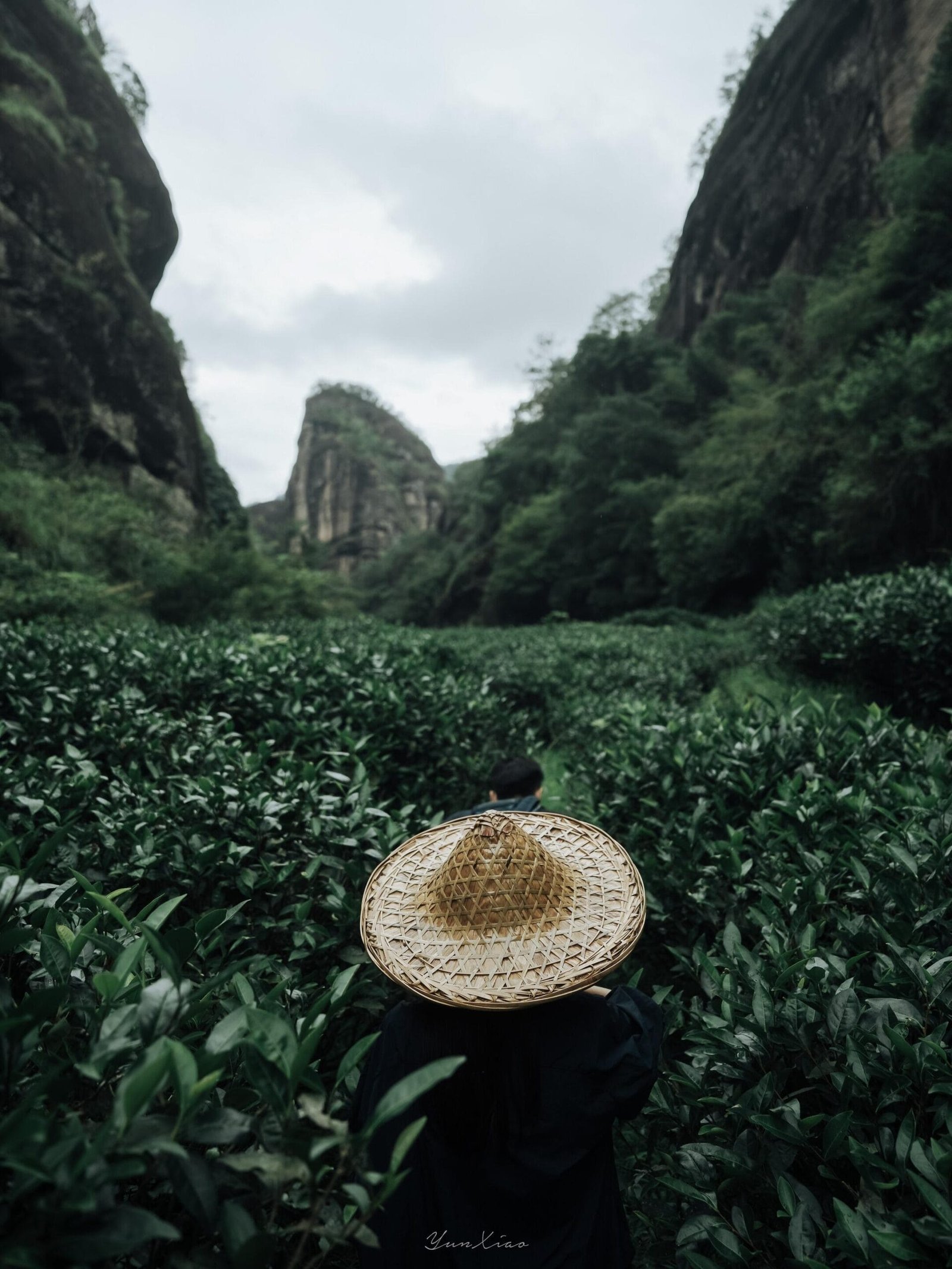
Within the “Three Pits Two Streams,” Huiyuan Pit holds an unique position. It is not as narrow and enclosed as Niulankeng; instead, it is much more open: surrounded by mountains on all sides, with a stream running through the center. This “pit” topography results in shorter direct sunlight hours, more diffused light, and consistently high humidity, creating a distinct microclimate. For tea trees, this environment resembles a “slow-cooking” process—unhurried, with leaves accumulating more inner substances through slow photosynthesis. Consequently, teas from Huiyuan Pit typically possess a more mellow liquor body and a more grounded aroma, solidifying its reputation as a key representative of the Wuyi rock tea origin.
2. Why Huiyuan Pit is Unique in the Wuyi Rock Tea Origin
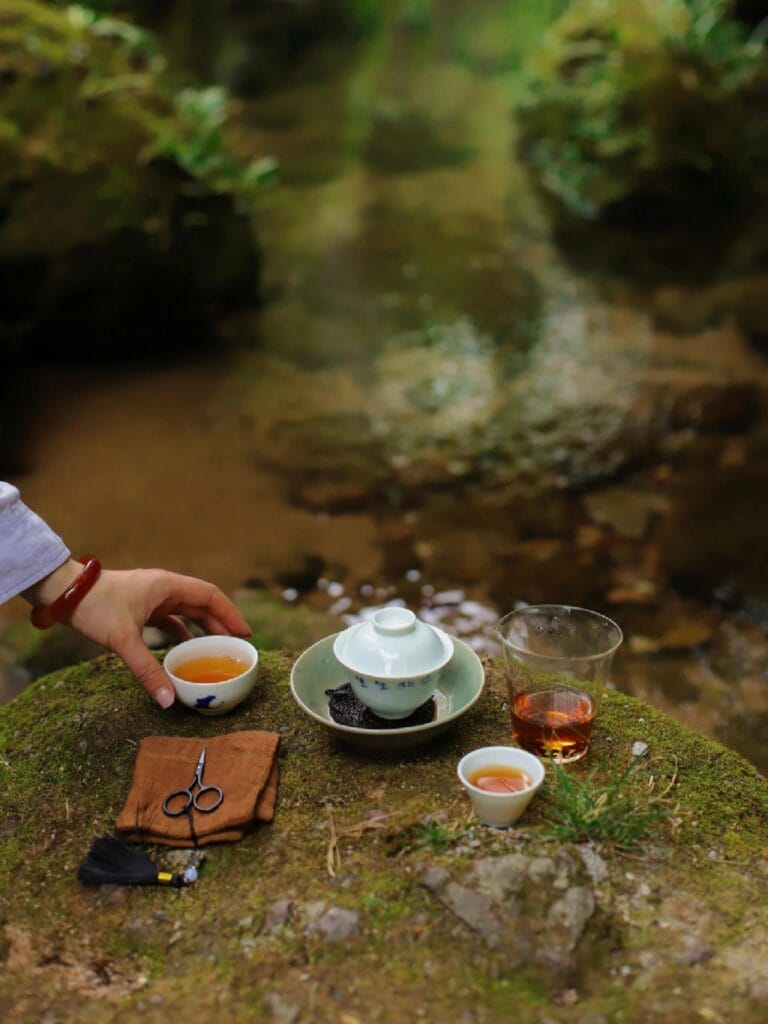
To understand what makes Huiyuan Pit special, let me share a personal experience. My first visit to Huiyuan Pit was with a tea master who had been making tea for twenty years. After driving to the foot of the mountain and continuing on foot, the cellphone signal gradually disappeared, replaced by the sound of streams and birdsong. This kind of isolation from the outside world was itself a prelude: the tea here must be different from anywhere else.
• Geography & Soil: The soil in Huiyuan Pit consists mainly of weathered volcanic rock debris, with deep soil layers and rich organic matter. Stepping on it, it feels as soft as treading on aged fallen leaves, and every step reveals a faint sweetness seeping from the earth. This soil endows the tea trees with abundant minerals, forming the material basis of the “rock rhyme” (Yan Yun).
• Microclimate: Surrounded by high mountains that block harsh winds, and moderated by the stream’s moisture, the area maintains a consistently humid, temperate state year-round. Tea trees grow slowly, and their shoots maintain high tenderness for a longer period. The resulting tea boasts delicate aromas, with unique floral notes and a mossy, ancient-forest quality that delights those seeking the flavor of the Wuyi rock tea origin.
3. Old Bush Shui Xian: The Gift of Time from Huiyuan Pit
Huiyuan Pit’s most renowned treasure is Old Bush Shui Xian (Lao Cong Shui Xian). Shui Xian is one of the leading varieties of Wuyi oolong tea, and the Old Bush Shui Xian from Huiyuan Pit is regarded by many seasoned drinkers as the unsurpassable pinnacle. “Old Bush” refers to Shui Xian tea trees aged over fifty or sixty years. In Huiyuan Pit, century-old bushes are not uncommon. These ancient trees have deep root systems, rough trunks, and are covered with moss—every crack seemingly inscribed with the stories of time.
3.1 Tasting Notes: The Flavor Journey of a Century-Old Bush
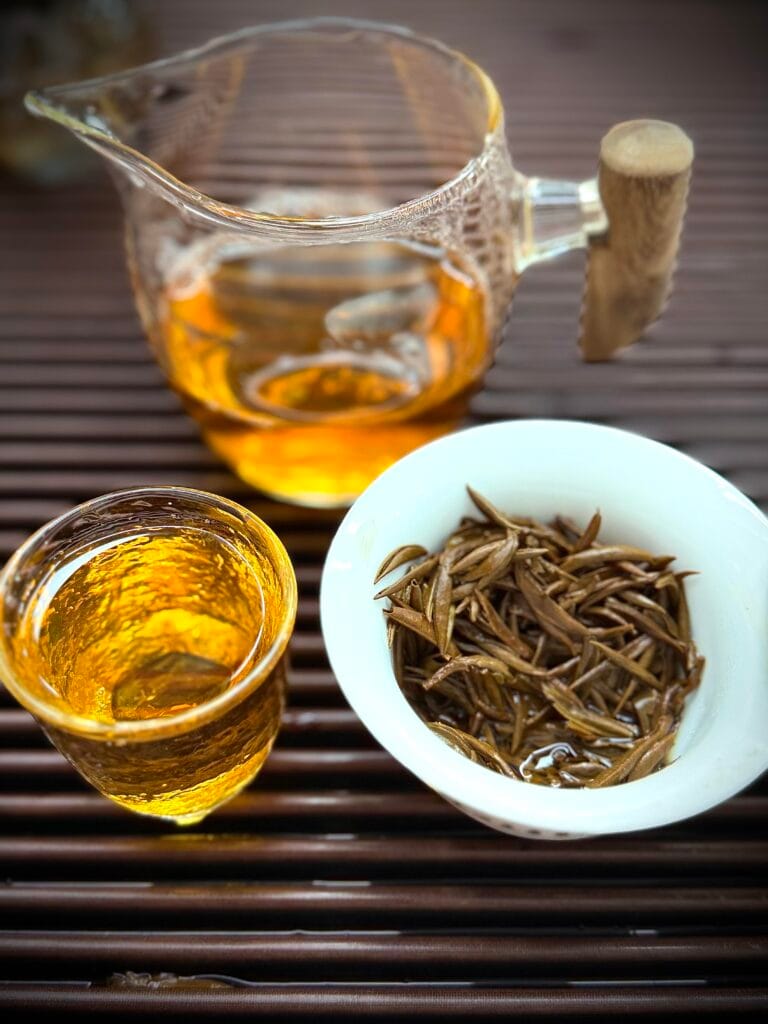
During my visit, the master brewed a century-old bush Shui Xian for me. The first infusion brought orchid fragrance; by the third, woody notes emerged; by the sixth, the liquor body felt even thicker—like a long-simmered rice congee, so smooth it barely needs swallowing. This is the charm of Old Bush Shui Xian: its distinctive “woody aroma” and “mossy note” are clearly recognizable, as if transporting you into an ancient forest after rain. After swallowing, the mineral-laden “rock rhyme” travels from the throat back to the root of the tongue, lingering for a long time—deep, not showy. This is the ultimate expression of the Wuyi rock tea origin.
3.2 Durability: Good Tea is Not Afraid of Many Infusions
“How many infusions can this tea handle?” I asked the master. He smiled: “At least twelve. Good tea is not afraid of infusions; what it fears is your impatience.” This statement reveals another hallmark of Huiyuan Pit’s Old Bush tea—exceptional longevity. Old Bush Shui Xian from the Zhengyan region, blessed with abundant inner substances, can often be brewed over ten times without losing flavor. Every infusion is the tea leaf revealing its full flavor trajectory to the drinker.
4. Another Identity of Huiyuan Pit: The Introverted Rou Gui
When discussing Wuyi oolong tea, one cannot avoid the “twin stars” of Rou Gui (Cassia) and Shui Xian (Water Sprite). If Old Bush Shui Xian is Huiyuan Pit’s signature offering, then Huiyuan Pit’s Rou Gui can be described as an underrated “master of subtlety.” It does not have the intense, piercing character of Niulankeng Rou Gui; instead, it follows a more reserved, profound path—cinnamon bark notes wrapped in soft florals, with a silky liquor and a long, sweet aftertaste. The two styles resemble two vastly different personalities: one outgoing and passionate, the other introverted and deep. Which one you choose likely depends on who you are.
5. A Day Spent in Huiyuan Pit: A Conversation with the Tea Master
I spent an entire day in Huiyuan Pit, and as I was about to leave, a light rain began to fall. In the mountains, rain comes quickly. Mist rose from the valley floor, wrapping the entire tea garden in a white veil. The distant trees turned hazy, reduced to mere silhouettes. The master stood under the eaves of his tea factory, lit a cigarette, and gazed at the rain: “Tea is something that cannot be rushed. The soil needs decades to cultivate, the trees need decades to grow, and the craft needs decades to refine. If you give it time, it returns you flavor.”
At that moment, I understood why the tea from Huiyuan Pit is so good. Perhaps it is because time moves more slowly here. The outside world accelerates, but inside this pit, everything continues at an ancient rhythm—sprouting in spring, growing in summer, crafting tea in autumn, and resting in winter. There is but one busy season a year; all other times are about waiting. This unhurriedness is precisely what is scarcest in the industrial age, and the most valuable thing a fine cup of tea can carry.
Conclusion: Drinking Tea is Drinking the Landscape of a Place
After returning home, I brewed that Huiyuan Old Bush tea and sat by the window, sipping slowly. Outside, the city hummed with traffic; in the cup, there was the mist, rain, and frost of deep mountains. Two streams of time converged at that moment. Some say that drinking tea is drinking the landscape of a place. I believe that drinking Huiyuan Pit tea is savoring a quiet confidence—it knows where it came from and also where it is going. Perhaps that is what Old Bush flavor is all about.
If you, too, wish to experience this steady Old Bush flavor from the Wuyi rock tea origin, we invite you to explore JunxiTea’s curated selection of Zhengyan Old Bush Shui Xian and other teas from the Three Pits Two Streams core production area. Every leaf is hand-picked from the ancient tea gardens of Huiyuan Pit and crafted through traditional charcoal-roasting techniques.
May this cup of Huiyuan Pit Old Bush tea bring you a moment of peace, allowing you to touch the deepest “rock bone and floral aroma” of the Wuyi Mountains in a single infusion, and savor the terroir imprint that has not faded through time.
https://junxistea.com/product/huiyukeng-old-bush-shuixian/
https://www.youtube.com/watch?v=IY9rfpE-6Is&list=PLbOHzzHkitUy87iM9Wb7gVtN0vX3V2dxs&index=1