Oolong Tea’s Shocking Truth: 7 Secrets of China’s Most Neglected “Half-Oxidized.” Universe

If there is one tea that can contain, within a single cup, the fresh briskness of green tea, the mellow sweetness of black tea, and a thousand-changing kaleidoscope of floral, fruity, and honey aromas, it must be Oolong Tea. The orchid fragrance of Tieguanyin, the rocky “Yan Yun” (rock rhyme) of Da Hong Pao, the perfume-like high aroma of Phoenix Dancong—they have vastly different styles, yet all belong under the grand banner of Oolong Tea. It is the most underrated universe of flavor, home to both the legend of China’s most expensive tea and a depth of complexity that can daunt beginners. This article will take you to the heart of Oolong Tea, unraveling all its mysteries from history and processing to appreciation.
1.A Beautiful Hunting Accident: The Legendary Birth of Oolong Tea
The origin of Oolong Tea, like its exquisite craftsmanship, is full of poetic accident. The story is set in Anxi, Fujian, during the Yongzheng era of the Qing Dynasty. A tea farmer named Su Long, nicknamed “Wu Long” (Black Dragon) by villagers for his dark complexion, went to pick tea one spring. On the way, he encountered a river deer. Excited, Su Long put down his tea basket and gave chase. By the time he caught his game, it was dark. Returning home, he was busy preparing the deer and completely forgot about the freshly picked tea leaves left piled and “smothered” in the bamboo basket overnight.
The next morning, when he opened the basket, his heart sank: the edges of the tea leaves had turned red, showing signs of oxidation. In an era where green tea reigned supreme, this was a complete failure. Reluctant to discard them, he proceeded to fix and roast the leaves with a “try anything” attitude. To his surprise, an extraordinary fragrance filled the room during fixation. The brewed liquor was orange-yellow and bright, tasting mellow and sweet on the palate, with none of the grassiness of green tea, and an astonishing durability over many infusions. This serendipitous discovery was named “Oolong Tea” after his nickname, inadvertently opening a brand new door to the flavor palace of “oxidationn” for Chinese tea.
2.The Soul of Flavor: The Infinite Spectrum of “Half-Oxidized.”
The key to understanding the richness of Oolong Tea lies in grasping “Half-Oxidized.” Unlike green tea, which is nearly zero-Oxidized, or black tea, which is fully Oxidized, the oxidation level of Oolong Tea can flexibly range from 15% to 70%, entirely at the discretion and skill of the tea master.
Think of the oxidation level as a flavor palette:
Leaning 50%-70% (e.g., Wuyi Rock Tea, traditional Dong Ding Oolong): Liquor is bright orange-red. Roasted aromas, fruity acidity, and varietal characteristics blend, forming a deep “Yan Yun” (rock rhyme) or “Guanyin Yun.” Taste is closest to black tea but with a clearer structure.
Leaning 15%-30% (e.g., light fragrance Tieguanyin, lightly oxidized Dancong): Liquor is yellow-green. Aroma is high and lifting, dominated by fresh floral and creamy notes. Taste is brisk like green tea but more mellow.
Middle 30%-50% (e.g., traditional Tieguanyin, medium-oxidized Dancong): Liquor is orange-yellow. Aroma shifts to ripe fruit and honey. Taste is mellow, sweet, and smooth with strong layers.
It is this vast adjustable space that gives Oolong Tea its “one tea, a thousand faces” character. Connoisseurs often say: the taste of Oolong Tea is a spectrum one could explore for a lifetime and never fully traverse.
3.The Art of Craftsmanship: The Flavor-Shaping “Rocking & Tumbling” Process
The precise control of “Half-Oxidized” is achieved through a signature process—Rocking & Tumbling (Yao Qing). This is the most dynamic and artistic step in the flavor formation of Oolong Tea.
After picking, the fresh leaves are thinly spread on bamboo trays. The tea master holds the tray with both hands, causing the leaves to rub against each other through rotation, shaking, and tumbling. This process seems simple but tests skill immensely:
1.Aroma Transformation: Under enzymatic action, large molecules in the leaves begin converting into small aromatic compounds. Floral and fruity aromas gradually emerge.
2.Physical Bruising: Cells at the leaf edges break, releasing sap that oxidizes upon contact with air, turning red, forming the typical “green leaves with red edges.”
3.Water Loss: Simultaneously, water and low-boiling-point grassy odors are carried away through the leaf veins.
The rhythm is key. It requires “rocking and resting” alternately, allowing the leaves to “lose water” and “oxidize” in turns. The force, frequency, and interval of each rocking session are based on the master’s instant judgment of temperature, humidity, and leaf condition. This is precisely why top Oolong Tea cannot be fully replaced by machines—it relies on the “hand feel” and “tea sense” accumulated over decades of experience.
4.The Flavor Map of Oolong Tea: A Tour of Four Core Regions
The landscape of Chinese Oolong Tea is primarily shaped by four core producing regions, each with its own strengths. Remember this eight-character mantra: Minnan: Clarity, Minbei: Rock, East Guangdong: Aroma, Taiwan: Rhyme.
1.The “Clarity” of Southern Fujian: Anxi Tieguanyin
Anxi Tieguanyin is the world’s calling card for Oolong Tea, famous for its unique “Guanyin Yun” (Guanyin Rhyme) and “lasting fragrance over seven brews.” Its core lies in the word “clarity.” High-quality lightly oxidized Tieguanyin has a clear, yellow, bright liquor. Its aroma is an elegant orchid fragrance. The taste is clear, sweet, and brisk, with a clear, serene, and long-lasting sweet aftertaste in the throat. This combined sensation is the “Guanyin Yun.”
To discern its craftsmanship, observe the brewed leaves: traditionally hand-rolled Tieguanyin has dry leaves tight like a “dragonfly head, frog legs.” After brewing, the leaves are thick, soft, and bright, with distinct “red edges.” If the brewed leaves are fragmented, thin, and dull, it’s likely a poorly made product.https://junxistea.com/product/anxi-tieguanyin-tea/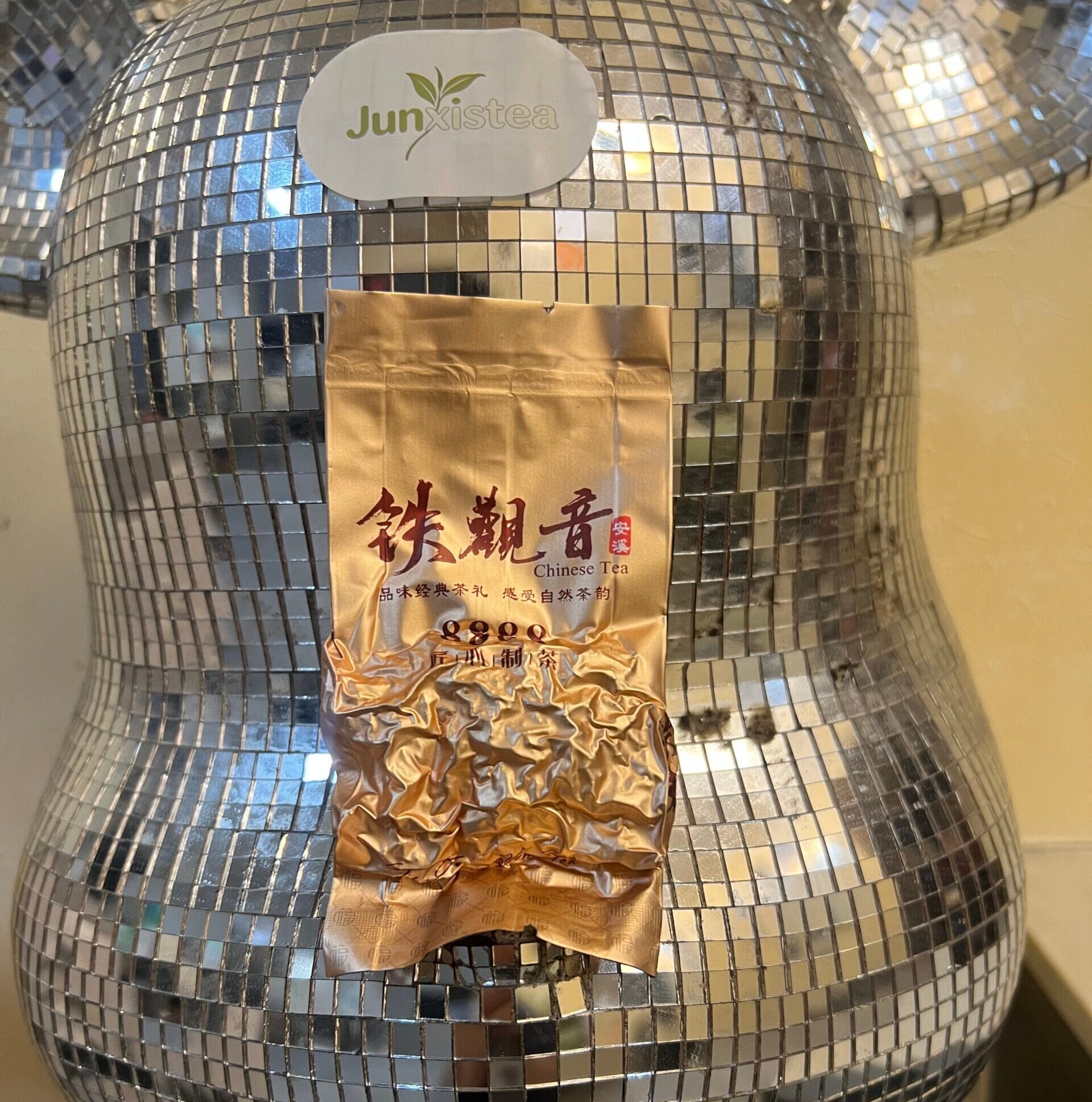
2.The “Rock” of Northern Fujian: Wuyi Rock Tea (Yancha)
Represented by Da Hong Pao, Rou Gui, and Shui Xian, Wuyi Rock Tea (Yancha) symbolizes the depth and strength within Oolong Tea. Its soul comes from Wuyi’s unique Danxia landform. In core “Zhengyan” areas like “Three Pits and Two Gullies,” towering cliffs and constant mist create mineral-rich soil. Tea tree roots dig deep into rock crevices, absorbing nutrients, forming the unique “Yan Gu Hua Xiang” (Rock Bone, Floral Fragrance).
Rock Bone: Refers to the liquor’s texture. It’s that mellow, rich, substantial fullness, the “strength” and “minerality” felt when swallowing, as if the tea has “bones.”https://junxistea.com/product/hu-xiao-yan-rou-gui-tea/
Floral Fragrance: Refers to the layers of aroma. It’s not just the varietal floral scent but also the caramel and fruity notes from roasting, elusive and extremely long-lasting, hence the saying “fragrance lingers in the empty cup.”https://junxistea.com/product/qi-lan-rock-oolong-tea/
3.The “Aroma” of Eastern Guangdong: Phoenix Dancong Oolong
Produced in the Phoenix Mountains of Chaozhou, Guangdong, Phoenix Dancong Oolong is hailed as the “Perfume of Teas.” Its most prominent feature is the incredible richness and sharp intensity of its aromas. Farmers have categorized hundreds of varietals based on natural aroma profiles, such as Mi Lan Xiang (Honey Orchid), Jiang Hua Xiang (Ginger Flower), and You Hua Xiang (Pomelo Flower).https://junxistea.com/product/mi-lan-xiang-ancient-tree-oolong-tea/
The most storied among them is undoubtedly “Ya Shi Xiang (Duck Shit Aroma).” Legend says a farmer, to protect his outstanding tea plants, claimed they were grown in “duck shit soil” and tasted like duck poop. Unexpectedly, its silver flower and almond aroma amazed everyone, and the name stuck. Its aroma is clean, crisp, and elegant, the taste mellow and brisk with a powerful sweet aftertaste, serving as the “flavor initiation” for many tea drinkers.
5.The “Rhyme” of Taiwan: High Mountain Oolong & Oriental Beauty
Taiwanese Oolong Tea is known for its fresh and delicate style. High Mountain Oolong (e.g., from Li Shan, Da Yu Ling) grows in mountains over 1000 meters. The significant diurnal temperature variation and misty nourishment result in leaves rich in pectin. The liquor is honey-green and translucent, with a clean, elegant orchid and milky aroma. The taste is brisk, sweet, lively, smooth, with a cool, refreshing throat feel, praised as “mountain air.”https://junxistea.com/product/natural-jin-xuan-milky-oolong-tea/
Oriental Beauty (Bai Hao Oolong) is another legend. Its oxidation reaches 60-70%, and the leaves must be bitten by tea jassids. The insect saliva interacts with the plant’s defense system, creating a unique ripe honey-fruit aroma (“yàn zǎi wèi”). The liquor is bright red-orange, tasting mellow and sweet like honey, with no astringency. Presented to Queen Victoria in the 19th century, it earned the praise “Oriental Beauty” and remains popular in the West.
6.A Gift of Time: The Aging and Rebirth of Oolong Tea
Among the six major tea categories, Oolong Tea is one of the very few that can sublime in flavor and increase in value through proper aging. This is thanks to its solid oxidation foundation and exquisite roasting skill.
High-quality Wuyi Rock Tea, traditional Tieguanyin, etc., after years or even decades of sealed, light-proof, moisture-proof storage, enter a slow post-fermentation stage. Their original fruity-floral aromas gradually transform into a deep aged aroma, herbal scent, woody fragrance. The liquor becomes more mellow, smooth, and full-bodied, with almost no astringency, replaced by an ultimate warmth and sweetness.
Even more magically, periodic slow “re-roasting” over lychee or longan charcoal every few years can remove any absorbed moisture or off-odors from storage, reactivate the tea’s inner substance, and give it new vitality—a “flavor rebirth.” This art of dancing with time makes aged Rock Tea and vintage Dancong treasures sought after by collectors and connoisseurs.
7.The Perfect Brew: Six Golden Rules for Brewing Oolong Tea
To fully unlock the rich layers of Oolong Tea, brewing is key. Follow these six rules, and even a beginner can brew like a pro:
1.Boiling Water is a Must: Use 100°C boiling water. Only high temperature can fully release the high-boiling-point aromatics and deep substance of Oolong Tea. Insufficient temperature locks in flavor and aroma.
2.Mind the Ratio: A universal ratio is 1:15 (tea:water). For a 150ml gaiwan, use 8-10g of leaves. Rock tea and Dancong can use more; light fragrance Tieguanyin slightly less.
3.Quick First Three Infusions: For the first three brews, pour out immediately after adding water—within 5-10 seconds. This is when aromatic compounds are released most intensely.
4.Extend Gradually: From the fourth infusion onwards, increase the steeping time by 5-10 seconds each round to balance the concentration.
5.First Rinse is for Awakening: The first pour of boiling water should be discarded quickly. This “awakens” the tightly rolled leaves, allows initial unfurling, and cleans the surface. Start drinking from the second infusion.
6.Uncover After Pouring: After each pour, always remove the gaiwan lid to let the brewed leaves cool. Avoid prolonged covering, as residual heat will “stew” the leaves, making the next brew bitter.https://www.youtube.com/watch?v=OYa8sXCdM8w
8.Conclusion: A Cup of Tea, A Journey of Abundance
Some say green tea is the poem of youth—fresh, bright, drinking in the whole spring in one sip. Black tea is the prose of middle age—warm, rounded, offering steady companionship. But Oolong Tea is like a chaptered novel or a slowly unfurling landscape scroll. It doesn’t rush to reveal everything at first but gradually unveils its scenery as you patiently savor: from elegant floral notes, to mellow fruity rhymes, to the long-lasting fragrance in the empty cup and the persistent sweetness in the throat.
Within the oxidation spectrum of 15% to 70%, refined through the craftsmanship of “rocking” and “roasting,” Oolong Tea accommodates immense complexity and possibility. It can be daily solace or a frontier for exploration. To understand Oolong Tea is perhaps to understand a Chinese philosophy of life: in the wisdom of “half”—half-oxidized, half-a-lifetime—seeking the richest balance and the deepest resonance. May this cup of tea open a door for you to an infinite universe of flavor.